According to the Thai Board of Investment (BOI), China has become the top source of foreign direct investment (FDI) in Thailand in 2023.
In the first three quarters of the year, nearly $2.84 billion was invested in 264 projects, accounting for 24% of Thailand's total FDI.
Over the past two years, China has submitted 588 investment projects totaling $7 billion.
The relationship between China and Thailand is strategic.
China is Thailand's main trading partner, absorbing 40% of its agricultural exports.
For its part, Thailand ranks third among China's trading partners within ASEAN.
China and Thailand maintain a strong economic partnership, with bilateral trade reaching $126.3 billion in 2023.
One of the highlights of their cooperation is the ambitious transcontinental railway project, which aims to connect the Indochinese peninsula to the Strait of Malacca.
See: China-Thailand Railway: A New Era of Connectivity
This initiative promises to improve regional connectivity and stimulate tourism growth.
See: Thailand is making rapid progress on the high-speed train project to China
As the Thai Ministry of Foreign Affairs announced in 2024 its intention to join the BRICS economic cooperation league, the country aims to attract more foreign investment to strengthen its economy and contribute to key sectors.
See: Thailand to become official partner of BRICS+ on January 1, 2025
In particular, green energy and electric vehicles (EVs).
Thailand is seeking to integrate into the global value chain and position itself as a leading player in Asia and around the world.
The two countries signed a strategic cooperation agreement in 2013 to strengthen their economic ties.
Thailand supports China's Belt and Road Initiative (BRI), which facilitates trade and mobility, as tourism and exports represent the largest share of the Thai economy.
In this context, Chinese investments have increased significantly, mainly in electric vehicles, digital economy, and manufacturing industry.
Why invest in Thailand?

View of Bangkok. Photo: National News Bureau of Thailand
A strategic region
Thailand occupies a key position in Southeast Asia.
As a central member of ASEAN (Association of Southeast Asian Nations), a regional organization promoting economic, political, and cultural cooperation, Thailand has solid infrastructure and attractive investment policies.
China, seeking to consolidate its leadership in Asia, considers Thailand a strategic ally.
China's interest in Thailand is also highlighted by the BRI initiative, which aims to strengthen regional connectivity and economic integration.
Key projects, such as the high-speed rail link connecting China to Thailand via Laos, highlight the deepening economic ties between the two nations.
Beyond the economy, cultural and diplomatic exchanges have further strengthened their bilateral relations, with both countries emphasizing mutual respect and common development goals.
Investor-friendly policies
In December 2024, the Thai Industrial Estate Authority (IEAT) announced a new initiative aimed at attracting Chinese investors.
Dubbed "Two countries, two parks", this initiative aims to make Thailand a key destination for Chinese investment by facilitating exchanges, according to Industry Minister Akanat Promphan.
This measure is based on previous agreements that have already eased investment procedures and reduced trade barriers between the two countries.
The “Two Countries, Two Parks” initiative is expected to strengthen economic ties between Thailand and China by promoting collaboration in sectors such as manufacturing, technology, and logistics.
According to officials, the program will include the development of industrial zones designed to specifically meet the needs of Chinese businesses, offering them streamlined services, tax incentives, and infrastructure tailored to their needs.
Minister Akanat Promphan emphasized that this initiative is part of Thailand's broader economic strategy to position itself as a regional hub for international trade and investment.
The automotive industry: a comprehensive example
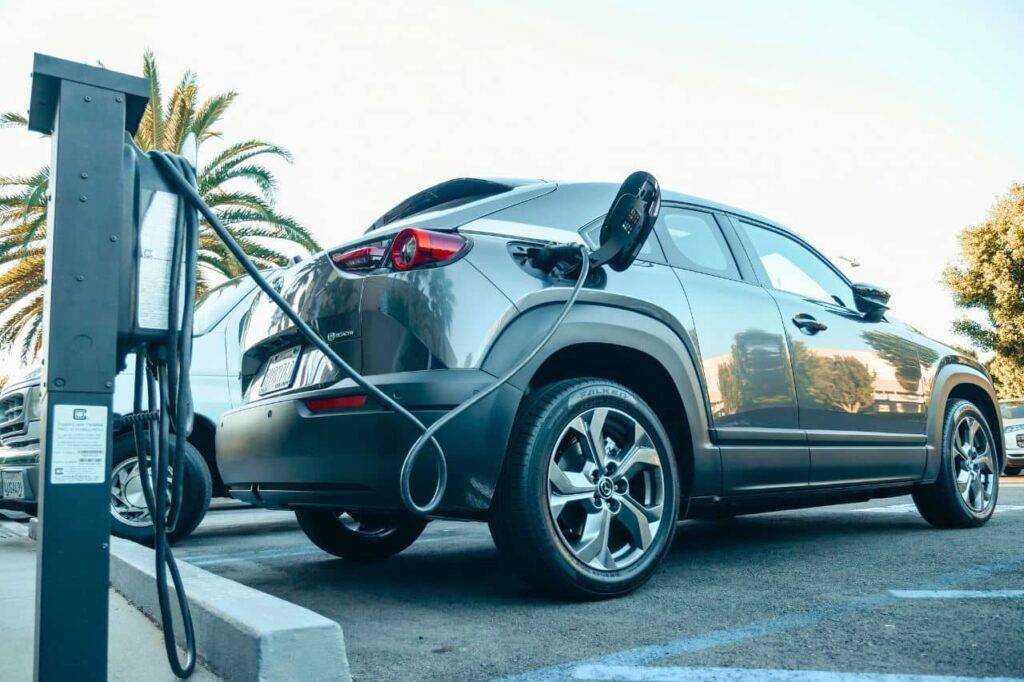
Electric car on charge. Photo : Kindel Media
The Thai government aims to make the country a regional hub for the production of electric vehicles.
The ‘30@30’ initiative aims to have electric vehicles account for 30% of total vehicle production by 2030, with the goal of producing 725,000 zero-emission cars, 675,000 electric scooters, and 24,000 electric buses.
The government is also encouraging Thai consumers to buy EVs.
Currently, 80% of EVs sold in Thailand are of Chinese brands.
The ‘30@30’ policy includes subsidies and tax reductions that attract investors, manufacturers, and suppliers in the electric vehicle industry.
Research and development (R&D) funding enables Thailand to maintain its competitive edge and establish itself as a leader in the sector.
Some Chinese automakers have already set up operations in Thailand.
BYD and Great Wall Motor have invested nearly $1.5 billion in building factories in the country.
See: Why are Chinese car manufacturers interested in Thailand?
Meanwhile, the Chinese company CATARC has opened an R&D center.
Thailand's appeal to Chinese investors in the electric vehicle sector is driven by:
- Financial incentives;
- Infrastructure;
- A skilled workforce and in-depth knowledge of the industry, which enable it to integrate all stages of the production and supply chain, including battery manufacturing.
Diversity of investment sectors

The TikTok logo, outside the company's headquarters in the United States, in Culver City, California, in September 2020. Photo: Reuters
The Thai Board of Investment recently announced that TikTok, owned by Chinese company ByteDance, plans to invest 126.8 billion baht in Thailand for a data hosting project.
See: TikTok is betting big on Thailand with a $3.8 billion data center
This announcement follows major investment commitments from large American technology companies, such as Google ($1 billion), Amazon Web Services ($5 billion over 15 years) and Microsoft, which is building its first regional data center in Thailand.
As Thailand becomes a strategic hub for the digital economy, it also attracts significant Chinese investment in this sector.
Many other industries benefit from Chinese investment.
In 2024, the Eastern Economic Corridor (EEC) met with a delegation of Chinese entrepreneurs to explore the possibilities of Sino-Thai cooperation in the field of green infrastructure, including solar farms and energy storage systems.
China is also investing in Thailand's tourism sector.
Chinese investment in hotels and restaurants helps strengthen ties between the two countries, stimulating the Thai economy by improving services and infrastructure, which attracts more tourists.
Impact on the Thai economy
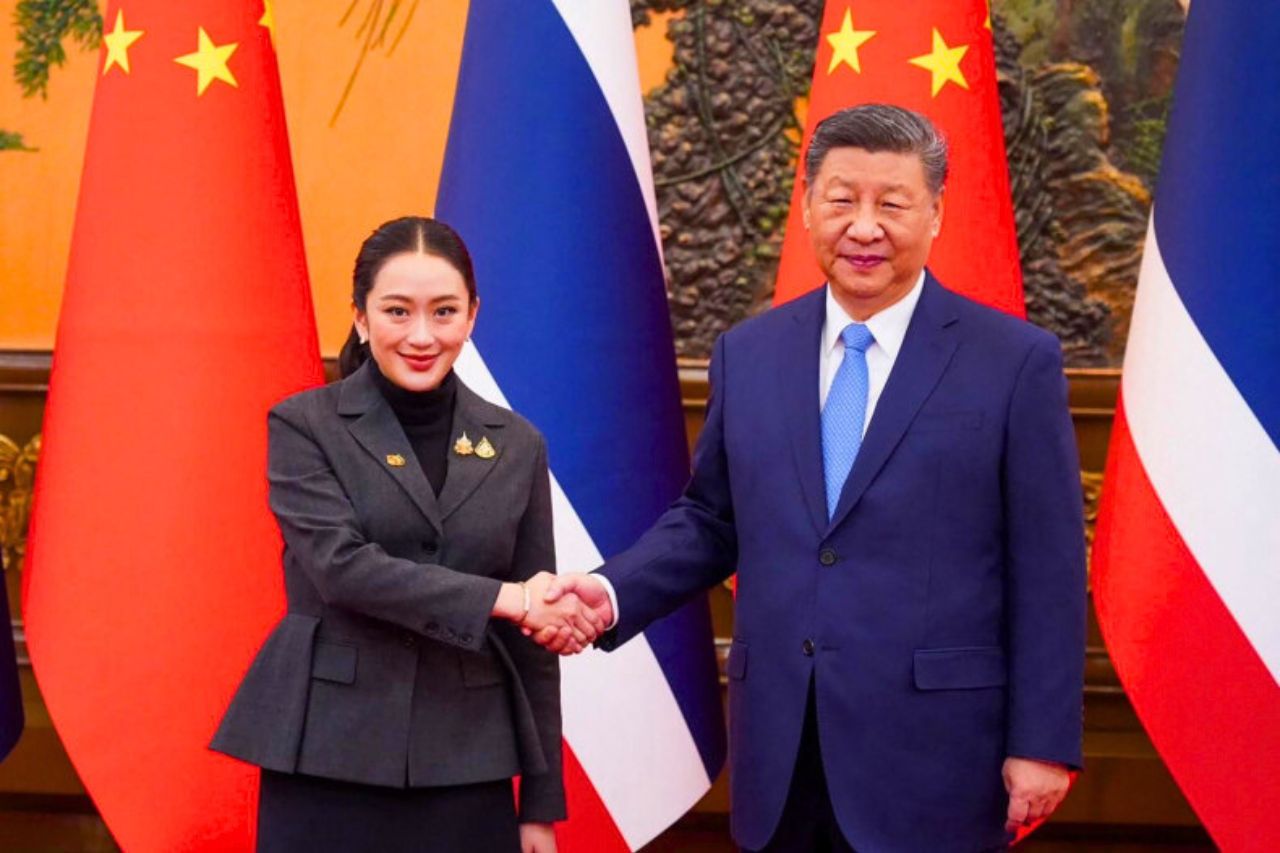
Thai Prime Minister Paetongtarn Shinawatra and Chinese President Xi Jinping. Photo: Bangkok Post
Chinese investments contribute to job creation.
The entry of Chinese companies into the Thai market promotes the recruitment of skilled labor, the development of expertise, as well as the transfer and creation of technological knowledge in future industries.
By leveraging its strategic location in Southeast Asia, Thailand aims to attract not only Chinese investors but also global companies looking to access ASEAN markets.
Analysts predict that this partnership could significantly increase bilateral trade volumes and create new opportunities for local industries to integrate into global supply chains.
The Thai government has also hinted at plans to extend similar initiatives with other key trading partners, thus signaling its commitment to fostering a more open and dynamic investment environment.
However, Thai businesses must adapt to competition from new entrants that benefit from cutting-edge technology and lower production costs.
They must adjust by collaborating with these new players and establishing business relationships.
It is also incumbent upon the Thai government to ensure that the opening up of its economy and infrastructure to China remains beneficial, enabling Thailand to assert its influence in the Asia-Pacific region.
However, some Thai analysts are wary of China's growing influence, fearing that Thailand will become too dependent on the country.
Despite these concerns, the Thai government remains optimistic about Chinese investment, which it considers a key element of the country's economic growth strategy.
See also:
Thailand and China strengthen their partnership with 14 key agreements
Under pressure from China, Thailand finally cracks down on call centers
Thailand: cancellations or traveling with fear for Chinese tourists
Thailand: Record influx of Chinese tourists despite kidnapping cases
Durian crisis in Thailand: China lets containers pass again
Chinese New Year in Thailand in 2025, the year of the snake
Thailand receives with great pomp a tooth of Buddha lent by China
Thailand's economy is being undermined by the influx of Chinese goods
Source : Thai Business News
Do you like Toutelathailande.fr?
👉 Leave us a review on Trustpilot.
Your review strengthens the credibility of our work and the trust of our readers.
Useful links to prepare your trip to Thailand
Book bus, train and boat in Thailand
Manage your money while traveling with Wise
If our news, tourist information, or cultural content has been useful to you and you'd like to thank us:
You can follow us on:
Twitter, LinkedIn, Facebook,Google News
Or install our application: Install the application of All Thailand on your smartphone

1 comment
It appears that Thailand is significantly strengthening its cultural, political, and economic ties with China and is moving away from strengthening its trade ties with the United States.
Thai Prime Minister Paetongtarn Shinawatra, her political entourage, advisors, and government do not seem to appreciate the tax maneuvers and the instability of Donald Trump's attitudes and decisions regarding many aspects of the global political, economic, and financial balance…
A dictator could not have done otherwise to destabilize the world order and its fragile balance…
I suppose that this significant rapprochement with the second world power (which, in my opinion, is on track to become the first in the next decade) has been carefully considered and its short, medium, and long-term consequences have been studied, analyzed, and taken into account to make this strategic shift towards the Asian giant…
Following these events, the reaction of the financial markets was not long in coming and the baht has fallen again and is on its way to regaining a value that better corresponds to its place in the international transfer market, whose trade balance will gradually tilt towards the Yuan by reducing the share of export markets in dollars.
It is clear that, in the medium term, the off-the-cuff statements by the US President and his right-hand man Elon Musk will inevitably backfire against them and against the US economy.
All they will succeed in doing is creating a growing unanimity against the USA and ultimately (it is the secret wish of many political leaders of the world), isolating them economically by boycotting all American products both in import and export to refocus their respective national economies towards economic exchange agreements and exports among themselves, excluding the United States !!!
It seems that Uncle Sam is going to reach the limits of his influence in the coming months or years… it remains to be seen how the rest of the world will make those who think they are the master(s) of the planet pay the bill, without worrying, on the other hand, that 12% (36 million) of their compatriots live below the poverty line, the United States occupying a rather unimpressive 9th place out of a total of 34 countries in America, behind notably Canada, Brazil, and Chile !!!
“America great again” ???
There's work to be done, Uncle Donald !!!