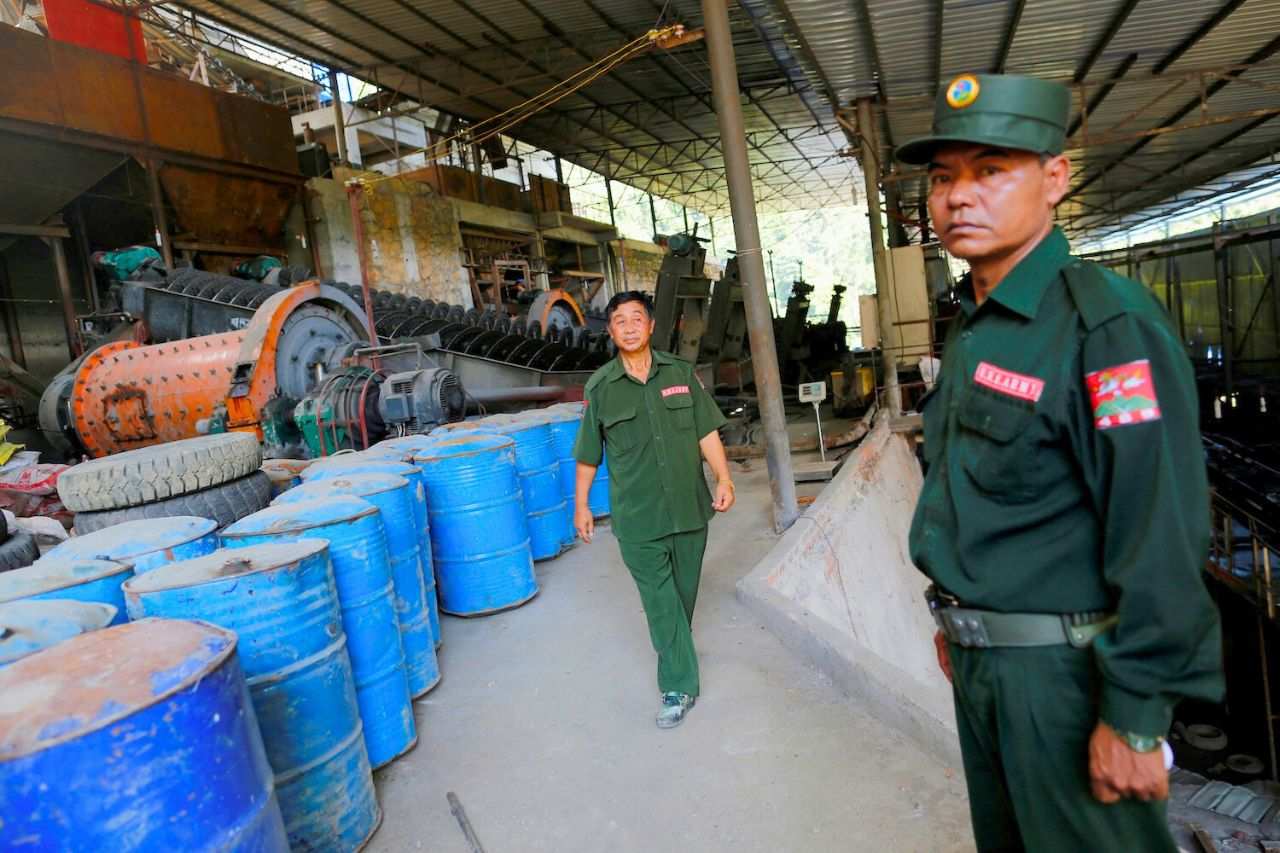
China's exploitation of rare earth mines in eastern Burma is the cause of arsenic river pollution in Thailand.
See: Rivers in Thailand poisoned by Chinese mines in Burma
Initially mistaken for gold mines, the operations responsible for polluting Thai rivers are actually rare earth mines, according to new revelations.
According to four people close to the case, the United Wa State Army, supported by China, protects new rare earth mines in eastern Burma.
See: The Red Wa poison Thailand: drugs and arsenic pollution
Beijing seeks to secure these strategic minerals, which it uses as leverage in its trade war with Washington.
China holds a near-monopoly on the processing of heavy rare earths into magnets that power essential products such as wind turbines, medical devices, and electric vehicles.
But Beijing relies heavily on Burma for the rare earth metals and oxides needed for their production.
This war-torn country was the source of nearly half of these imports in the first four months of this year, according to Chinese customs data.
Beijing's access to new reserves of minerals such as dysprosium and terbium has recently been extended after the United Wa State Army took control of a major mining belt in northern Burma.
This army, supported by Beijing, is not under the control of the Burmese military junta.
Today, in the hills of Shan State, in eastern Myanmar, Chinese miners are opening up new deposits for extraction, according to two sources who both work in one of the mines.
At least 100 people are working day and night to dig into the hills and extract minerals using chemicals, the sources said.
Two other residents of the region said they had seen trucks carrying materials from the mines, between the towns of Mong Hsat and Mong Yun, to the Chinese border, about 200 km away.
Reuters identified some of the sites using images provided by commercial satellite providers Planet Labs and Maxar Technologies.
Business records in Burma are poorly maintained and difficult to access, and Reuters was unable to independently identify the mine owners.
According to four sources, two of whom were able to identify the militia uniforms, the mines are operated under the protection of the UWSA.
The UWSA, one of the largest armed groups in Shan State, also controls one of the world's largest tin mines.
It has long-standing commercial and military ties with China, according to the US Institute for Peace, a non-profit organization specializing in conflict resolution.
Details of the militia's role and the rare earth export route are reported for the first time by Reuters.
Patrick Meehan, a professor at the University of Manchester, who has closely studied the rare earth industry in Burma and examined satellite images of the Shan mines, said:
"These medium to large-sized sites appear to be the country's first significant facilities outside the Kachin region in the north.
There is a whole belt of rare earths that stretches across Kachin, Shan and parts of Laos."
The Chinese Ministry of Commerce, as well as the UWSA and the junta, did not respond to Reuters' questions.
Access to rare earths is becoming increasingly important for Beijing, which has tightened its restrictions on exports of metals and magnets after US President Donald Trump resumed his trade war with China this year.
If China appears to have recently approved more exports and Mr. Trump has signaled progress in resolving the dispute, this decision has disrupted global supply chains.
These rare earths are essential to automakers, aerospace manufacturers and semiconductor companies.
The price of terbium oxide has jumped more than 27% in the past six months, according to data from the Shanghai Metals Market.
The prices of dysprosium oxide have fluctuated sharply, increasing by around 1% over the same period.
Chinese influence

A satellite image shows an overview of the West River rare earth mine in Burma, May 6, 2025. Photo: Maxar Technologies
According to satellite images examined by Reuters, a large circular clearing first appeared in April 2023 in the wooded hills of Shan State, about 30 km from the Thai border.
In February 2025, shortly after the suspension of activities at the Kachin mines, the site housed more than a dozen leach ponds, typically used to extract heavy rare earths, as the images show.
Six kilometers away, on the other side of the Kok River, another clearing was captured by satellite images in May 2024.
In less than a year, it has transformed into a facility with 20 leachate ponds.
David Merriman, a minerals analyst who reviewed two Maxar images for Reuters, said:
"The infrastructure of the Shan mines, as well as the levels of erosion visible on the terrain, indicate that the facilities have already been in production for some time."
At least one of the mines is operated by a Chinese company that employs Chinese-speaking managers, according to the two miners and two members of the Shan Human Rights Foundation, a human rights advocacy group.
The group revealed the existence of these activities in a report published in May based on satellite images.
One of the two sites also houses an office displaying the logo of a company in Chinese characters, said one of the miners, who wished to remain anonymous.
The use of Chinese operators in the Shan mines and the transportation of production to China reflect a similar system in Kachin, where entire hills are disfigured by leach ponds.
Neha Mukherjee of Benchmark Mineral Intelligence, based in London, said:
"Chinese mining companies can produce heavy rare earth oxides at a lower cost and in a lax regulatory framework in Burma, seven times cheaper than in other regions with similar deposits.
The margins are huge."
Beijing tightly controls the technology that enables the efficient extraction of heavy rare earths, and it has said it would be difficult to operate a facility in Myanmar without China's help.
Satellite images suggest that the mines in Shan are smaller than those in Kachin, but they are likely to produce the same elements, according to Merriman, who is a research director at consultancy Project Blue.
« The deposits in Shan State contain terbium and dysprosium, which will be the main elements sought by miners », he said.
Strategic tool
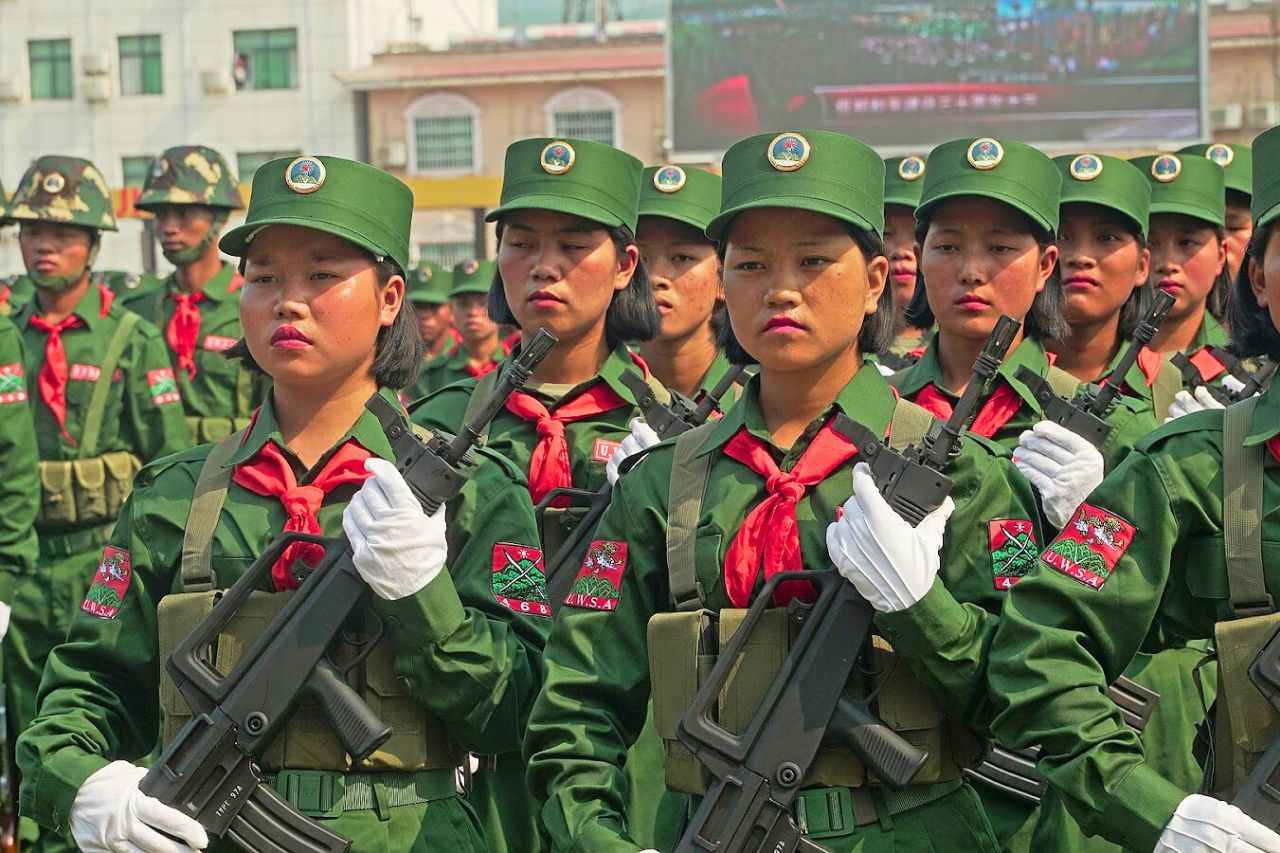
UWSA soldiers standing at attention during a ceremony on April 17, 2019. Photo: Steve Sandford
The UWSA controls a small, isolated state the size of Belgium and, according to US prosecutors, has long prospered through drug trafficking.
It has maintained a long-standing ceasefire with the junta, but still has a force of 30,000 to 35,000 men, equipped with modern weapons mainly from China, according to Ye Myo Hein, a senior researcher at the Southeast Asia Peace Institute.
“The UWSA is a key instrument that enables China to maintain its strategic influence along the border between Burma and China and to exert its grip on other ethnic armed groups,” he said.
Some of these fighters are also closely monitoring the mining area, said Leng Harn, a member of the SHRF.
“People cannot enter and leave the area freely without an ID card issued by the UWSA.”
Shan State has remained largely outside the civil war that has long pitted various armed groups against the junta.
Fighting has also shaken the Kachin mining belt and forced many Chinese operators to cease their activities.
China has repeatedly stated that it is seeking stability in Burma, where it has made significant investments.
Beijing has intervened to end fighting in certain areas close to its border.
“The Wa have not had any real conflict with the Burmese army for 35 years,” said Jason Towers, USIP director for Burma.
“Chinese companies and the Chinese government consider the Wa zones to be more stable than other regions in northern Myanmar.”
According to Ms. Mukherjee of Benchmark, the bet on Shan's rare earth deposits could give China more clout in the global race for essential minerals.
“If the disruptions are so significant in Kachin State, they will look for other sources,” she said.
“They want to keep control of heavy rare earths in their hands.
They use it as a strategic tool.”
A direct impact on Thai rivers and populations
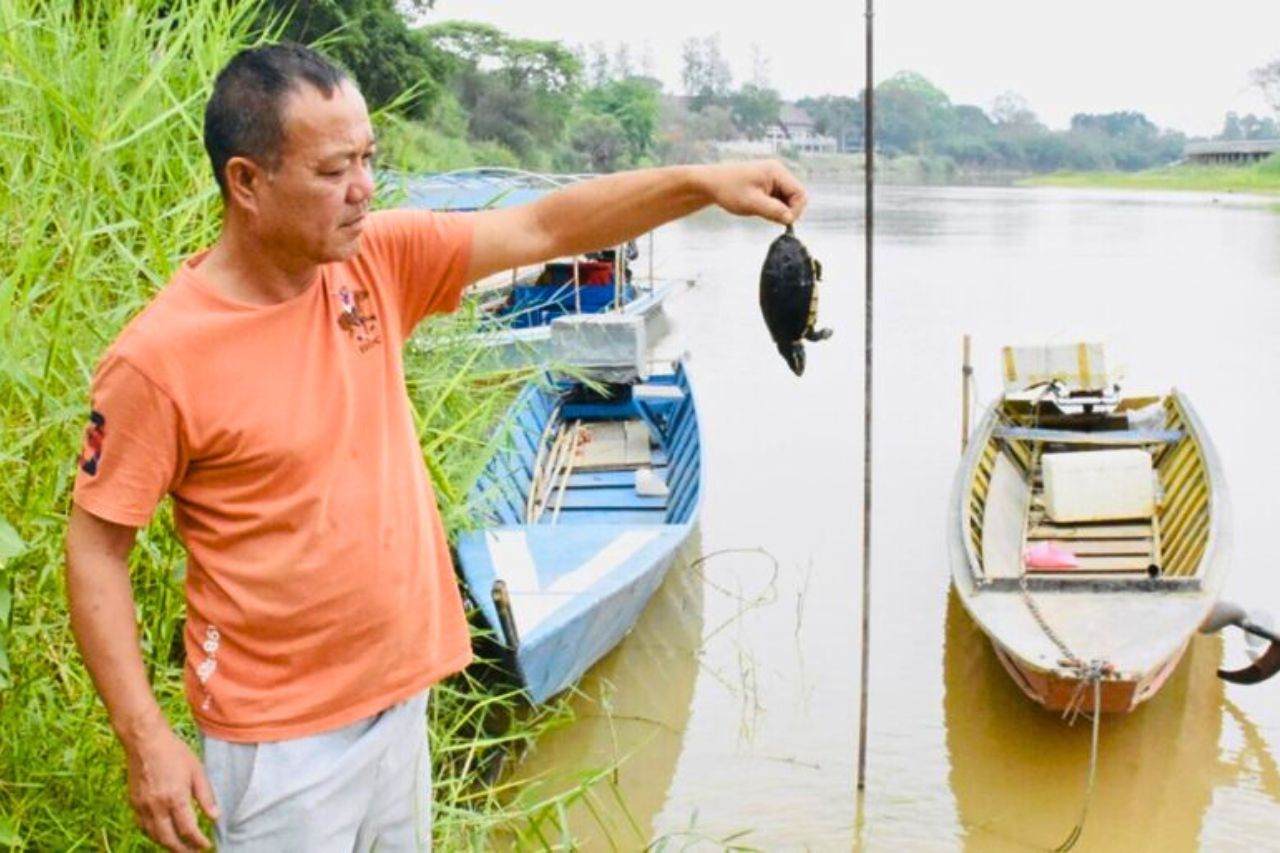
Apichit Panwichai, a resident of Chiang Rai province, shows a dead turtle on the banks of the Kok River.
The pollution generated by the extraction of rare earths in Burma does not stop at the borders.
The chemicals used for acid leaching seep into the soil and groundwater, before joining the rivers that cross the border into Thailand, particularly in the provinces of Chiang Mai and Chiang Rai.
Several local associations and environmental NGOs have reported an alarming decline in water quality, with consequences for fishing, agriculture and the health of riverside communities.
See: Thailand: dangerous levels of arsenic confirmed in northern rivers
If no action is taken quickly, the damage could become irreversible, permanently affecting the ecosystems of northern Thailand.
See also:
Thailand: Arsenic-poisoned rivers threaten thousands of lives
Arsenic pollution in Thailand: tourists flee Chiang Rai beach
Thailand: a river polluted with arsenic by Chinese mines in Burma
Source: Bangkok Post
Do you like Toutelathailande.fr?
👉 Leave us a review on Trustpilot.
Your review strengthens the credibility of our work and the trust of our readers.
Useful links to prepare your trip to Thailand
Book bus, train and boat in Thailand
Manage your money while traveling with Wise
If our news, tourist information, or cultural content has been useful to you and you'd like to thank us:
You can follow us on:
Twitter, LinkedIn, Facebook,Google News
Or install our application: Install the application of All Thailand on your smartphone
