
Thailand is facing an economic slowdown in a context of weak consumption and industrial difficulties.
Tourist attractions are deserted, local traders' complaints about stagnant purchasing power are multiplying, and the Thai economy is preparing for another slowdown in the 2nd quarter, which is usually a slump period for consumption.
Economic growth forecasts have been regularly revised downward this year, particularly in the latest announcement by the National Economic and Social Development Council (NESDC) last week, which brought its projections for 2025 down from 2.8% to 1.8%.
Despite economic expansion of 3.1% year-on-year in the first quarter, NESDC warned the public to be cautious in their spending to prepare for the impact of an impending slowdown.
Tourism in decline: fewer Thai and foreign travelers
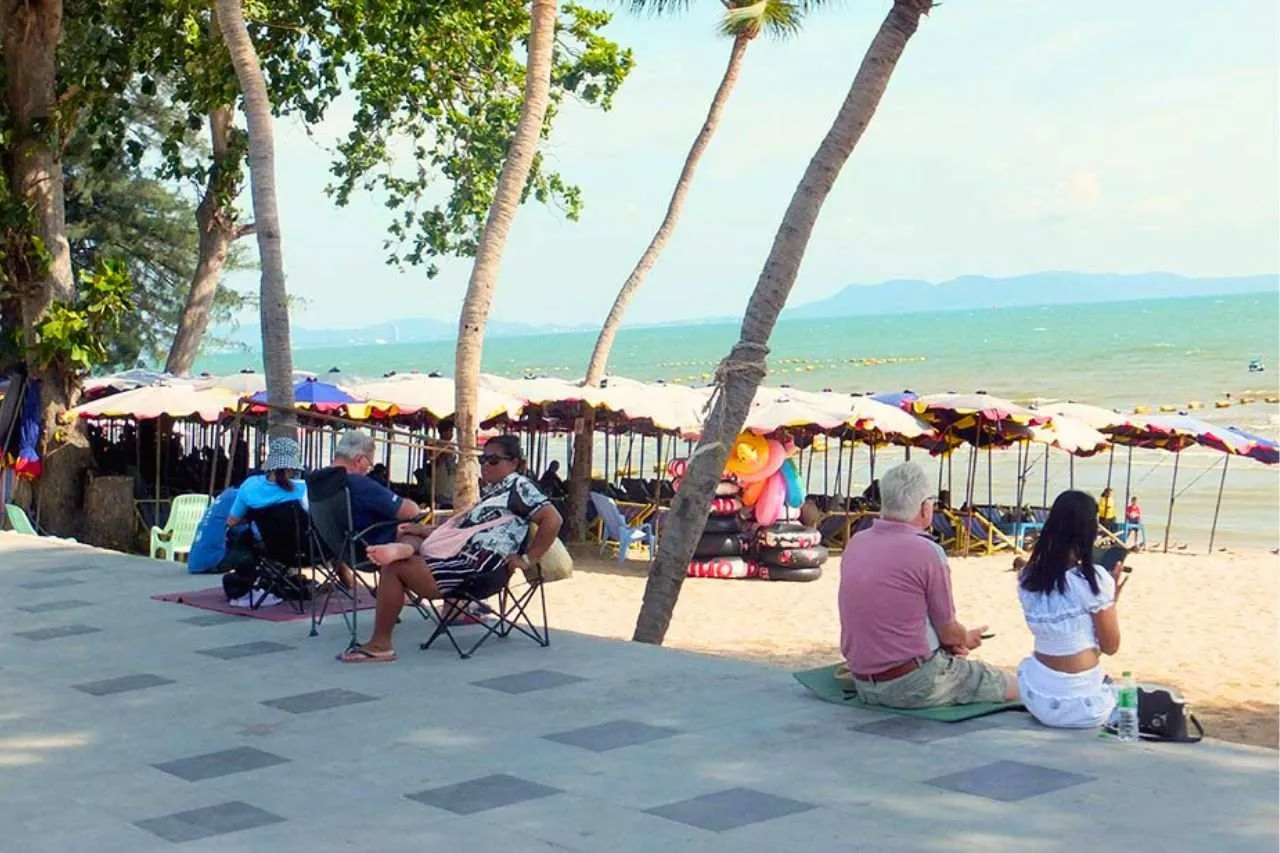
Tourists on a beach in Pattaya. Photo: Pattaya Mail
Paisarn Sukjarean, chairman of the northern section of the Thai Hotel Association, said the number of Thai customers in Chiang Mai hotels has dropped significantly since the beginning of the year.
Hoteliers only recorded a satisfactory number of customers during the five-day Songkran holiday in April, before the market collapsed sharply, he added.
The average occupancy rate fell to 40% in May, a level below the usual average of more than 50% for the month.
This decline is also attributed to the weakness of the Chinese market demand, said Mr. Paisarn.
See: Chinese tourism in decline: Thailand launches a recovery plan
However, June figures could improve when tourists from the Middle East come to Chiang Mai to enjoy the rainy season, he added.
“Thai tourists typically account for 30% of Chiang Mai hotel guests.
They have traveled less to the north this year in order to save money and prepare for economic uncertainty.
Many are waiting for the government's co-payment campaign.
The longer the government delays this program, the more hotels will be affected,” said Mr. Paisarn.
The decline in tourist numbers has also had an impact on the province's agricultural sector, which has sold fewer products, he added.
Tourists are clearly showing more caution when making purchases, said Mr. Paisarn.
Among the tourist markets that sustain Chiang Mai, the Chinese have the highest average purchasing power, as they buy all kinds of local products.
European tourists have experienced steady growth and their stay is longer, but their daily spending remains much lower than that of the Chinese, he clarified.
See: Thailand: French and other European tourists return en masse
Real estate in trouble: fear of debt slows down buyers
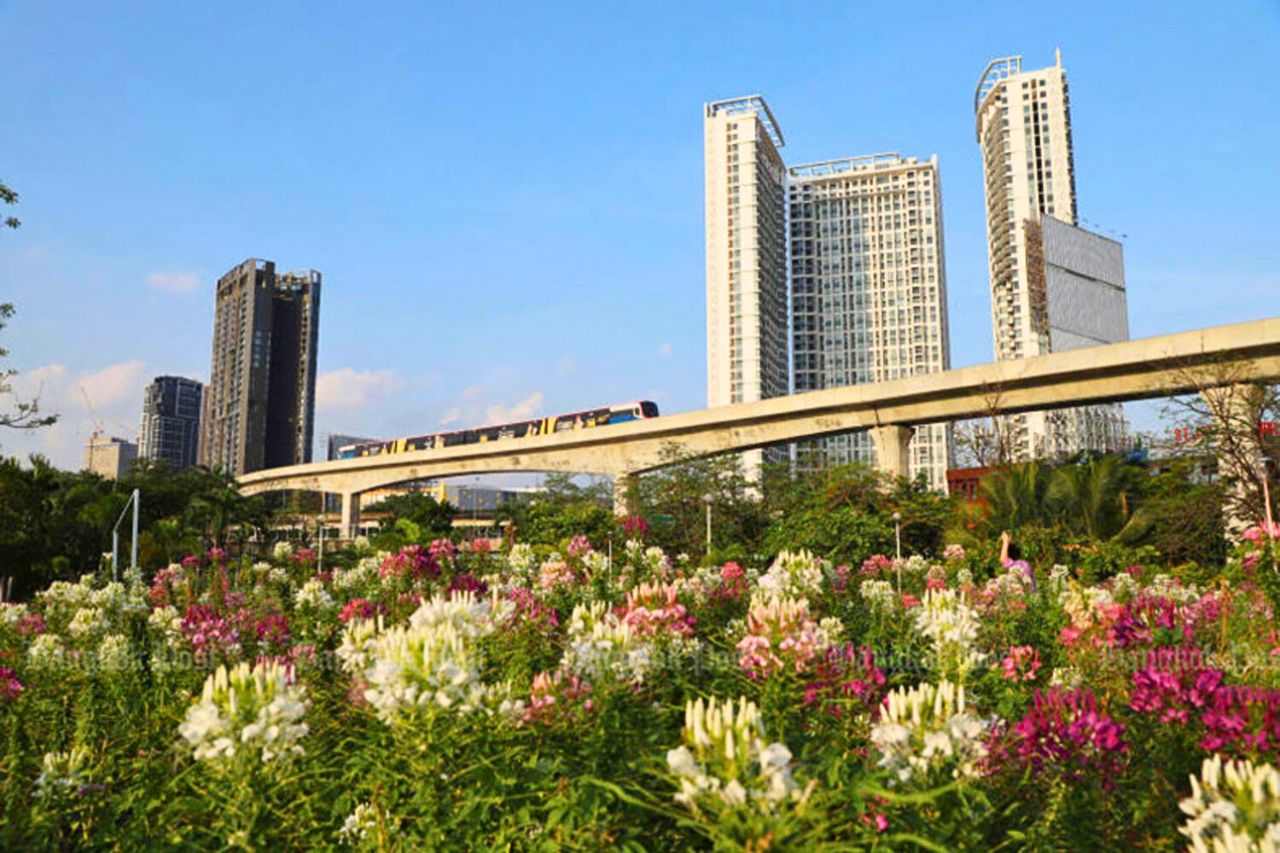
Condominiums rise above Chatuchak Park in Bangkok. Photo: Pattarapong Chatpattarasill
Given the NESDC's recommendations for spending restraint, the property market is expected to be affected by the economic slowdown, as buying a home involves significant investment and long-term debt.
Kessara Thanyalakpark, CEO of Sena Development, a company listed on the Thai Stock Exchange (SET), said real estate buyers are driven by real demand, whether they are young professionals just starting out or families looking to settle down.
"Buying a home, one of the four basic needs of life, is particularly sensitive to economic concerns and rising household debt," she said.
"When consumer morale is low, people don't want to buy anything, including homes.".
Few are willing to go into debt for 30 years in a period like this
Ms. Kessara said that the residential market is expected to contract this year, in line with the economic slowdown.
In the first quarter of 2025, before the earthquake and the NESDC warning, the average mortgage rejection rate by banks had risen to more than 50%.
"The NESDC's warning about consumer spending reflects reality," she said.
"The real estate market has been affected by the tightening of mortgage lending criteria by banks."
One of the factors behind the recent increase in mortgage rejections is that some banks have stopped taking into account overtime when calculating borrowers' income.
This reflects growing concerns about economic uncertainty.
In this context, it is difficult to increase housing sales, which encourages many developers to diversify into non-residential sectors, particularly industrial real estate, which has seen steady growth in recent years.
Although the Bank of Thailand has relaxed the loan-to-value ratio limits and the government has extended the reduction in transfer and mortgage fees until June 30, 2026, the impact has been minimal, said Ms. Kessara.
See also: Imminent crisis in Thailand: the real estate market is shaky
Automobile: sales are slipping, caution is taking the wheel
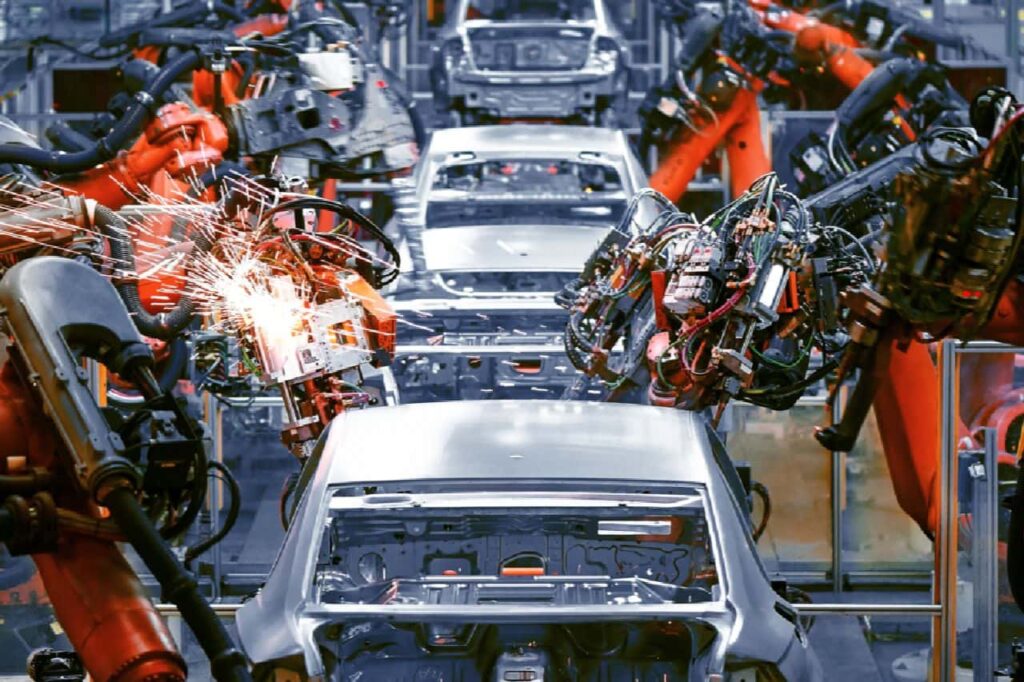
Car assembly plant. Photo: Exim
Martin Schwenk, CEO of Mercedes-Benz (Thailand), said:
“In the automotive sector, potential buyers should think more carefully before buying, given the growing concerns about the volatility of the economy.
Domestic vehicle sales remained sluggish in the second quarter, with consumers becoming more cautious due to global economic uncertainty caused by US President Donald Trump's reciprocal tariff policy.
The Thai economy will not be able to escape the impact of tariffs, which is expected to be felt more in the second half.
The slowdown is expected to worsen the sluggishness of car sales in Thailand, with buyers having more difficulty obtaining car loans due to the high level of household debt.
I think the Thai auto market will contract further during the year, as I see no positive signs ».
Sales of passenger cars and pickup trucks are most likely to be hit hard.
“Even luxury cars will not be able to escape the impact, although it will be limited because people are more cautious in their spending,” he said.
From January to April, domestic sales fell by 4.8% year-on-year to 200,386 vehicles, mainly due to the strict credit criteria of banks and automotive financing companies, according to the Federation of Thai Industries.
Sales of passenger cars and pure pick-up trucks in the internal combustion engine category decreased by 13.8% to 48,784 units and 15.4% to 51,319 units, respectively, over the four-month period.
Credit under strain: bank loans contract
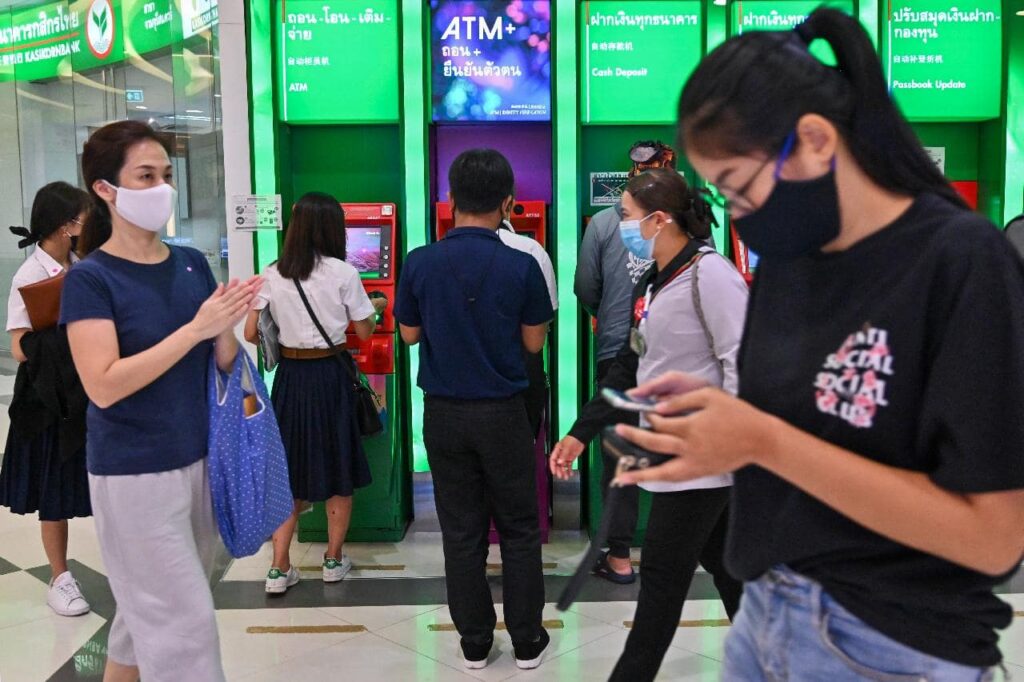
Passersby in front of ATMs in a shopping center in Thailand. Photo: Thai PBS World
Kanjana Chockpisansin, head of banking and financial research at Kasikorn Research Center (K-Research), said she expects more significant challenges for the banking sector over the rest of the year.
Mainly due to uncertainty surrounding US tariff hikes, a factor that could curb both private investment and consumer spending.
The slowdown in Thai economic growth and persistent household debt are expected to reduce consumer purchasing power and weaken the repayment capacity of individual borrowers, particularly among vulnerable segments.
Given these factors, K-Research expects loan growth in the banking sector to be 0.6% year-on-year in 2025.
Loans to individuals are expected to decline by 1% this year, mainly due to a sharp 7.5% drop in auto loans.
Mortgage loans are expected to see marginal growth of 0.5%, while unsecured loans could rise by 1.3%, the research firm noted.
As the world waits for news on the 90-day suspension of US tariff hikes, these loan growth forecasts could be revised downward, said Ms. Kanjana.
At the same time, the net interest margin of the banking sector is expected to decline to 2.83% in the second quarter of this year, down from 2.92% in the previous quarter, in line with the decline in the Bank of Thailand's policy rates.
The central bank stated that the overall growth of bank loans contracted by 1.3% year-on-year in the first quarter of this year.
This trend is expected to continue in the second quarter amid persistent economic uncertainty.
The growth of loans to individuals increased by only 0.2% year-on-year in the first quarter, while auto loans fell by 10.2%.
The slowdown in loan growth has contributed to the decline in the household debt-to-GDP ratio, which fell to 88.4% in the fourth quarter of 2024, compared to 88.9%, 89.7% and 90.7% in the previous three quarters.
Fuels: demand is declining in the face of economic gloom
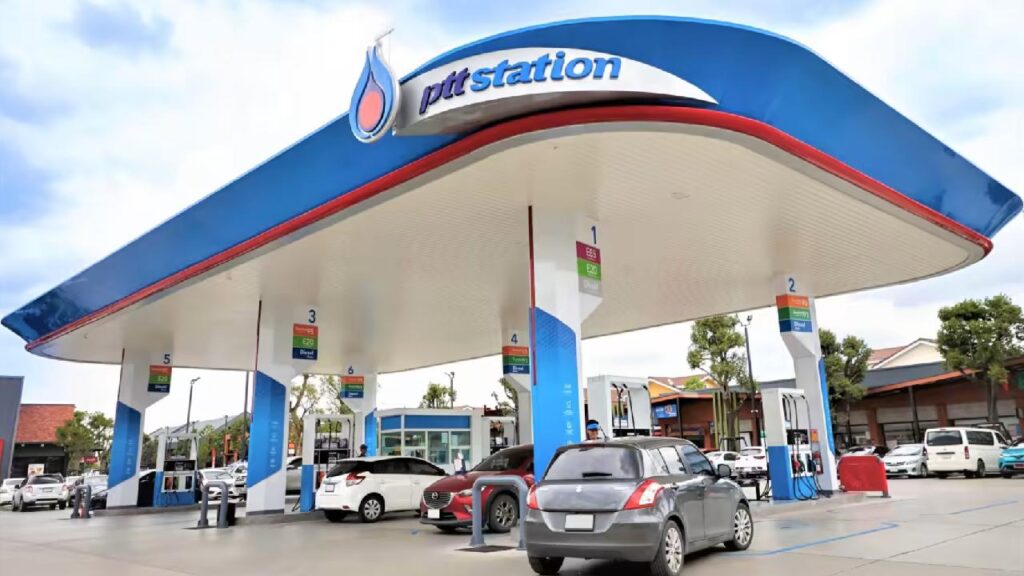
PTT service station in Thailand.
PTT Oil and Retail Plc (OR) is preparing for the impact of slow growth and trade war on its fuel business.
This could result in a loss of oil inventories this year, said Pitirat Rattanachote, head of investor relations.
The slowdown in the economy is generally a key indicator of fuel consumption in Thailand.
Weak economic expansion leads to a decline in demand for diesel, gasoline and gasohol, a mixture of gasoline and ethanol.
According to her, US tariff threats and global economic uncertainty are clouding prospects, and many countries, including Thailand, are expected to be affected by the negative impact on their economy and the subsequent decline in global crude oil prices.
While Thai GDP growth stood at 3.1% in the first quarter, consumption of diesel, gasoline and gasohol declined, even though demand for all types of fuel in the country rose 1.3% over the period, according to the Energy Department.
Ms. Pitirat said OR was adopting various approaches to cope with the economic downturn and falling crude oil prices, such as reducing operating costs, better managing oil inventories and hedging oil prices.
These measures are expected to help avoid massive losses on oil inventories, she said.
The company estimates that global crude oil prices will be between $50 and $70 per barrel this year.
In the field of aviation fuel, Ms. Pitirat said that sales will remain strong this year despite a decline in the number of Chinese visitors, which is expected to be offset by an increase in the number of visitors from the Middle East and India.
Electronics: a still solid market despite the gloom

Thai woman checking her smartphone. Photo: Bangkok Post
Somchai Sittichaisrichart, Managing Director of SiS Distribution (Thailand), stated that the computer products market remained strong in the second quarter, with the impact of US tariffs expected to be felt in Thailand in the third quarter.
While low-end smartphone sales have slowed, high-end smartphones have suffered less from the economic downturn, he added.
Food consumption: customers desert the stalls
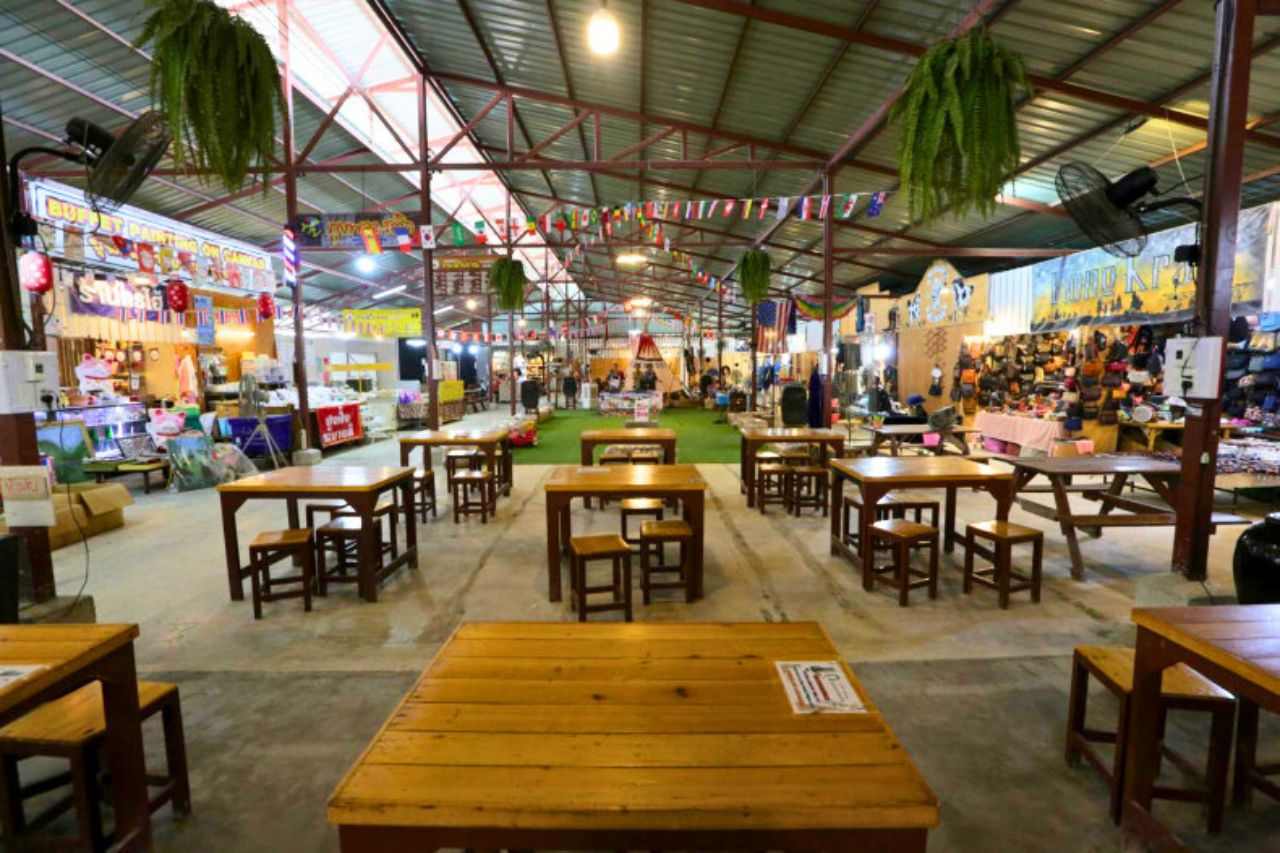
Shops and food stalls are empty in a dining area of Khlong Lat Mayom floating market, in Taling Chan district, Bangkok. Photo: Chanat Katanyu/Bangkok Post
Worawat Phothakanapong, Managing Director of Kamol Pork, which operates retail pork shops, a farm, and a slaughterhouse, has seen a decline in consumer purchasing power since the start of the year.
He stated that orders have decreased and the turnover per invoice has dropped in all stores.
Kamol Pork operates 14 retail stores in Bangkok, Nonthaburi, and Samut Prakan, down from 18 in 2024, with several underperforming outlets having closed.
Sales per transaction have dropped by around 50% compared to last year, although Mr. Worawat did not disclose exact figures.
The main customer segments are people with medium to low incomes and buffet restaurant operators, especially those that serve Thai-style barbecue pork, known as "moo krata".
This year, the company has lost around 50% of its regular customers who operate buffets, and around 40% of these businesses have closed down, he said.
The remaining customers have changed their purchasing habits, preferring not to stock up on raw materials such as marinated pork as they did before, said Mr. Worawat.
"Previously, they would place a new order when their stocks were low, but now they wait until they are completely out," he explained.
Individual customers are increasingly turning to ready-to-cook products, such as marinated pork, rather than fresh pork, whose price has increased, said Mr. Worawat.
See: Thailand: crisis in the restaurant industry due to a 40% drop in purchasing power
Back to school: families limit spending on uniforms
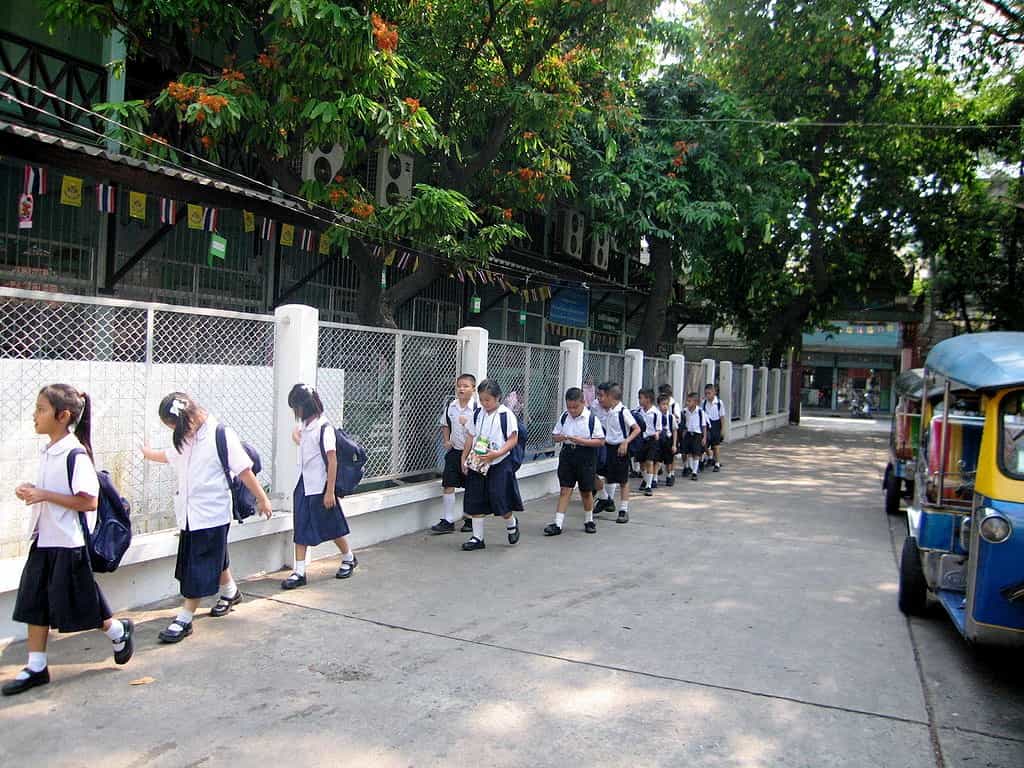
Schoolchildren in Thailand.
Arnon Chitmeesilp, Managing Director of Nomjitt Manufacturing Co, a Thai manufacturer of school uniforms, said the country's economy was sluggish this year.
“This has led to a decline in consumer confidence,” he said.
“Consumers may lack confidence in the way the government is tackling economic gloom, to which is added global economic uncertainty.”.
Even those with purchasing power may be reluctant to spend at the moment.
For those who are experiencing financial difficulties, the situation could worsen. ”
With the school year starting in mid-May, Mr. Arnon said that some parents were spending less on school uniforms.
Some parents may choose to extend the use of their children's current uniforms, he added.
Others may postpone buying uniforms until after the start of the school year, as it entails many expenses, such as tuition fees and textbooks, Mr. Arnon explained.
In the past, parents always bought uniforms before the start of the semester.
They generally buy two uniforms per child per year, because they still have those from the previous year, he specified.
Some parents who buy four to five uniforms per child at the start of the school year may only buy three this year, said Mr. Arnon.
Only high-income customers will not be affected by the economic slowdown, as sales in this segment remain stable, he added.
A small number of customers may opt for cheaper school uniforms offered by competitors, said Mr. Arnon.
The prices of uniforms from market leaders tend to be slightly higher, but they are of better quality due to economies of scale, he added.
Beauty: a sector that resists the crisis

Beauty products store in Thailand. Photo: The Nation Thailand
While many sectors are declining, the beauty industry in Thailand is expected to continue its growth, according to retailer Eveandboy Co.
Hiran Tanmit, CEO of Eveandboy, said that the local beauty sector relied more on emotional influences and lifestyle than on the economic situation.
“This has prompted brands to develop unique identities in order to better capture and retain consumers,” he said.
See also:
Thai exports rise for tenth consecutive month
The sharp rise in the baht threatens the Thai economy
Economic uncertainty: Thailand abandons 10,000 baht aid plan
Economy in difficulty: Thailand prepares an emergency stimulus plan
Credit crisis: the Bank of Thailand sounds the alarm
Towards a major financial crisis in Thailand?
Source : Bangkok Post
Do you like Toutelathailande.fr?
👉 Leave us a review on Trustpilot.
Your review strengthens the credibility of our work and the trust of our readers.
Useful links to prepare your trip to Thailand
Book bus, train and boat in Thailand
Manage your money while traveling with Wise
If our news, tourist information, or cultural content has been useful to you and you'd like to thank us:
You can follow us on:
Twitter, LinkedIn, Facebook,Google News
Or install our application: Install the application of All Thailand on your smartphone
