Thailand is turning the page on low-cost tourism, the Tourism Authority (TAT) now wants to attract travelers with high purchasing power.
According to the TAT, Thailand will no longer promote cheap tourist packages to compete with neighboring countries, but will instead focus on high-potential segments such as health and wellness, luxury travel and sustainable tourism.
From mass tourism to wealthy tourists
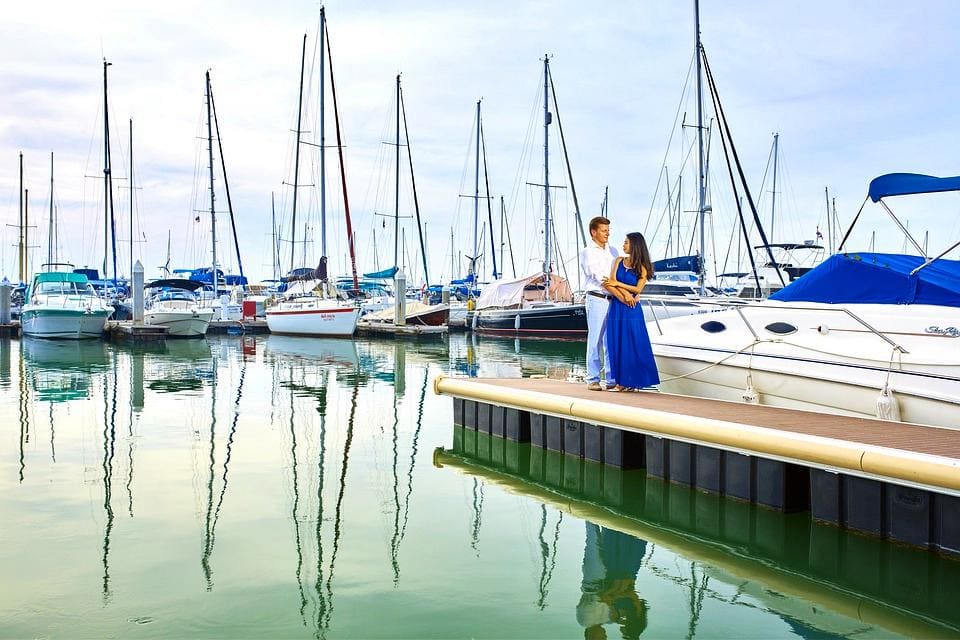
The Ocean Marina Yacht Club in Pattaya.
This strategic reorientation was detailed by Nat Kruthasoot, Deputy Governor of the TAT in charge of tourism products and activities:
“The agency acknowledges that emerging destinations such as Vietnam are gaining market share from Thailand, particularly among travelers seeking affordable prices.
The development of tourism products will now focus on attracting high-value visitors and tourism experiences, rather than relying on volume as in the past.”
See: Tourism, economy: Vietnam on track to overtake Thailand
Products will have to meet sustainability standards, which European markets will adopt when partnering with operators in tourist destinations, such as the Global Sustainable Tourism Council standard.
Only 20% of private operators are enthusiastic about these standards, as compliance requires more significant investments than usual, said Mr. Nat.
See also: Sustainable tourism: why Thailand is ahead of its neighbors
Thailand is banking on health tourism revenue
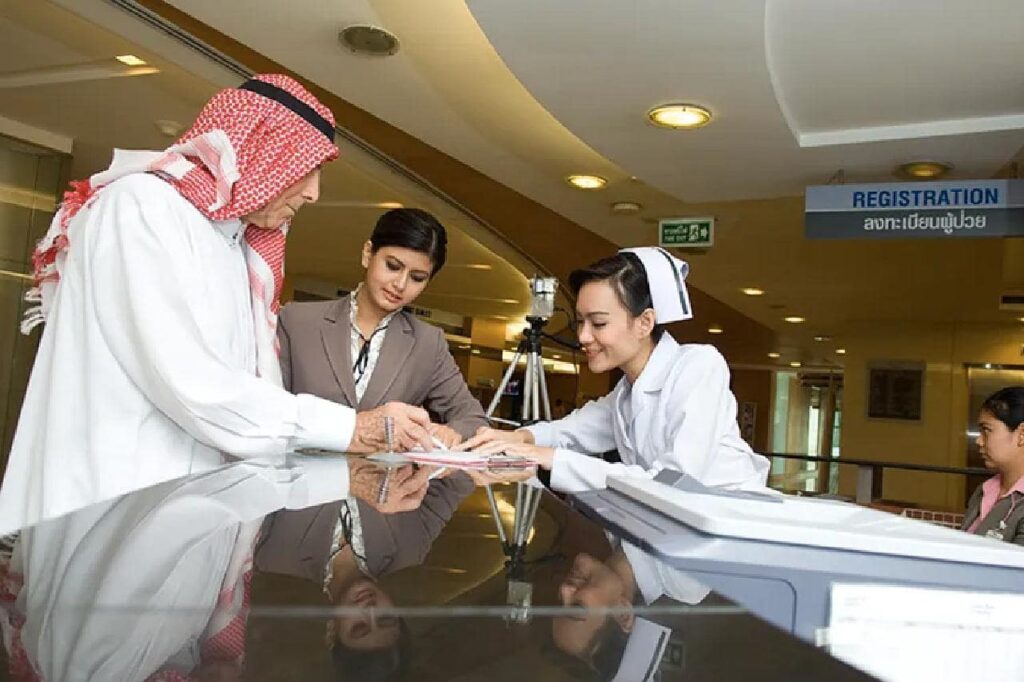
Middle Eastern tourists in a hospital in Thailand. Photo: TAT News
The TAT expects health tourism revenue to reach 124 billion baht this year, after reporting more than 62 billion baht in the first half.
Mr. Nat said this segment had the potential to grow to 140-150 billion baht in a few years, a level comparable to that of 2019.
He explained that the average expenditure in this sector reaches 107,662 baht (2,815 euros), 103% more than the average of other visitors, while the average length of stay is 13 nights.
The market boom is largely due to establishments meeting international standards, particularly the 61 hospitals accredited by the Joint Commission International (JCI) and over 500 medical clinics that can accommodate tourists.
Hospitals accredited by the JCI are not only located in Bangkok, but also in major tourist provinces and border provinces, as well as in hotels and resorts that focus more on health and wellness services.
One of Thailand's strengths remains its costs 30 to 70% lower than those of Western countries, and 30 to 50% lower than those of Singapore.
“We have private hospitals and fairly solid hotels that are capable of developing this segment, particularly from the Middle East.
Our challenge remains knowing how to meet expectations, particularly in terms of quality and overall experience during their stay,” said Mr. Nat.
However, the expectations of these wealthy visitors are not always met.
Wealthy tourists disappointed by the cleanliness and maintenance of attractions
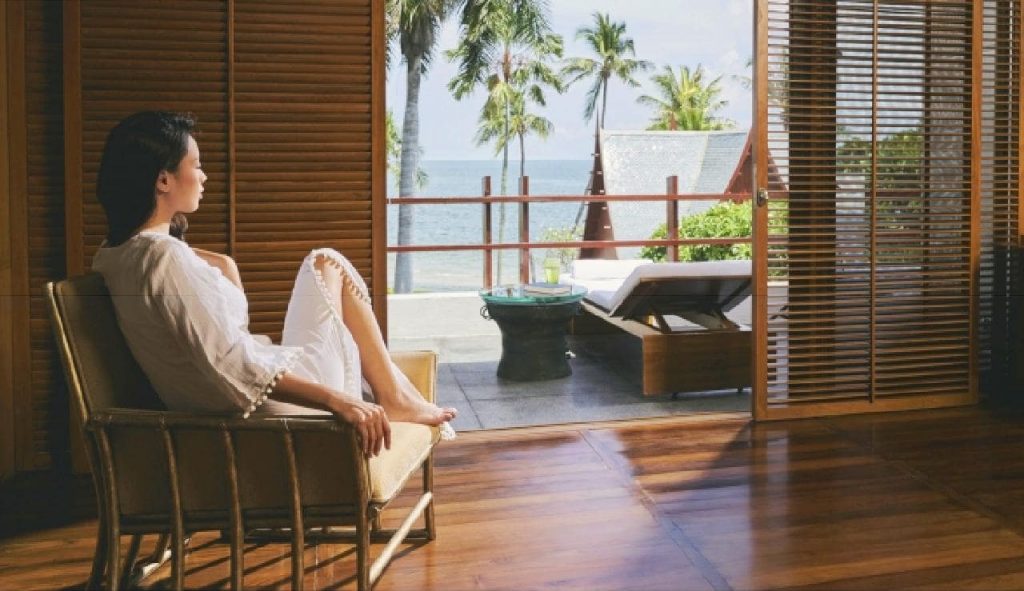
Chiva-Som Wellness Center in Hua Hin. Photo: Chiva-Som
According to a 2024 luxury market study, most tourists in this segment in Thailand were not satisfied with the cleanliness and maintenance of tourist attractions, the hygiene of shops and restaurants, and language skills.
Mr. Nat said that Thai tourism should grow next year in order to conquer the luxury market, by seeking partnerships with service providers that offer unique experiences and transportation.
The TAT office in Prague launched a one-day classic car tour in Bangkok this year, which costs between 100,000 and 150,000 baht (2,615 to 3,923 euros) per person, and the agency promotes this product and similar packages in other markets, particularly in China.
Thailand has also launched two luxury trains: the Blue Jasmine, a retro sleeper train connecting Bangkok to Chiang Mai in nine days with cultural and hotel stops, and the Royal Blossom, designed for shorter weekend excursions.
The Blue Jasmine, a restored 1960s Japanese train, offers cabins starting at 195,000 bahts (5,100 euros) per person, while one-day trips on the Royal Blossom or Kiha-183 start at 1,599 bahts (41.82 euros).
These initiatives confirm the country's willingness to reposition its tourism offer towards the high-end segment.
Sports tourism, a new asset for Thailand

The Laguna Phuket Marathon.
Mr. Nat stated that sports tourism relies on events that can persuade travelers to spend more time in Thailand.
The agency plans to promote the country as a destination for trail running, as athletes typically spend 14 days training before the event, unlike marathon runners who sometimes stay only a few days.
- The TAT is ending the promotion of cheap packages to target premium segments.
- Health tourism is expected to generate more than 120 billion bahts in 2025.
- Wealthy tourists expect more cleanliness, quality, and exclusive experiences.
See also:
Thailand's bet: saving tourism thanks to Lisa from Blackpink
Thailand faces a dilemma: gold makes the baht soar, tourism takes a hit
Strong recovery of tourism in Thailand: 100,000 arrivals per day
Tourism in Thailand continues to decline: -7.5% foreign visitors
Thailand's new plan for tourism and economic recovery
Source: Bangkok Post
Prepare your trip to Thailand
Book bus, train, or boat in Thailand
Manage your money while traveling with Wise
If our news, tourist information, or cultural content has been useful to you and you'd like to thank us:
You can follow us on:
Twitter, LinkedIn, Facebook, Google News
Or install our app:
Install the Toute la Thaïlande app on your smartphone
⚠️ Cryptocurrencies involve risks: Invest only what you are willing to lose.

6 comments
This is an annual article.
But we've never been closer to Christmas!!!
First, the TAT should multiply high-end tourist reception centers…
Whoever says wealthy tourists necessarily means accompaniment from the time they exit the plane until their return to the status of these very demanding tourists, and Thailand, apart from a minority of internationally-rated hotels and luxury villas with services that meet the expectations of these wealthy individuals, does not have the infrastructure or trained personnel to compete with recognized destinations like Monaco, Singapore, Dubai, Abu Dhabi, or other places.
Even the Thai staff at 5-star hotels in Bangkok, Phuket, Koh Samui, and other similar locations (often trained by high-end qualified personnel recruited abroad, particularly in France) cannot compete with their European, Parisian, or Monegasque counterparts, including luxury hotels.
There is, therefore, a real challenge for T.A.T if it wants to give Thailand a status identical to destinations frequented for decades by the world's largest fortunes.
Even if Brad Pitt, Tom Cruise, and a few other showbiz personalities or international athletes passing through Thailand for professional or private reasons made the front page of the press and social media during their (brief) stay in the country, it did not bring a tidal wave of their counterparts with unlimited bank accounts.
And after sometimes more than 10 to 15 years of existence on the market, the different types of "Elite" visas, and other "Vip Advantages" have never allowed international tourism figures to reach new heights thanks to their success with this clientele, which ultimately remained mixed by these various conditional offers, sometimes considered uninteresting compared to other more appealing destinations…
Wanting the butter, the money from the butter and the "super beautiful pot" of the dairymaid, Thailand has so far only harvested a few maroilles for sniffly amateurs…
The Kingdom is far from having harvested the large, soft and fragrant wheels of Beaufort or Comté in view of the repeated efforts to attract the world's elite big spenders on the planet…
Mass tourism remains to this day the only tourist source that keeps Thailand above the waterline…
VIP tourism, in all its forms (and considering that the reception and stay conditions follow to replace mass tourism, which is not won), remains to this day a value added of a few %, which is added to the guaranteed income of this mass tourism that has been going on for more than 60 years…
For me, another gesture from the TAT to recall the good memories of well-filled bank accounts, which again resembles another attempt to bring the unimpressive tourism statistics of 2025 back to the level of 2019.
At this point, it's 12:30 pm, I'm going to enjoy a "Kao Soy kai" for 80 bahts at my usual Thai restaurant, by a small pond in Koï, in the shade of banana trees!!!
Unfortunately, it won't work.
The country essentially lives on mass tourism.
With this change, it will cause unemployment to skyrocket and poverty to worsen.
Moreover, what will become of the hundreds of thousands of existing businesses?
It's like a sea serpent, it comes up regularly.
On the other hand, there's reality, like the increase in the reception capacity of Bangkok's airport.
So, we're not close to seeing Thailand become the Bahamas.
There's the price of tickets, but also and especially taxes (Chirac, airport security and many others, sometimes up to 25% of the ticket price).
Le Cornu plans to create 1 new tax on pollution and maybe others.
Thailand has been dreamed of for nearly 50 years, but it's not with street food and its chicken or pork skewers for 10 bahts, its night bazaars filled with plastic items made in China, its markets teeming with poor-quality Chinese copies of luxury brands or the absence of casinos that Thailand will attract high-spending tourism.
For 50 years, it has only attracted backpackers or the middle class.