Formerly a symbol of Asian dynamism, Thailand is now facing a deep economic crisis.
Record household debt, declining industry, tourism downturn, and prolonged political instability have weakened a once-exemplary model.
Thailand's era as a high-growth 'economic tiger' has come to an abrupt end.
Once envied by its neighbors, the country is increasingly referred to as “Asia's sick man”, as reported by a recent article in the Financial Times.
See: A bank compares Thailand's economy to Asia's sick man
The nation is today facing severe economic paralysis in its three main pillars: consumption, manufacturing industry, and tourism.
A decade of decline
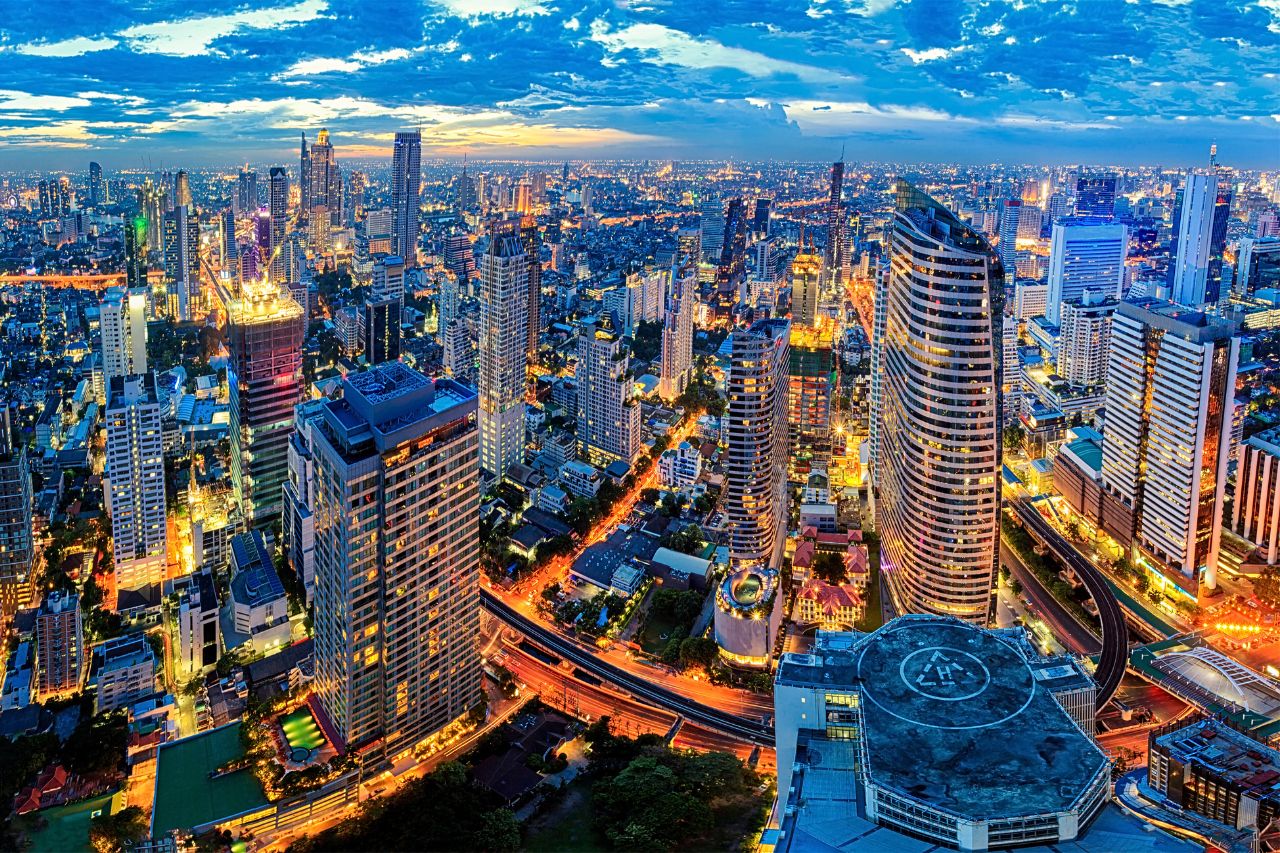
View of Bangkok.
The transition from a regional power to a stagnant economy has occurred at an alarming rate.
According to Burin Adulwattana, chief economist at the Kasikorn Research Centre, this change has occurred in just a decade.
After reaching a growth peak of 13% in 1988, the Thai economy remained stuck at a meager growth rate of 2% over the past five years.
Several structural brakes are hindering the country's growth:
Demographic collapse
The Thai population has declined for four consecutive years, with the birth rate reaching its lowest level in 75 years in 2025.
Indebtedness
Household debt is now approaching 90% of GDP, the highest ratio in Asia, which is curbing domestic spending.
Loss of competitive advantage
Thailand is rapidly losing its competitive advantage to more agile regional rivals.
The decline of the automotive industry
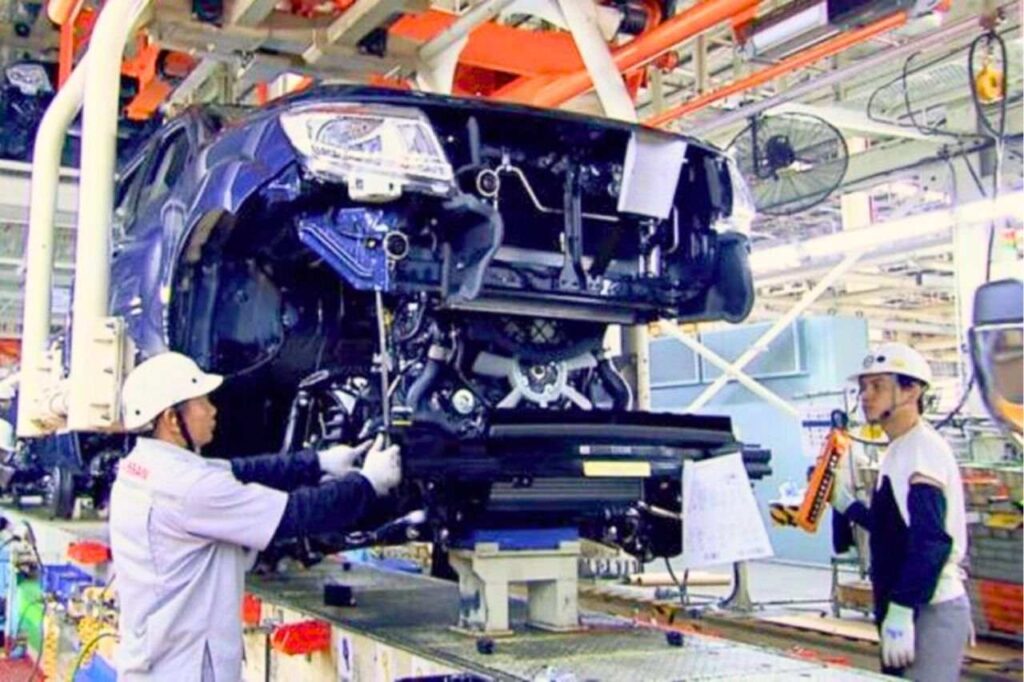
Employees on a Nissan assembly line. Photo: Nissan.
The manufacturing sector, long the engine of the Thai economy, is under siege from an influx of cheap Chinese products and fierce competition from Vietnam.
The automotive industry, once the crown jewel of the economy, is in sharp decline.
See: Thailand: automobile exports drop by 12%
Heavyweights such as Nissan, Honda, and Suzuki have responded to this slowdown by closing factories or significantly reducing their production capacity.
See: 1,000 Nissan Thailand employees to be laid off or relocated
Financial markets have reflected this grim reality: in 2025, the Thai stock market was Asia's worst performer, losing 10% of its value in local currency.
See: The Thai stock market ends its third consecutive year in the red
Tourism losing momentum and political inertia

Tourists on a beach in Mu Ko Similan National Park, in Phang Nga Province. Photo: Karnjana Karnjanatawe
Even the tourism sector, traditionally a resilient growth driver, is losing momentum.
Foreign arrivals for 2025 fell to 32.9 million, a 7% drop from the previous year, due to safety concerns and the growing appeal of Japan and Vietnam.
See: Thailand: what the 2025 tourism figures reveal
Dr Pipat Luengnaruemitchai, Chief Economist at Kiatnakin Phatra Financial Group, warns that the crisis is not just a temporary slowdown in demand.
"We don't have new growth drivers," he stressed, specifying that the problems are deeply structural and exacerbated by a fragile political landscape.
The constant changes at the head of the country have delayed the allocation of essential budgets and blocked vital infrastructure projects, leaving the country without a clear recovery prospect.
See also:
Economy: Thailand stagnates while Vietnam progresses
Thailand's economy "on the brink"
Thailand's new plan for tourism and economic recovery
Source: The Nation Thailand
Do you like Toutelathailande.fr?
👉 Leave us a review on Trustpilot.
Your review strengthens the credibility of our work and the trust of our readers.
Useful links to prepare your trip to Thailand
Book bus, train and boat in Thailand
Manage your money while traveling with Wise
If our news, tourist information, or cultural content has been useful to you and you'd like to thank us:
You can follow us on:
Twitter, LinkedIn, Facebook,Google News
Or install our application: Install the application of All Thailand on your smartphone
