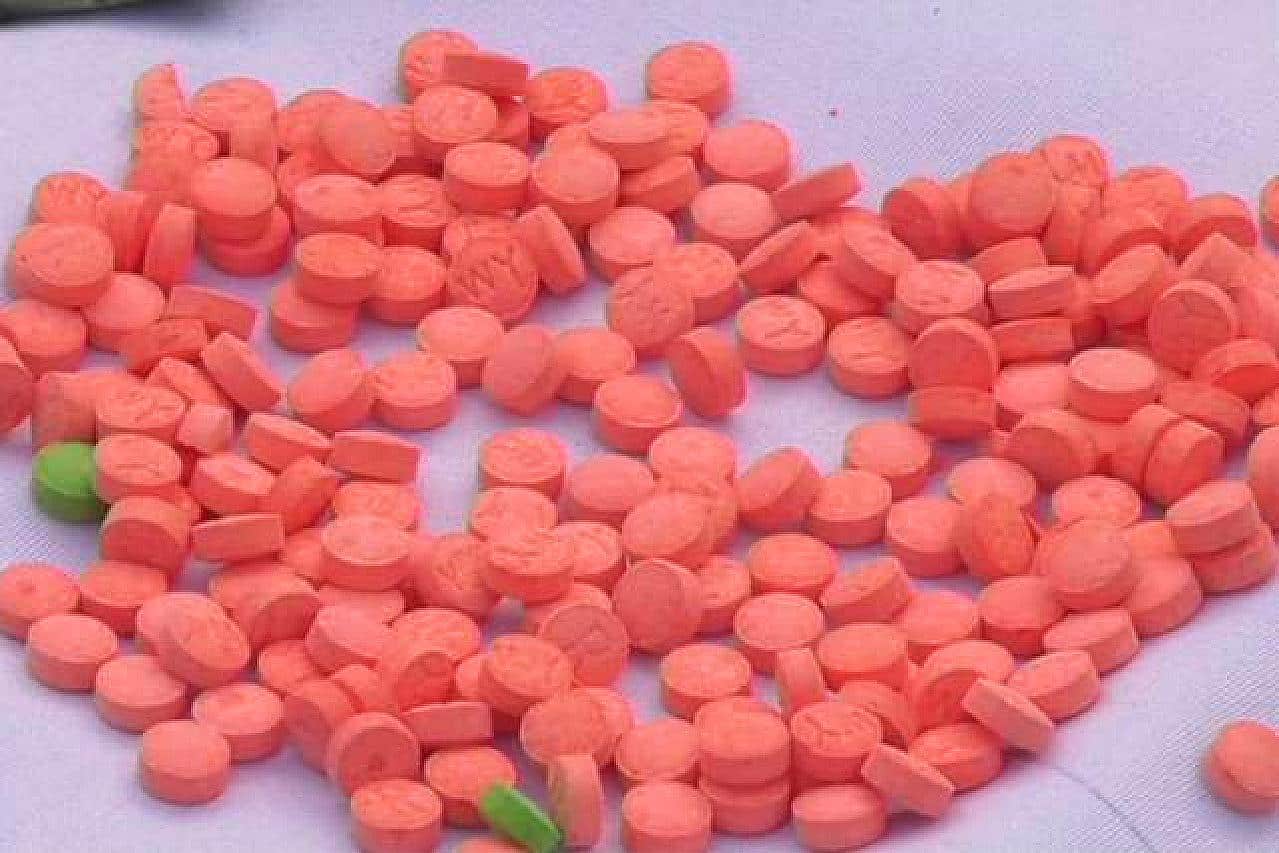
The consumption of Yaba, a popular methamphetamine in Thailand, is on the rise due to falling prices and an increase in production.
According to a new study, methamphetamine use rose 30% last year in Thailand, as production of the illicit drug surged in neighboring Myanmar, flooding the region with an ever-cheaper supply.
To address the rise, the Thai Ministry of Public Health is pushing for new strict rules under which anyone caught with more than one methamphetamine pill could be prosecuted as a drug trafficker.
But according to academics and social workers, this would do nothing and could even exacerbate the problem.
According to a national survey on drug use conducted by Chulalongkorn University in Thailand, an estimated 57,900 Thais aged 18 to 65 have used methamphetamine at least once last year, up from 44,500 the previous year.
Rasmon Kalayasiri, head of the university's Drug Dependence Research Center, said these figures are likely underestimates, as many people are reluctant to admit to using an illegal drug, even if the study preserves their anonymity.
Previous surveys conducted by the government's Narcotics Control Board, which cover a larger number of people, have estimated the number of methamphetamine users to be several hundred thousand in recent years.
According to Mr. Rasmon, the results of the next ONCB survey, which is usually conducted every three to five years, will give a more definitive picture of the latest trends.
But the university study itself, she added, still suggests that methamphetamine use could be on the rise.
The Thai Raks Thai Foundation, which provides harm reduction and needle exchange services to drug addicts across the country, has also noticed this trend.
Nantapol Chuenchooklin, the association's technical head, said Raks Thai had anecdotally seen an increase in methamphetamine use over the past two years, just as street prices of the drug have plummeted.
“Consumption has increased by 30 to 40% since the price of drugs has dropped significantly,” he said.
Easy-to-obtain drug
According to Mr. Nantapol, a methamphetamine tablet, commonly called yaba, which means “crazy medicine” in Thai, now costs only 81 cents, or even 54 cents in northern Thailand, near the border with Myanmar.
This represents only a quarter of what it cost a few years ago.
According to him, the prices of crystal methamphetamine, more powerful and addictive, have also fallen during the same period, from 49 to 54.7 euros previously to 13 to 27 euros today, depending on purity.
According to Mr. Rasmon, this has made drugs easier to obtain.
“People can access it very easily because the cost is very low, so the availability is greater,” she said.
Apinun Aramrattana, who heads the Northern Drug Dependence Treatment Centre at Chiang Mai University in Thailand, said that the social and health workers his team works with also report that the price of yaba is less than 1 euro in some parts of the country:
“Some have said it was easier than finding a cigarette,” he added.
The price drop coincides with an increase in methamphetamine seizures across East and Southeast Asia, most of which are manufactured in Myanmar, where a 2021 coup plunged much of the country into chaos, and are smuggled into or via Thailand.
According to the United Nations Office on Drugs and Crime (UNODC), regional authorities seized a record 171.5 tonnes of methamphetamine in 2021.
Judging by the drop in prices in Thailand and elsewhere, the UNODC believes this indicates an increase in production by drug trafficking gangs in Myanmar.
The figures
Thailand has responded by stepping up patrols along its northern borders with Myanmar and Laos, which drug traffickers also use to transport their methamphetamine abroad.
To address what he described as a loophole in Thai drug laws, exploited by local traffickers, Public Health Minister Anutin Charnvirakul also announced late last month that he planned to amend government regulations so that anyone caught with more than one yaba tablet could be considered a distributor.
See: An anti-drug campaign in Thailand risks destroying many lives
Currently, anyone found in possession of 15 tablets or less can be treated as a user and avoid prison by consenting to treatment.
Resellers, on the other hand, face prison sentences of up to 15 years, and 20 years if they sell to minors.
Anutin's hard line follows an appeal by Prime Minister Prayut Chan-ocha for a crackdown on narcotics after a former police officer fired for drug use went on a murderous rampage last October, killing 37 people, including 24 children.
See: A former policeman shot 37 people, including 23 children, at a nursery in Thailand
At the beginning of the month, Mr. Anutin told journalists that stricter rules were still needed "to address social problems definitively and effectively and to curb the spread of yaba pills".
However, the change must be approved by the cabinet before taking effect and, on Wednesday, a government spokesman said that the Ministry of Public Health had not yet submitted its proposal.
Opposition to the proposed change in regulations
A number of local groups are urging the government to reject the idea.
More than 40 of them signed an open letter insisting that it would undermine the intent of a set of reforms to Thai drug laws adopted by the National Assembly in 2021, focusing on prevention and treatment rather than punishment for those caught with small quantities.
"This seems to go against the spirit of the law which advocates treatment and rehabilitation, which is part of what we consider to be an intention not to send people to prison, but to direct them towards health interventions," said Promboon Panitchpakdi, Executive Director of Raks Thai.
He fears that prosecuting drug users as dealers will further scare consumers who do not come forward to seek help voluntarily, making the problem even harder to address.
Critics of the health minister's plan also argue that it will unnecessarily burden Thai prisons, which are already overcrowded.
Part of the government's justification for the 2021 reforms was to reduce the number of prisoners.
According to Mr. Rasmon, locking up more people solely for consuming drugs will expose more non-violent offenders to hardened criminals in prisons, where they are more likely to fall into existing criminal networks.
Lowering the arrest threshold would also give the police, currently shaken by a series of corruption scandals, greater leeway to extort consumers in exchange for their release, said Verapun Ngamee of the Ozone Foundation, another local charity that helps drug addicts.
Apinun also said that Anutin's plan risks flooding the courts with small-scale drug cases, while doing little or nothing to stop the actual flow of drugs, as dealers and their clients adapt to the new rules, as they usually do.
“It will be difficult to see how they will get a positive result overall from this proposal,” he said.
Source: VOA
Notice to Adblock users
Toutelathailande.fr is an independent media outlet financed solely by advertising.
Automatic and intrusive video formats have been removed for several months to improve your reading comfort.
If our articles are useful to you, you can support the site by disabling your blocker for this domain.
Useful links to prepare your trip to Thailand
Book bus, train and boat in Thailand
Manage your money while traveling with Wise
You can follow us on:
Twitter, LinkedIn, Facebook, Google News
Or install our app:
All Thailand Application on your smartphone

1 comment
The road carnage isn't going to get any better!
Already in countries where it's suppressed... It's not sad (recent example...)
Even in the US, you have to see some streets in San Francisco, Philadelphia...
Paris too.