
Thailand is facing a major challenge, as around 24 million citizens are at risk of falling into poverty.
According to the latest report from the National Economic and Social Development Council (NESDC):
Despite significant progress in reducing poverty rates by more than half, Thailand faces a major challenge as around 24 million citizens remain vulnerable to multidimensional poverty.
The comprehensive analysis of social conditions in Thailand reveals that, while the country has made remarkable progress in reducing poverty over the past decade, complex challenges persist beneath the surface of these improving statistics.
The poverty profile shows mixed progress
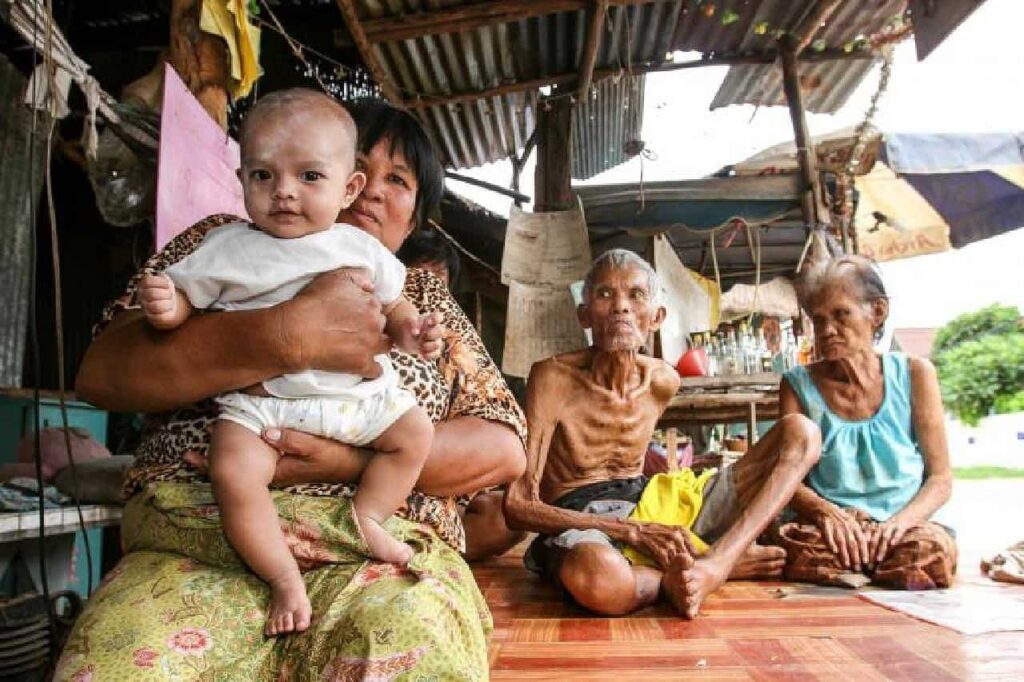
Thai family. Photo: Aphiluck Puangkaew – UNICEF
The 2023 data indicate that Thailand has 6.13 million people in multidimensional poverty, or 8.76% of the total population, a figure that shows that the country has succeeded in halving its multidimensional poverty rate since 2015.
However, a more in-depth examination of the data presents a more nuanced picture.
The NESDC classifies the country's disadvantaged populations into three distinct groups:
- Those who are faced only with financial poverty;
- Those who are faced only with multidimensional poverty;
- Those who are facing both of these challenges simultaneously.
Of the 7.17 million Thais classified as poor in 2023, around 4.78 million face multidimensional poverty without financial difficulties, while 1.04 million experience financial poverty exclusively.
The most concerning are the 1.35 million citizens, representing 18.8% of the total poor population, who are facing both financial difficulties and quality of life issues, making their escape from poverty particularly challenging.
Millions of people on the brink
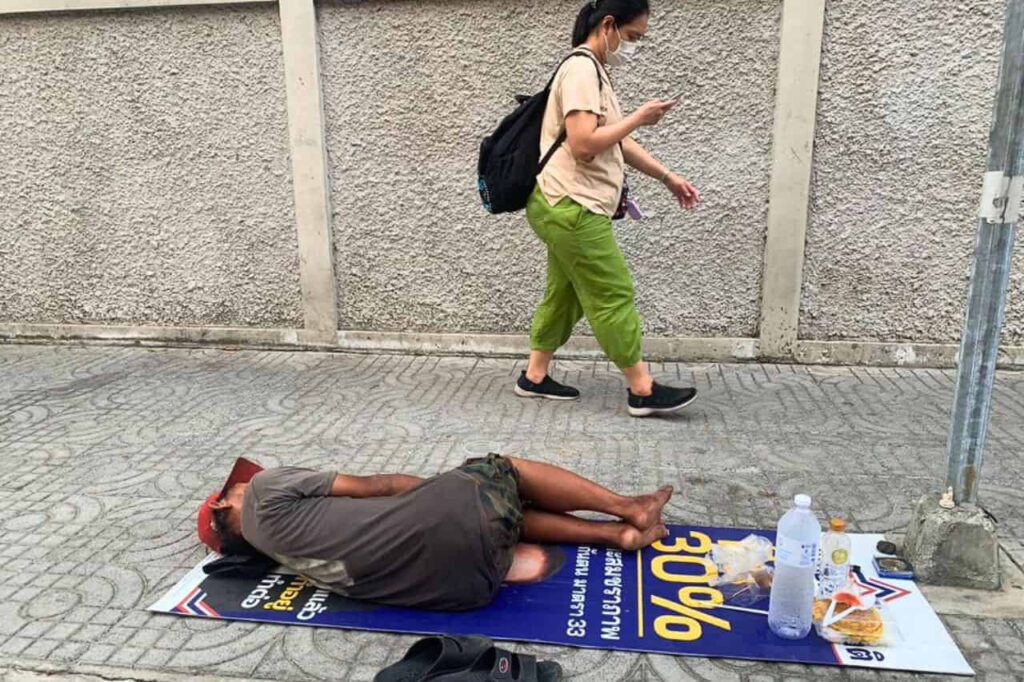
A homeless person uses a poster as a bed on Sukhumvit Road in Bangkok. Photo: Yokin Charoenying
The most alarming thing is perhaps the identification of a large population at risk.
The NESDC report highlights that more than 24 million Thais, or 34.7% of the country's population, are at risk of falling into multidimensional poverty.
The Secretary-General of NESDC, Danucha Pichayanan, explained:
« Most people currently identified as being in a situation of multidimensional poverty are classified as « slightly poor », that is to say they are faced with deprivations in more than one, but less than two of the four dimensions measured.
This suggests that there are significant opportunities to further reduce poverty, but also highlights the precarious situation of millions of other citizens.
The regional analysis reveals that the most vulnerable people are concentrated in the northeastern and central regions.
In these regions, insecurity of retirement, inadequacy of waste disposal systems, and limited ownership of assets appear to be common challenges.
A striking 70.5% of citizens near the poverty line in the northern and northeastern regions do not have retirement security, which is significantly higher than the average of 57.4% observed in other regions of the country.
Financial security: the major challenge
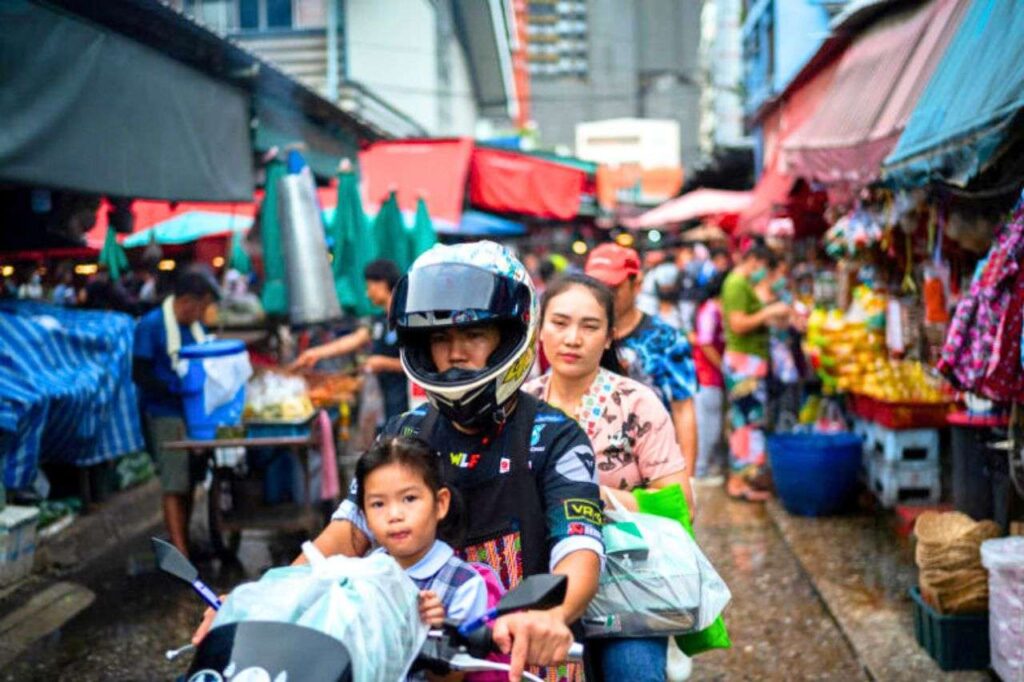
People shop at a market in Bangkok. Photo: Reuters
The NESDC report highlights that financial security has become the predominant factor in multidimensional poverty, particularly in Bangkok, where it is considered the most important factor, followed by living conditions and education.
Despite the government's ongoing efforts to improve financial education and retirement planning, retirement insecurity remains the most significant deprivation factor since 2017, noted Danucha.
In 2023, 7.06% of people in multidimensional poverty did not have retirement coverage.
Current challenges include difficulties in integrating informal workers into formal security systems and responding to changes in the work patterns of younger generations that could leave future workers without adequate retirement arrangements.
The current economic uncertainty, combined with still high levels of household debt, threatens to further increase financial burdens while reducing the savings capacity of vulnerable populations.
Adapted regional approaches are necessary
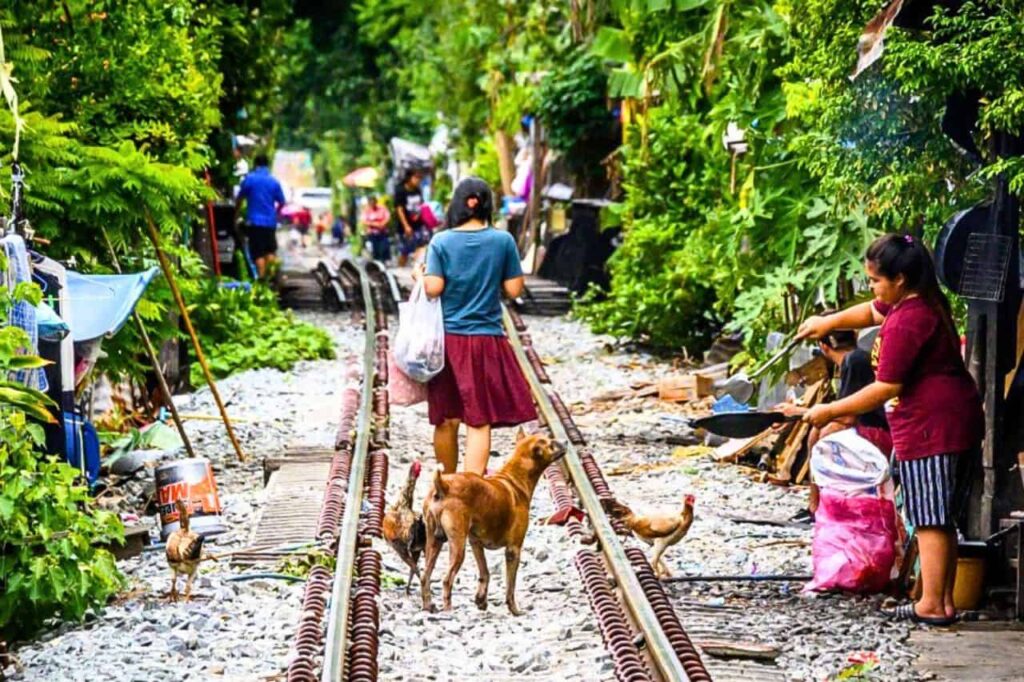
Inhabitants of a slum along the railway tracks in central Bangkok. Photo by Mladen Antonov – AFP
The report highlights that standardized national policies may not be able to address the various challenges faced by different regions.
For example, neighboring provinces often have very different poverty profiles:
The province of Phitsanulok is mainly faced with waste management problems, while the neighboring province of Uttaradit is faced with significant gaps in pension coverage.
« Policy implementation must prioritize the specific challenges of each region », concludes Danucha.
« In addition, isolated interventions may prove ineffective due to the interdependence of poverty factors, such as financial burdens that affect savings capacity, asset ownership and food security. »
See also:
Thailand: one in ten children faces severe food poverty
Thailand wants to reduce poverty through the sufficiency economy
Poverty is declining in Thailand
How poverty has been halved in Thailand
The plan to end the poverty pandemic in Thailand
The Chinese solution to poverty presented as a model for Thailand
Source: The Nation Thailand

6 comments
When we look at it from one side, there is wealth, abundance and wastefulness…
And when we turn around, we see only misery, distress and suffering…
Maybe it's time for Buddha and Karl Marx to come back and explain what society should be…
Education is a means to escape poverty.
Buying a book and acquiring knowledge would help get out of this situation.
I often say around me, learn English, I'll pay for the book…
When it's done, some time later I ask questions.
The book was never opened, but they have a large number of points in their games where they have to move fruits or other things on their smartphone.
24 million Thais are at risk of falling into multidimensional poverty in a country where the king is at the head of a fortune estimated between 30 and 60 billion dollars and a prime minister whose personal fortune amounts to nearly 14 billion bahts.
But well, as De Funès said in the film "The Madness of Greatness": "The Poor, it's made to be very poor and the Rich, very rich", right?
How can one not be moved by this emaciated old man in the photo of this Thai family?
No government, no Thai politician has an interest in seeing the emergence of an emerging middle class, from a generation of young people who have had the opportunity to benefit from complete secondary education until their 18th birthday and beyond for the luckiest and those whose parents have the financial means, to continue towards higher or university education in sociology, economics, education, psychology, law and philosophy, all faculties that would lead to the emergence of a middle class capable of forming a political and social force in expansion, able to form political leaders with socio-humanitarian and economic objectives beneficial to the working masses of this country which represents barely 50% of the total population of the country.
This is in a phase of “demographic ageing”, with 56% of the population having moved into the 55/60 age group and beyond, accentuated by a declining birth rate that continues to grow among the 20 to 35 age group…
But this social context does not exist and is not culturally favored by the 2% of Thais who are in political and economic leadership of the country and who make up the upper bourgeoisie of the Kingdom, guarantor of maintaining the current situation and governing bodies, through an ultra-protected Monarchy (the richest in the world!) by law and lese-majesty decrees and by the Army generals, politically committed and always ready to intervene in case of "slip-up" of a popular counter-power that, since the return of Taksin Shinawatra to Thailand, has strangely entered deep lethargy…
When will we wake up???
Thailand will never be a developed country.