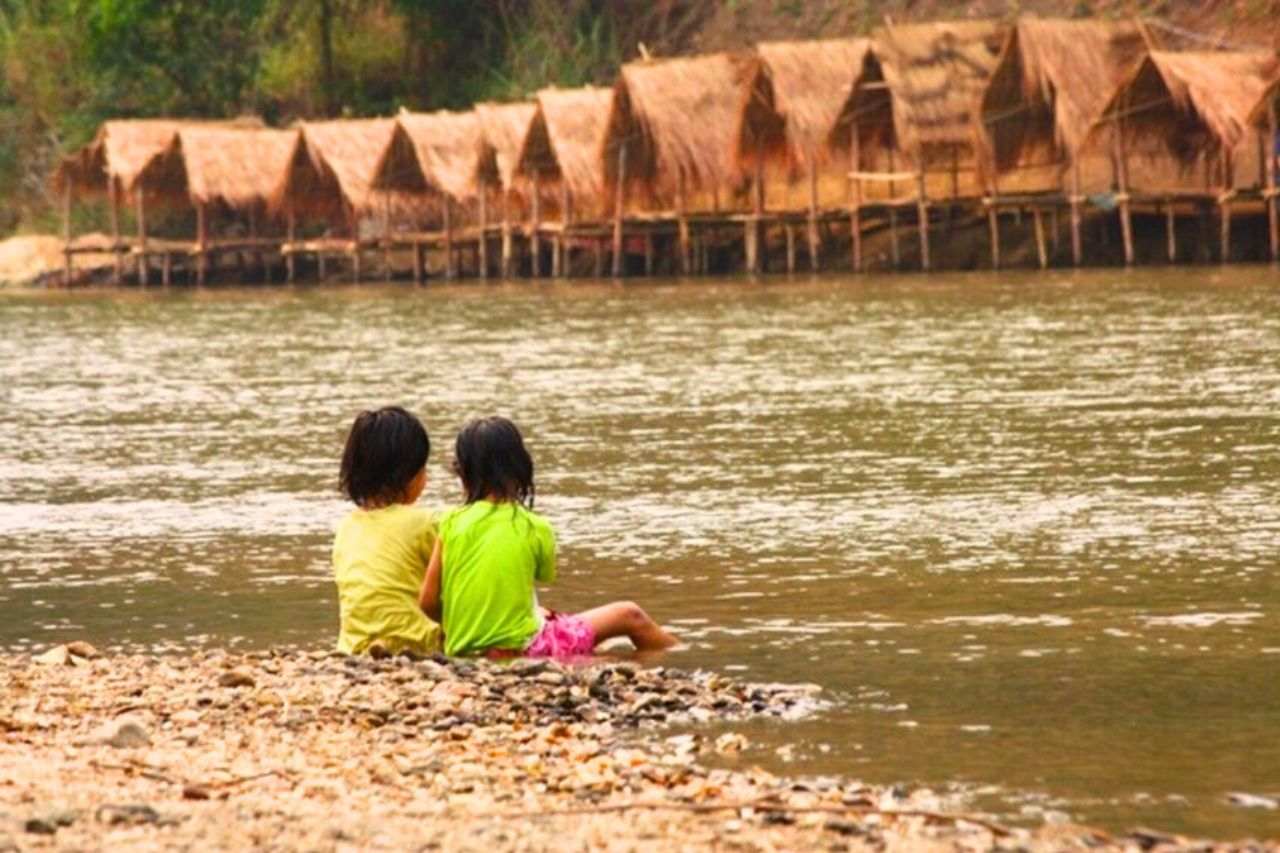
Children in northern Thailand have been contaminated with arsenic after consuming fish from polluted rivers.
The pollution is believed to come from rare earth mines located in Myanmar, operated by Chinese companies on the territory controlled by the Red Wa, an armed group supported by China.
These rare earths are then sent to China.
See: China's rush for rare earths in Burma is poisoning Thailand
Thai authorities are accused of having covered up the matter.
Children victims of arsenic pollution in northern rivers
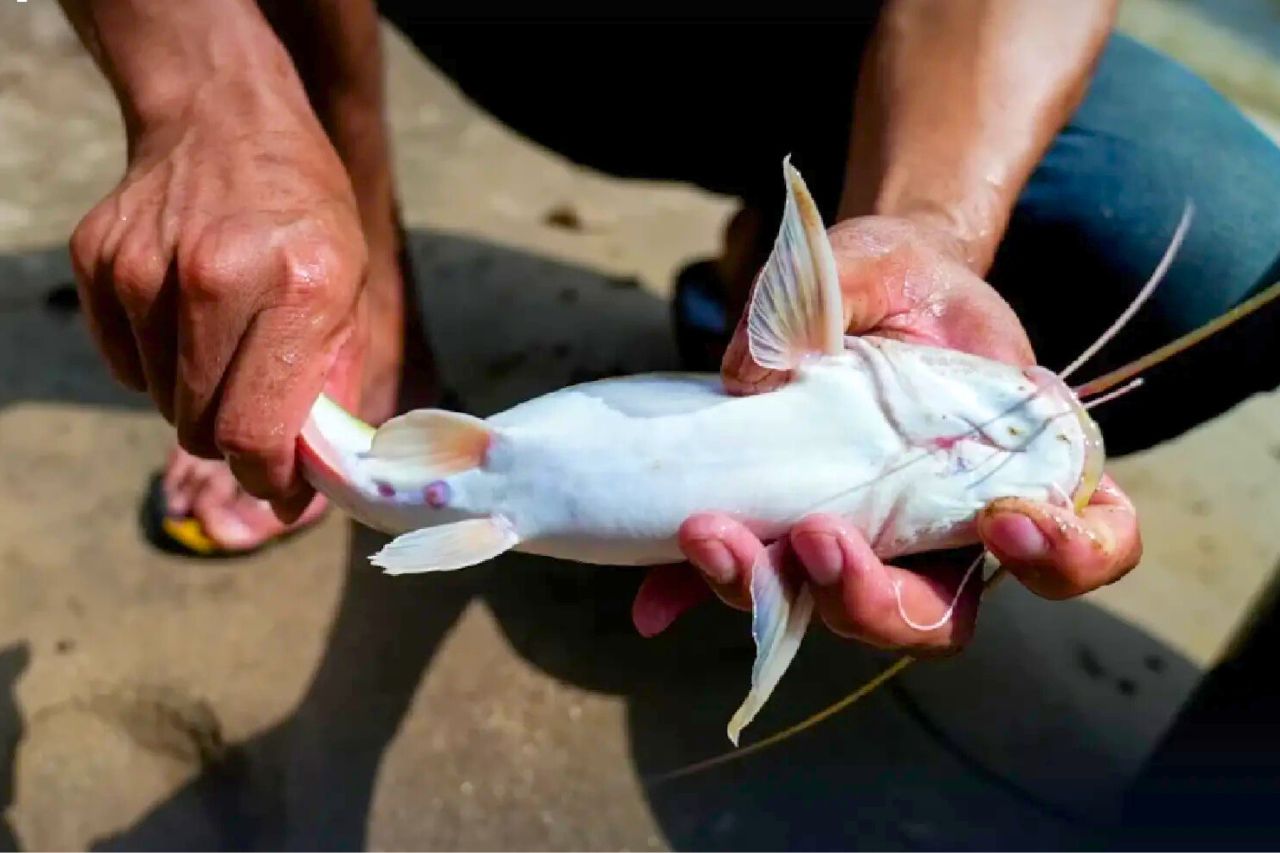
A resident shows a fish with blisters. Photo: The Nation Thailand
Two children from Mae Ai district, Chiang Mai, had abnormally high levels of arsenic in their bodies.
Aged 2 and 6, they regularly consumed fish caught in the Kok River, which flows from Shan State, Myanmar, to Thailand.
Several waterways, including the Kok and Sai rivers and the Mekong River, are contaminated with heavy metals from Myanmar mines.
See: Thailand: dangerous levels of arsenic confirmed in northern rivers
Thailand tries to hide the extent of the poisoning
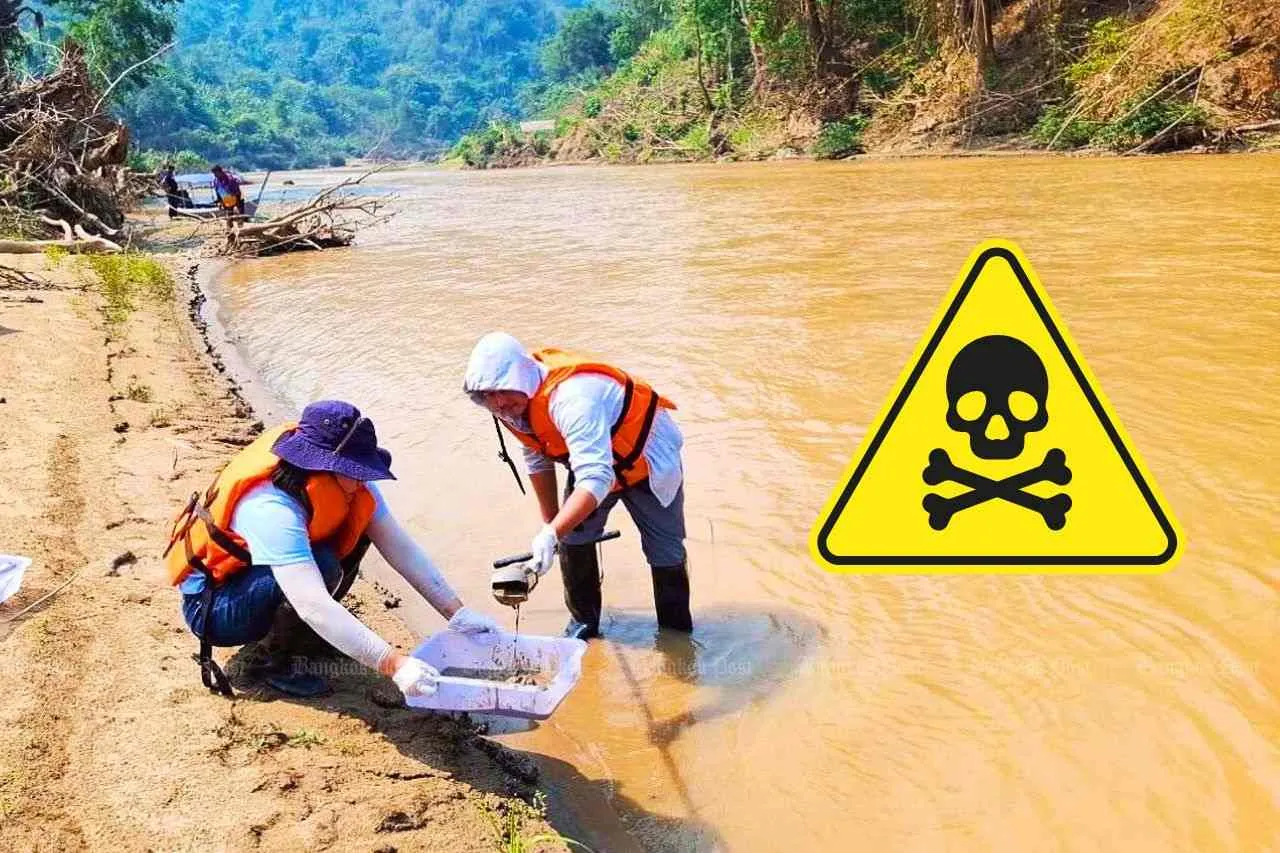
Officials from the Chiang Mai Natural Resources and Environment Office collected water samples at three locations along the Kok River for analysis at the end of April 2025. All samples contained dangerous levels of arsenic and lead. Photo: Panumet Tanraksa
On Monday, Transborder News reported that the Chiang Mai Provincial Public Health Office had received the results of heavy metal screening tests conducted on four villagers from Kaeng Sai Mun, located at the source of the Kok River.
Urine samples taken on May 19, 2025, revealed alarming levels of arsenic in children.
According to a source, although test results have been available for some time, local authorities have chosen not to immediately disclose this information.
Although the Chiang Mai Provincial Public Health Office requested more details from the Mae Ai district, provincial authorities pressured the district office.
They ordered the village heads of Kaeng Sai Mun to not disclose the information to the media to avoid causing panic among the villagers.
A source indicated that in addition to arsenic, other heavy metals such as lead and manganese had also been detected at levels above the permitted limits in the Kok River, although previous tests had mainly focused on arsenic.
The provincial public health office has been asked to expand its tests to include blood samples taken from residents in at-risk areas to detect the presence of lead and manganese.
Villagers worried about pollution and banned from protesting
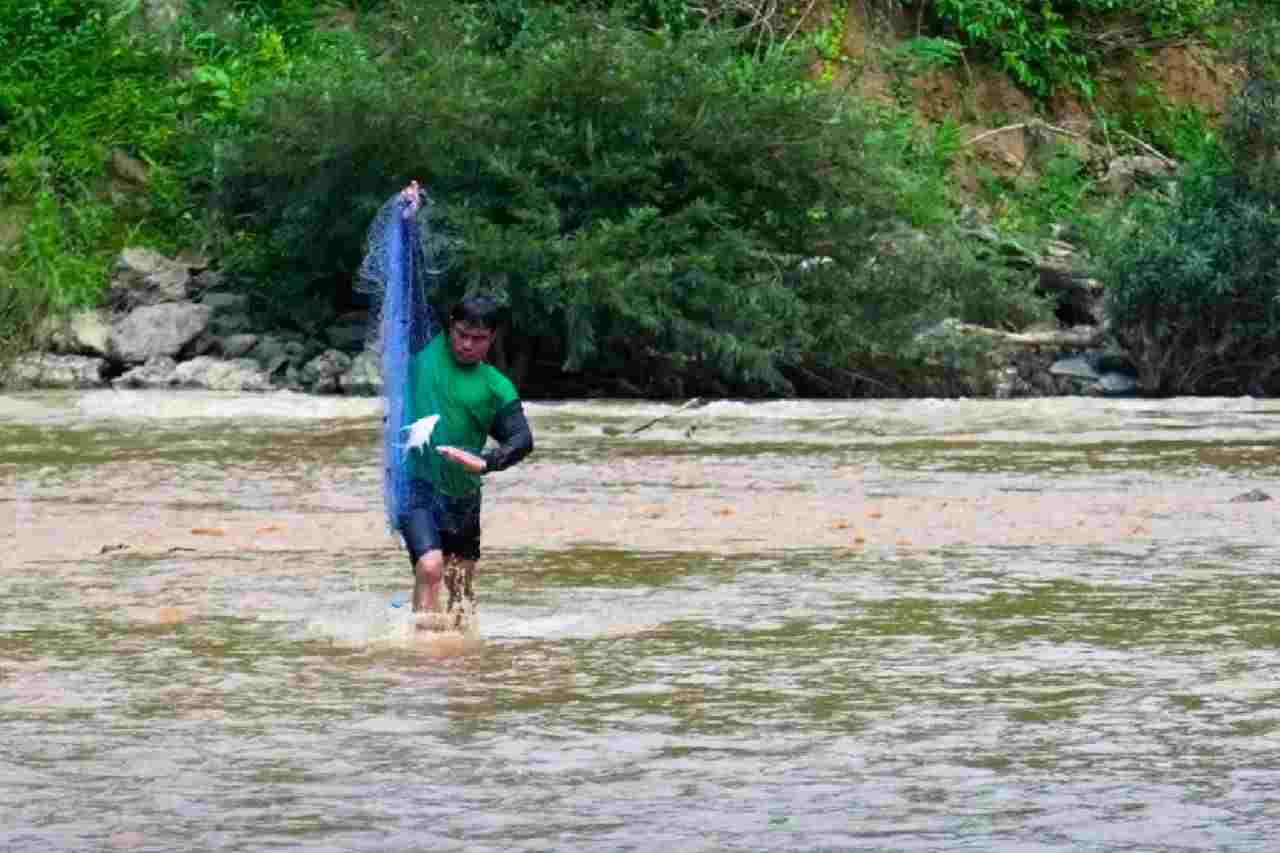
Fisherman in a northern Thai river. Photo: The Nation Thailand
“Currently, village chiefs and local organizations are feeling stressed due to pressure from provincial and district authorities, who are attempting to downplay the impact of toxins in the Kok River,” said a source.
“Despite the significant effects on villagers, particularly in terms of drinking water, food, and agricultural crops, the government has no systematic plan to address the problem.”.
This situation has caused considerable unease among villagers.
Even attempting to protest has become impossible, as the authorities have issued a ban.”
Samadul Utcharoen, a Chiang Mai MP from the People's Party, has expressed concerns about the lack of transparency in the situation.
He stressed that the government should immediately inform the public to help protect them from further harm.
He also requested that comprehensive health checks be carried out along the Kok River, particularly for high-risk groups, and that a plan be put in place to assist and compensate those affected by the contamination.
Samadul stressed that three months had passed since local complaints led to an investigation into the presence of heavy metals in the river, without significant progress being made to resolve the issue.
He urged the government to declare the Kok River zone a disaster zone to ensure that affected communities receive the help they need.
He also expressed concern about the safety of groundwater sources in the region, as many villagers remain skeptical about using water from shallow wells, even after testing has been done.
A serious contamination kept under wraps

A satellite image shows an overview of the West River rare earth mine in Burma, May 6, 2025. Photo: Maxar Technologies
Samadul stressed the need for the government to develop a water treatment plan for the region's residents.
Sathien Chantha, a professor at Chiang Rai Rajabhat University, echoed the MP's comments, stating that the presence of arsenic in humans indicates serious contamination.
He criticized the government for hiding information for fear of causing panic among the population, arguing that villagers have the right to know the risks they are exposed to in order to take appropriate measures.
He called on government agencies to step up their efforts to combat health, agricultural and fisheries risks related to contamination and to stop concealing the problem due to political pressure.
This case highlights the cross-border consequences of mining, as well as the opacity of the authorities in the face of a growing health scandal.
Rare earths are strategic for China, which currently uses them as leverage in its trade war with the United States.
Is Thailand sacrificing the health of its citizens to preserve its relations with Beijing?
See also:
Thailand: mutant fish discovered in the Mekong, arsenic alert
The Red Wa poison Thailand: drugs and arsenic pollution
Thailand: Arsenic-poisoned rivers threaten thousands of lives
Arsenic pollution in Thailand: tourists flee Chiang Rai beach
Source: The Nation Thailand
Do you like Toutelathailande.fr?
👉 Leave us a review on Trustpilot.
Your review strengthens the credibility of our work and the trust of our readers.
Useful links to prepare your trip to Thailand
Book bus, train and boat in Thailand
Manage your money while traveling with Wise
If our news, tourist information, or cultural content has been useful to you and you'd like to thank us:
You can follow us on:
Twitter, LinkedIn, Facebook,Google News
Or install our application: Install the application of All Thailand on your smartphone

3 comments
I quote: 'Rare earths are strategic for China, which currently uses them as leverage in its trade war with the United States.
Is Thailand sacrificing the health of its citizens to preserve its relations with Beijing?' End of quote..
Obviously, after reading this article, edited initially by the Thai daily 'The Nation', the answer is YES!
Certain levels of government do everything to limit the media impact of this pollution coming from an industrial activity in a neighboring country, where certain regions are no longer controlled by the central government (the military junta, which is unable to control the entire country), but are under the domination of dissident armed militias, supported and supplied in men and material by China, mixing state power, exploitation channels, and mafia trafficking.
In this case, an entire Thai population, spread across many villages along rivers coming from Burma, whose water is used upstream for the extraction and exploitation of rare earths, is being slowly poisoned through their staple food, derived from river water, fish and vegetables grown and irrigated with this contaminated water, and this entire population is therefore being silenced, ignored and hidden by the regional Thai administration.
It is highly likely that Chinese influence and corrupt pressures from mine operators are weighing on the Thai authorities, provincial and local, in the districts concerned.
It is dismaying to note that this serious problem of environmental and health pollution, affecting the lives of residents of these rivers and potentially causing serious and irreversible illnesses, cancers, and ultimately the death of contaminated individuals, does not seem to be a major concern for the government of Bangkok…
As time passes, one wonders what the current government still controls within the constitutional and ministerial framework of its duties towards the Thai population as a whole…
This increasingly looks like a headlong flight in which everyone is trying to save their furniture before the great debacle and the great relocation that seems to be brewing in the higher echelons of a central authority that has less and less control…
Hello Hansson,
For your information, The Nation's article doesn't mention Chinese mines.
Of course, these are indeed Burmese mines, operated by a Chinese company whose opacity (what about the working conditions of workers?) raises the question of whether it is directly linked to the central power in Beijing, a company protected on the ground by the Burmese military of the 'RED WA' group that controls this part of Myanmar's territory.
The rare minerals thus harvested do not benefit the Burmese economy in any way, since they are 100% exported to China.
There is therefore clearly a 'wild' economic exploitation of a foreign country of raw materials, with or without the agreement of the official authorities of that country (???), and all this in conditions that totally ignore safety standards, health consequences and the protection of populations directly and indirectly impacted by the exploitation of these mines.
Meanwhile, Thailand is content with an official finding, with more or less stifled and minimized communiqués from regional and provincial authorities, going so far as to ban communication with the media on the daily reality of residents living along polluted rivers.
As for implementing concrete measures to decontaminate the water of rivers for the needs of local populations and their crops, nothing has been planned on the ground so far by the Thai government authorities, alerted 3 months ago of this alarming situation.
We are content to analyze the water, week after week and to note the pollution and its future effects which, necessarily, will amplify and worsen over time…