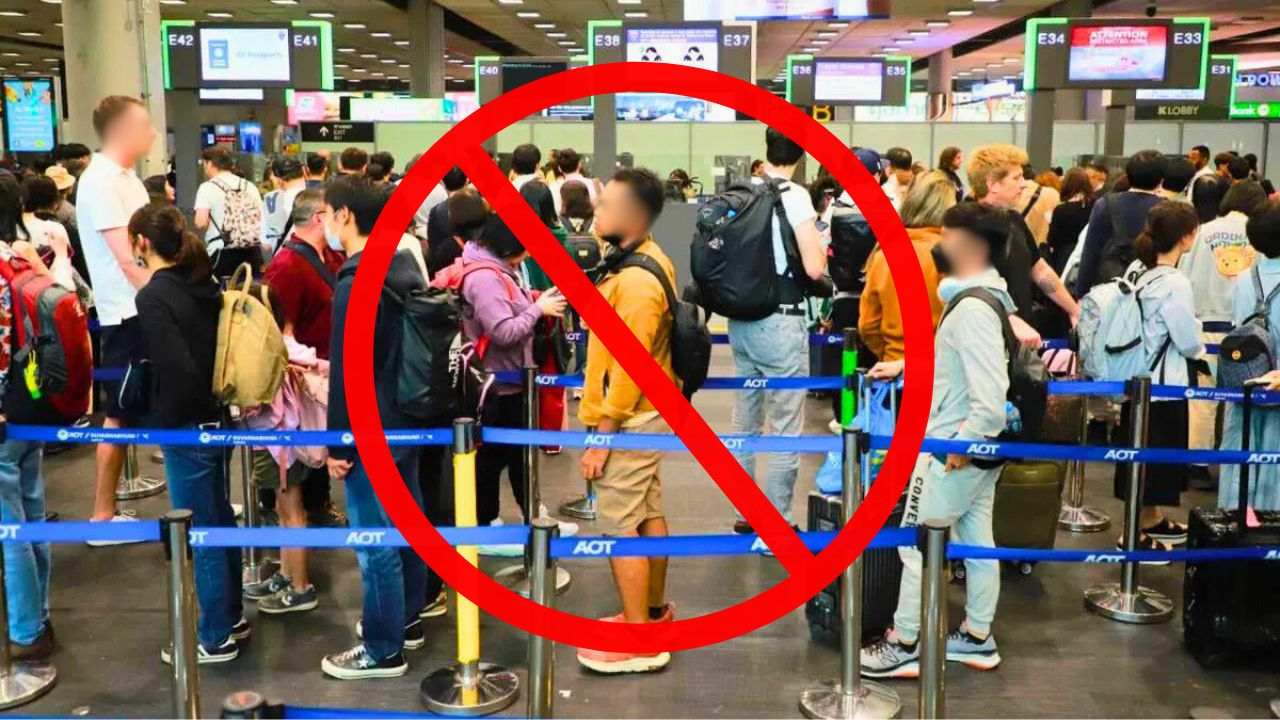
Foreign travelers have recently been turned away upon arrival in Thailand because they were unable to provide proof of sufficient financial resources.
This situation does not result from a change in the law, but from a stricter application of existing rules by immigration services, raising concerns and questions among tourists and expatriates.
Stricter controls at entry to Thailand
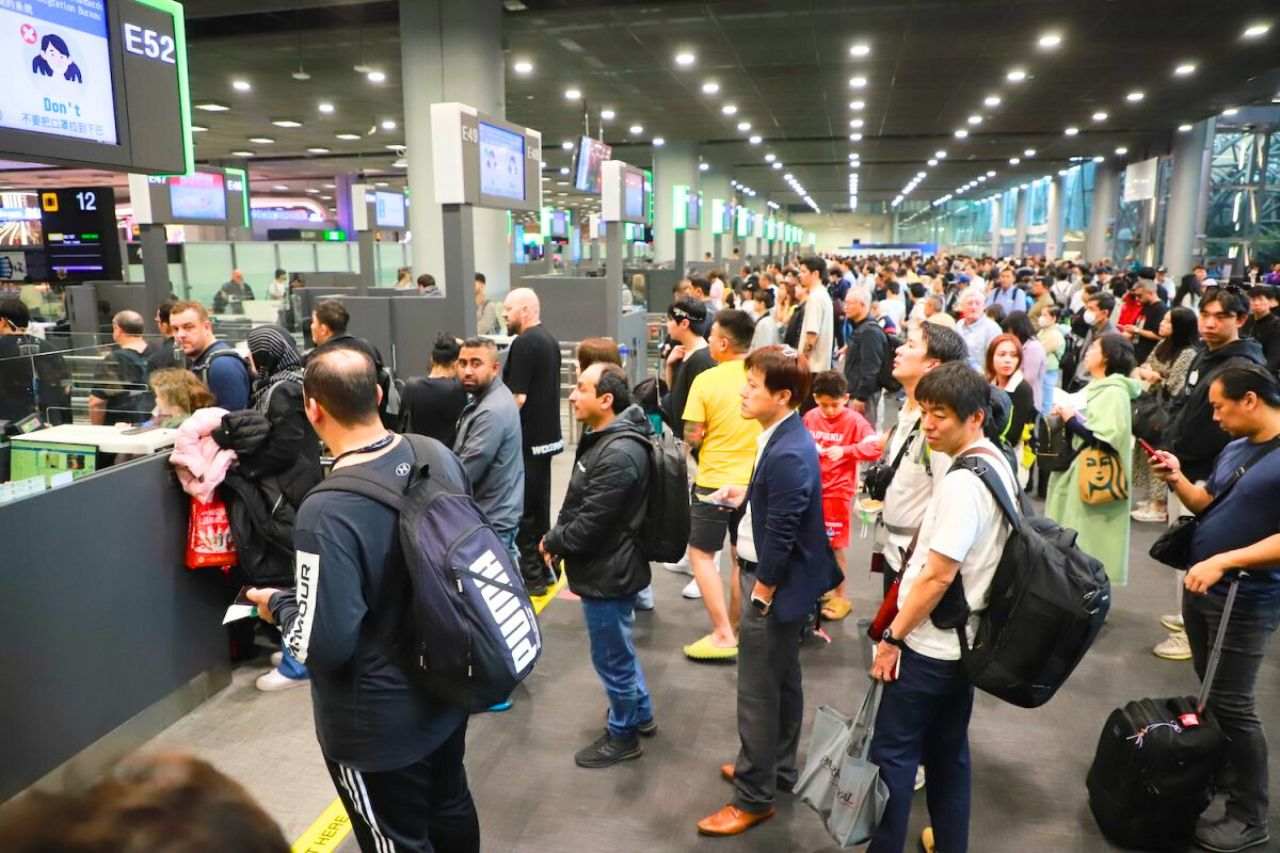
Foreign travelers wait to pass immigration formalities at Suvarnabhumi Airport. Photo: Somchai Poomlard/Bangkok Post
Over the past week, several major Thai airports, including Don Mueang (Bangkok), Chiang Mai and Phuket, have reported denials of entry to foreign travelers.
They were unable to prove that they had sufficient financial resources upon their arrival in Thailand.
Although these incidents appear sudden, they do not stem from any new immigration law.
Rather, they reflect a stricter application of existing discretionary powers in immigration matters.
In particular, regarding the long-standing requirement that visitors must be able to support themselves financially during their stay in Thailand.
This has resulted in growing concern among tourists and expatriates, which is compounded by the fact that immigration officers can also decide to refuse entry without a visa after two uses in a year.
See: Thailand: no, visa-free entry is not limited to twice a year
This is not a new rule, but a reactivated one
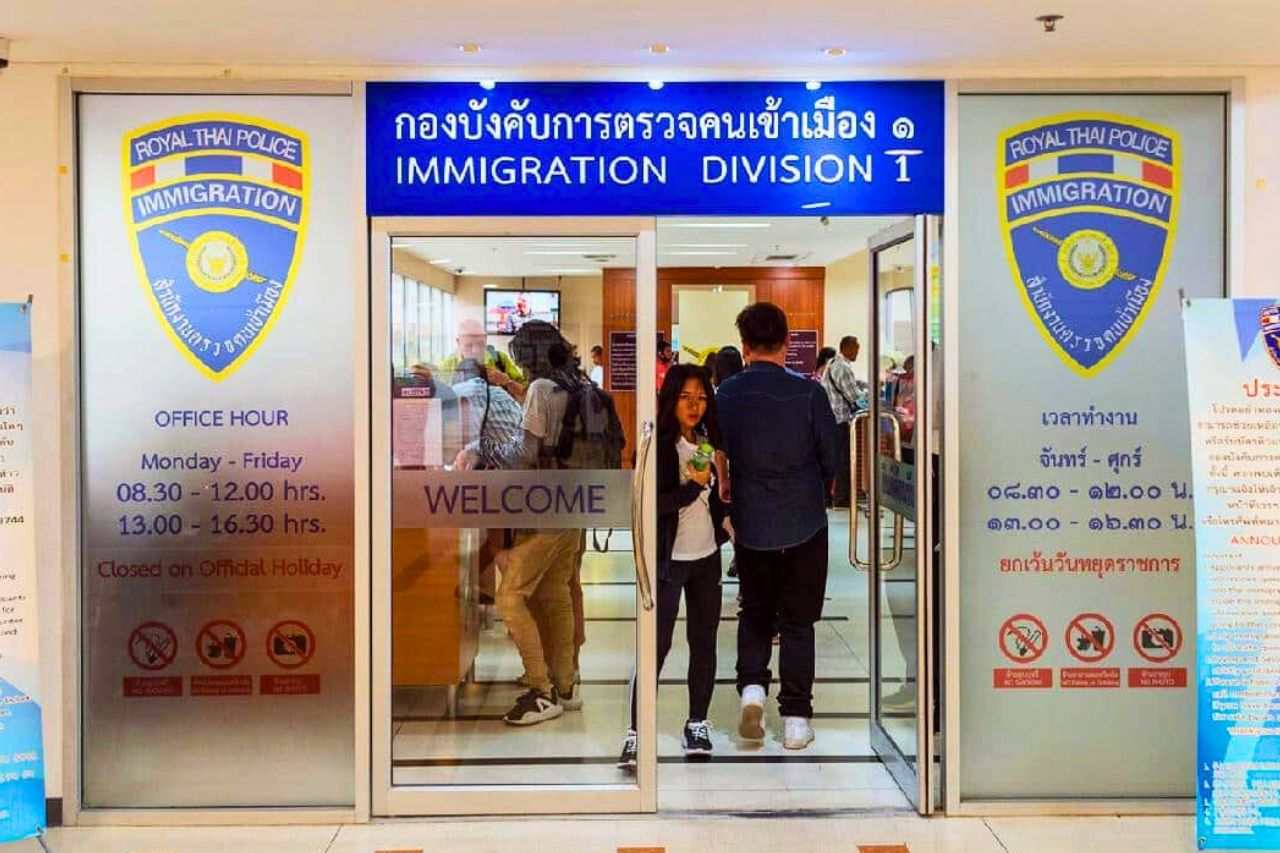
Entrance of an immigration office in Thailand.
Under Thai Immigration Act BE 2522 (1979), immigration officers are authorized to request proof that a foreign national has sufficient funds to support themselves during their stay.
Traditionally, this amount is estimated at approximately:
20,000 baht (533 euros) per person , or 40,000 baht (1,067 euros) per family .
In practice, however, this requirement has rarely been applied in recent years.
Proof is required when applying for a tourist visa, but was not applied for visa-free entries.
What has changed is not the law itself, but the willingness of immigration officers to exercise their discretionary power more rigorously at the point of entry.
Travellers are now strongly advised to have the equivalent of at least 20,000 baht in cash or a recent bank statement easily accessible, in order to be able to immediately prove their financial means upon arrival.
Entry refusals reported in Don Mueang and Chiang Mai
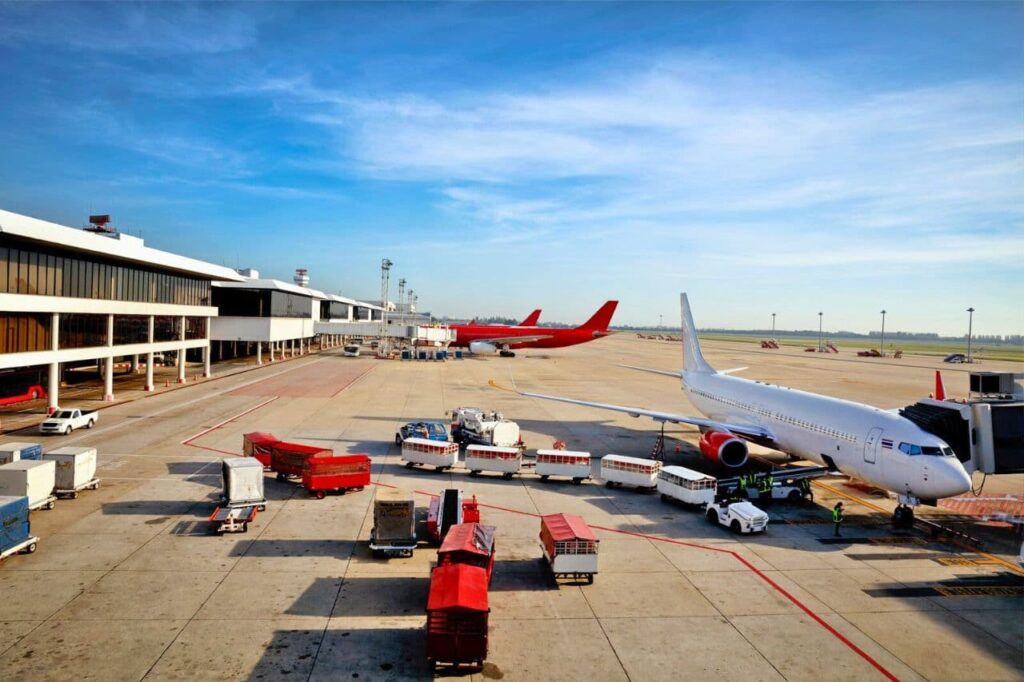
Don Mueang Airport. Photo: AOT
At Don Mueang Airport in Bangkok, several cases have been reported in which travelers were interrogated at length, temporarily detained and ultimately turned away after failing to prove they had sufficient funds or supporting documents.
Similar accounts have been reported in Chiang Mai, mainly through traveler networks and online forums.
Although not all passengers are questioned, law enforcement lacks consistency.
This situation has contributed to creating a climate of uncertainty and anxiety, particularly among regular visitors and long-time residents accustomed to relatively smooth entry procedures.
Phuket Airport: A First-Hand Account
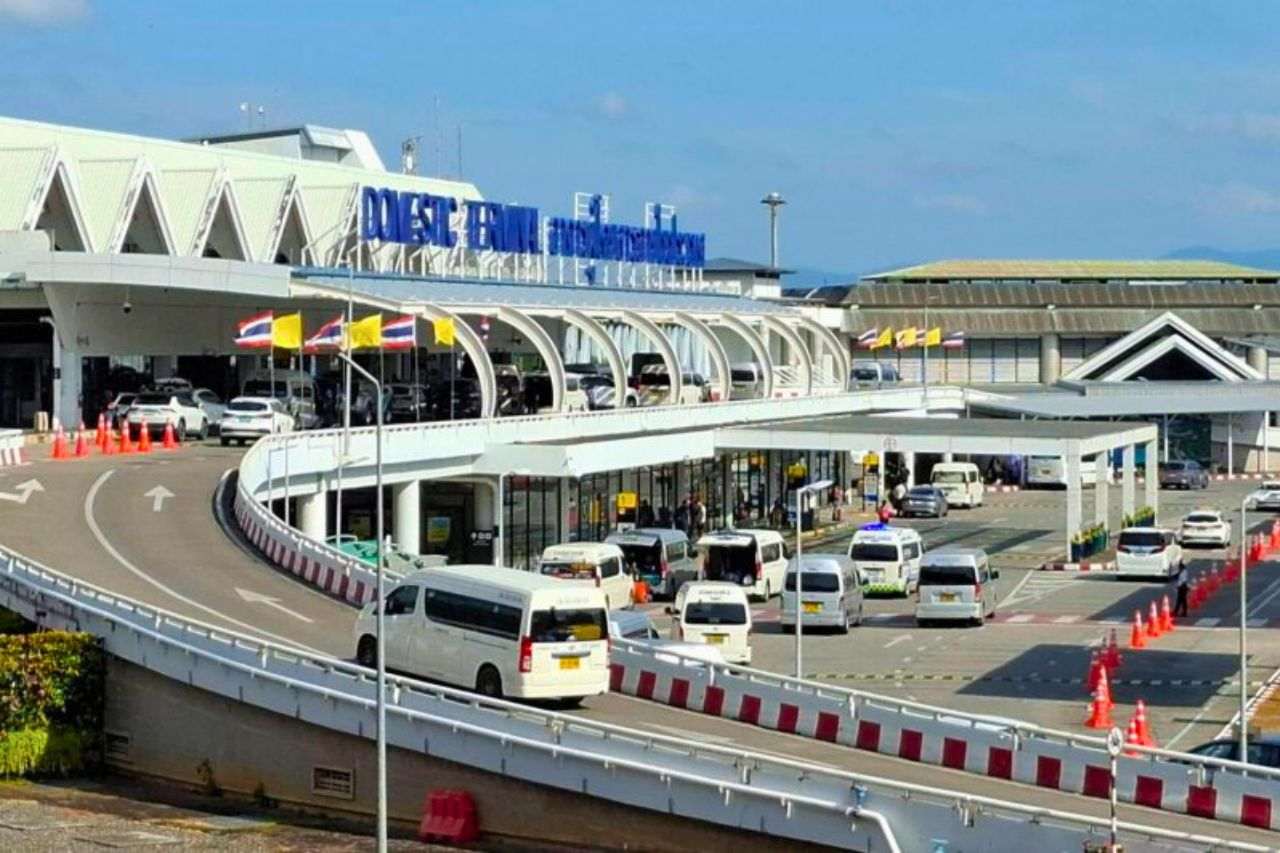
Phuket International Airport. Photo: Achadthaya Chuenniran
In the case of Phuket International Airport, a Pattaya Mail journalist was contacted directly by a Russian tourist, not by immigration services.
The traveler was presented with a document at immigration and asked if he could safely sign it.
Upon examination, the document was identified as a standard "refusal of entry" form issued by Thai immigration services.
It is important to note that the document contained no mention of blacklisting, permanent exclusion, or long-term immigration sanctions.
It simply stated that entry had been refused on that particular occasion.
The tourist was informed that signing the document would not result in him being blacklisted and would not jeopardize his future trips to Thailand.
Once the necessary funds or supporting documents are available, readmission will remain possible under normal immigration procedures.
This episode highlights a recurring problem: many travellers misunderstand the legal effect of entry refusal documents, leading to unnecessary fears and speculation.
Entry denied: no automatic blacklisting
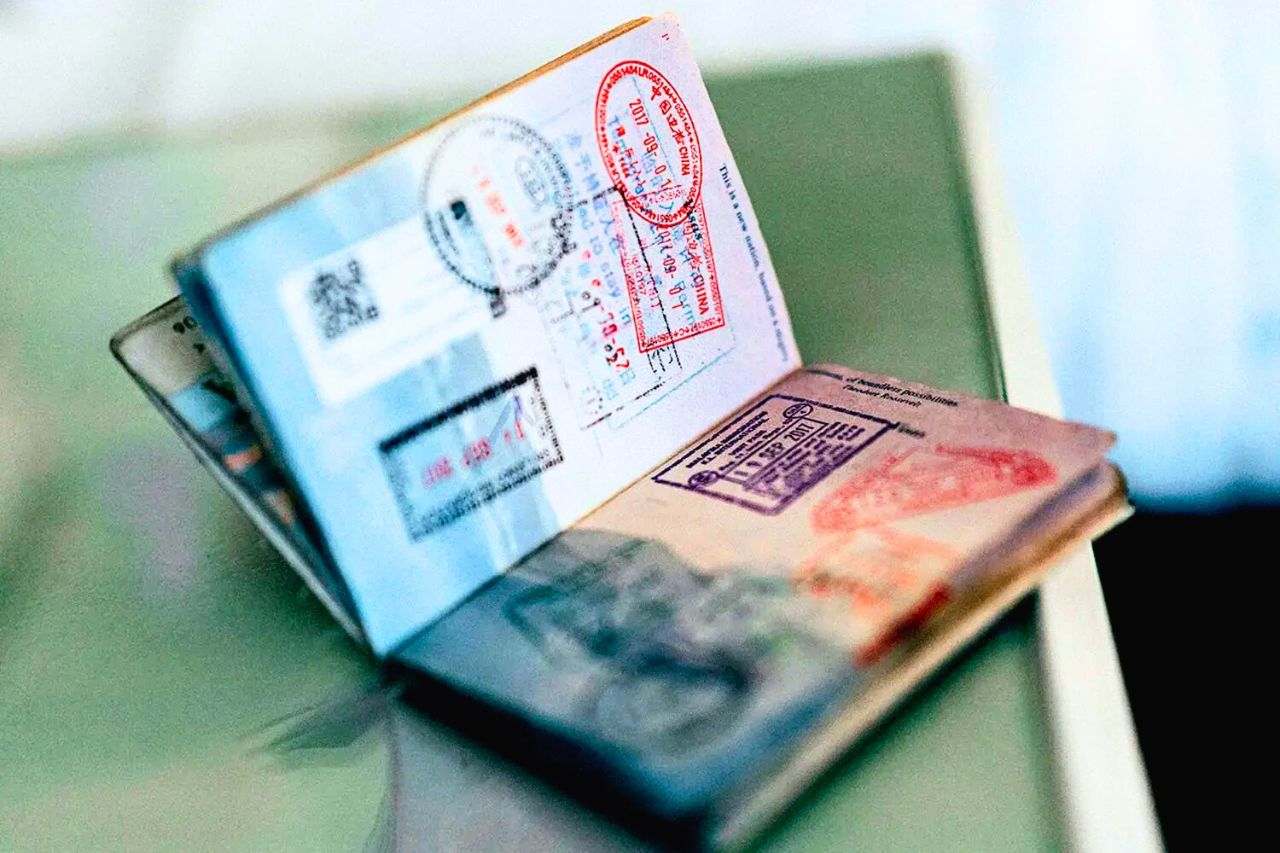
Passport pages with visas. Photo: National News Bureau of Thailand
One of the most damaging misconceptions circulating among expat communities is the belief that being denied entry automatically results in being blacklisted.
This is generally not the case.
Entry refusal is an administrative decision taken at the border, based on the assessment of the officer at that time.
This is not in itself a ban, nor a permanent ban on future entry, unless it is accompanied by a separate decision to place on a blacklist, which would be expressly mentioned.
Unfortunately, this distinction is rarely clearly explained to travelers at the airport.
Why these entry refusals worry travelers
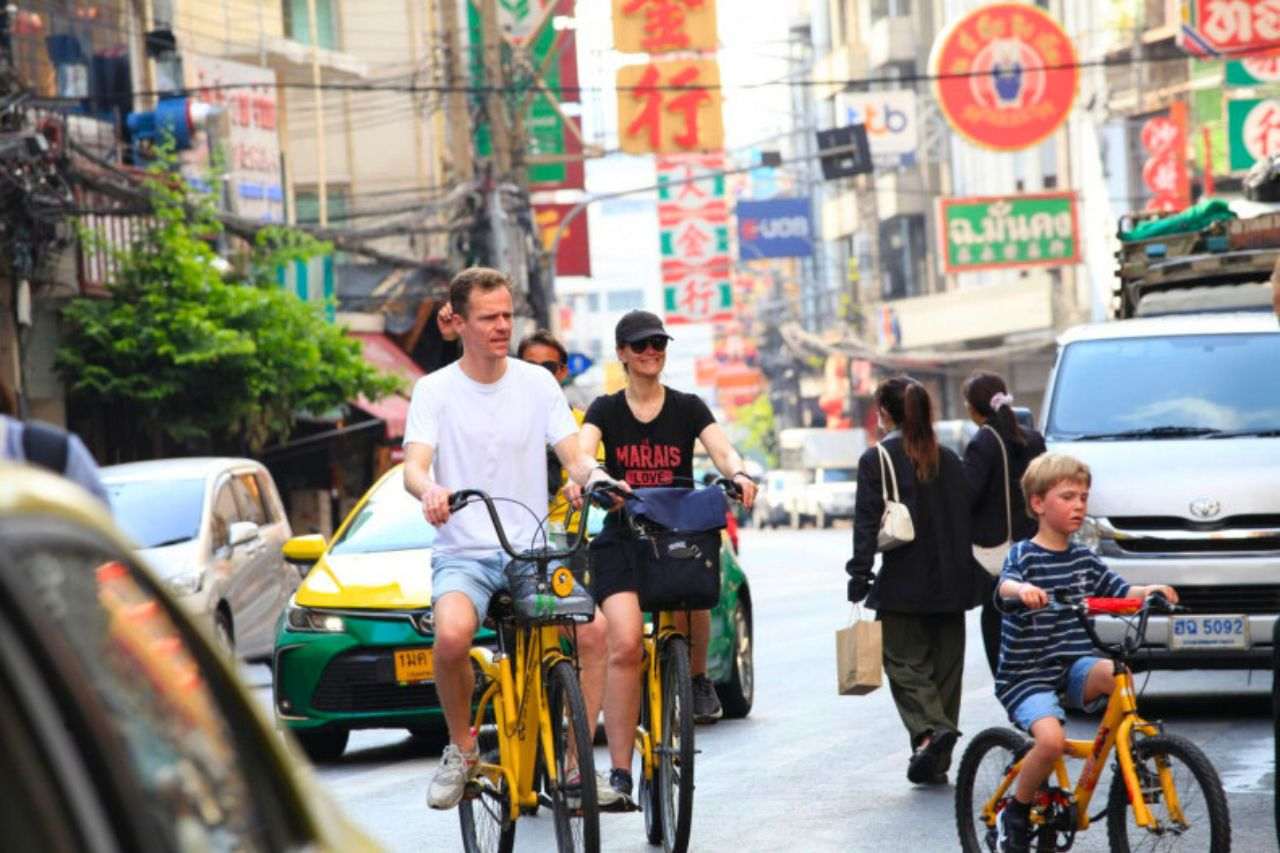
A family of tourists cycling in a town in Thailand. Photo: Apichart Jinakul
Travellers' concerns do not stem from the existence of discretionary power in immigration matters, as this power has always existed.
The concern lies in:
1. The lack of clear official communication regarding the renewal of the application of the law
2. Uncertainty as to what constitutes acceptable proof of funds
3. Confusion regarding whether funds must be held in cash or can be presented in digital form
4. The fear that signing immigration documents could have long-term consequences
When rules appear to be applied unevenly and without clear guidelines, trust erodes, even among those who respect the law and intend to comply with it.
It's a matter of communication, not politics
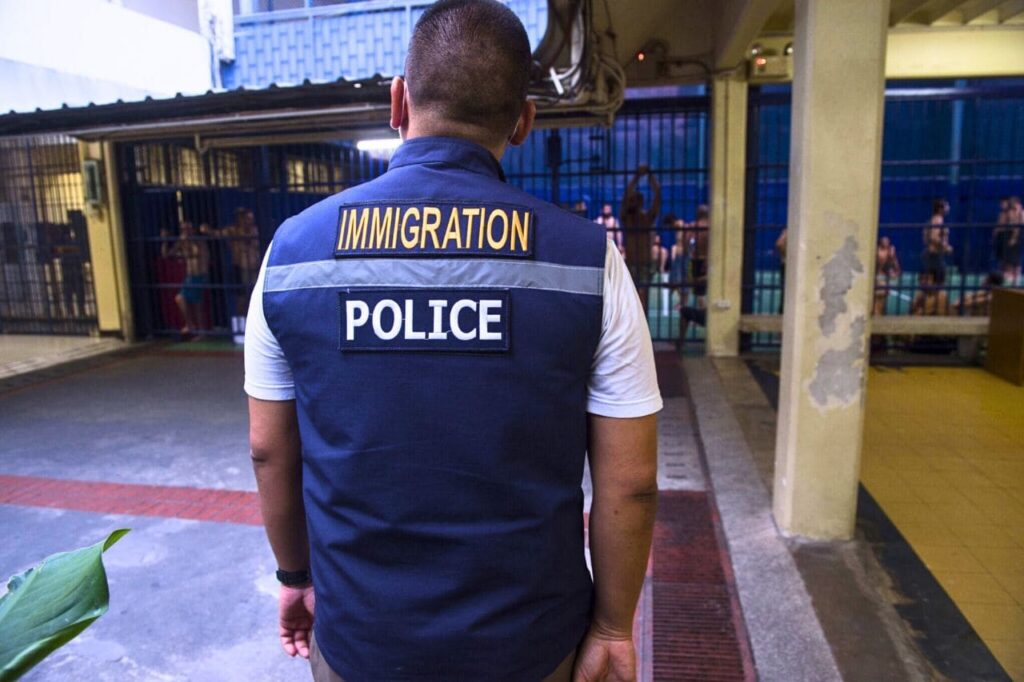
Immigration police. Photo: Romeo Gacad/AFP
Thailand retains the right to control its borders, like any sovereign state.
However, predictability and clarity are essential, especially for a country that is heavily dependent on tourism and long-term foreign residents.
Clear guidelines would go a long way toward restoring confidence, particularly in English, confirming that:
- Proof of funds can take several forms
- Refusal of entry is not equivalent to being placed on a blacklist, and
- Compliance restores eligibility for future entry
What we are witnessing is not a legal change, but an operational one.
Immigration officers exercise discretionary power that has always existed, but they do so in a more visible and stricter manner.
For travellers and expatriates, the lesson is simple: be prepared.
Carry with you accessible proof of funds and supporting documents, even if this proof has never been requested in the past.
For policymakers, the message is just as clear: law enforcement works best when it is accompanied by transparency.
Without it, even a legal discretionary power can seem arbitrary.
See also:
Thailand Visa: many tourists turned away, the vagueness of the rules worries
Thailand: hunting tourists by entering without a visa repeatedly
Thailand: visa exemption criticized for influx of bad tourists
Source: Pattaya Mail
Do you like Toutelathailande.fr?
👉 Leave us a review on Trustpilot.
Your review strengthens the credibility of our work and the trust of our readers.
Useful links to prepare your trip to Thailand
Book bus, train and boat in Thailand
Manage your money while traveling with Wise
If our news, tourist information, or cultural content has been useful to you and you'd like to thank us:
You can follow us on:
Twitter, LinkedIn, Facebook,Google News
Or install our application: Install the application of All Thailand on your smartphone

3 comments
Depending on the province, visa extensions may be refused or granted.
I was refused entry to Lamphun and accepted in Chiang Mai last month.
Clarity and anticipation of the law are two pillars of the rule of law!
The law must be easily accessible to everyone in order to be respected.
There are laws, but the immigration officer will remain the sole decision-maker, and this is true in all countries.
That's why it might be accepted in one office, airport, or border crossing, but not in another…
Personally, I find this perfectly normal because other countries, including Australia, have been doing it for a long time.
And that will help eliminate some of the..