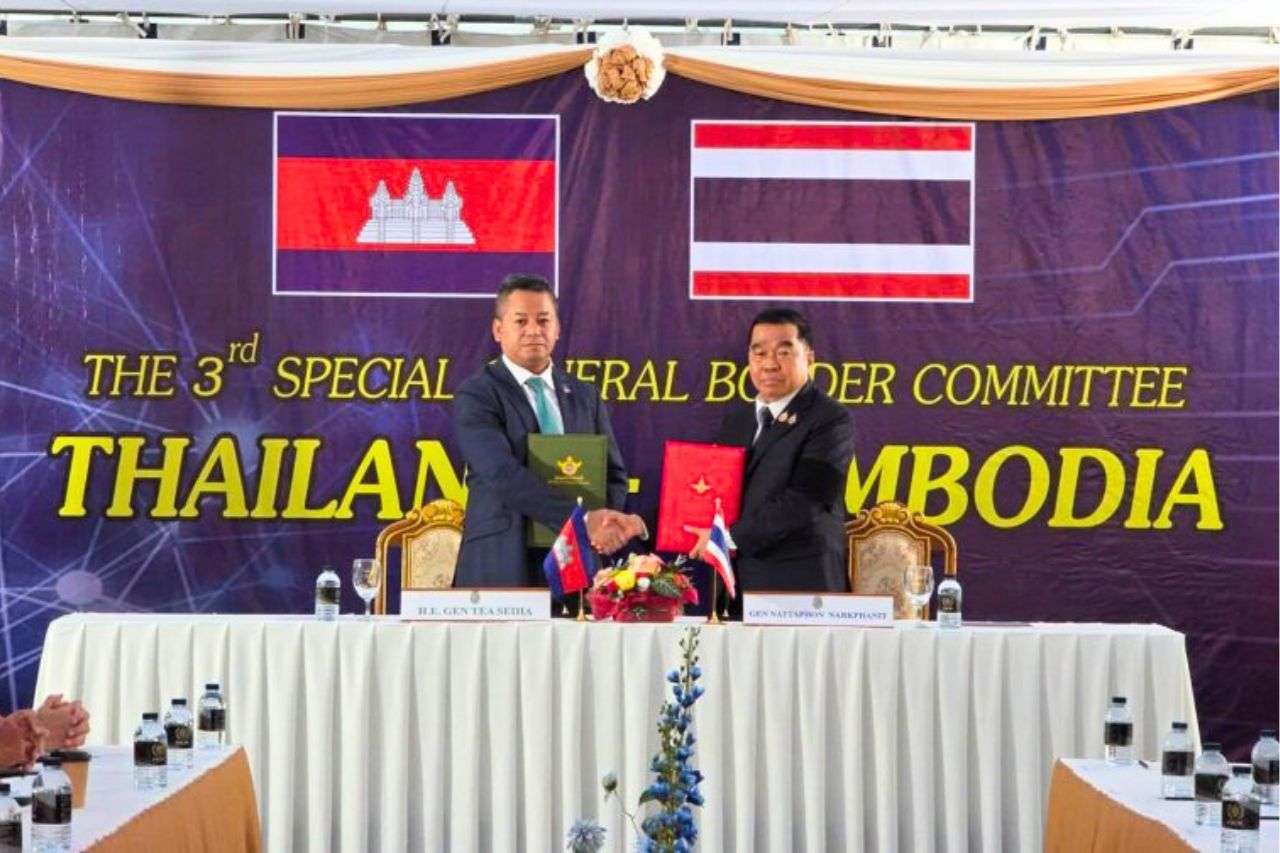
Thailand and Cambodia have once again signed a ceasefire agreement after Phnom Penh accepted the previously agreed terms.
- Thailand and Cambodia have signed an immediate ceasefire on December 27 at the Chantaburi border.
- The agreement provides for a 72-hour truce, the return of captured soldiers and cooperation on demining and cybersecurity.
- The conflict has resulted in at least 101 deaths and over half a million displaced people, and the demarcation of the border remains unresolved.
Thai Defense Minister General Nattaphon Narkphanit and his Cambodian counterpart General Tea Seiha signed a joint statement on Saturday, December 27 at 10:15 am.
The signing took place during a meeting of the Thai-Cambodian General Border Committee (GBC) at the permanent border checkpoint of Ban Phak Khat in Pong Nam Ron district, Chantaburi province.
A 72-hour ceasefire
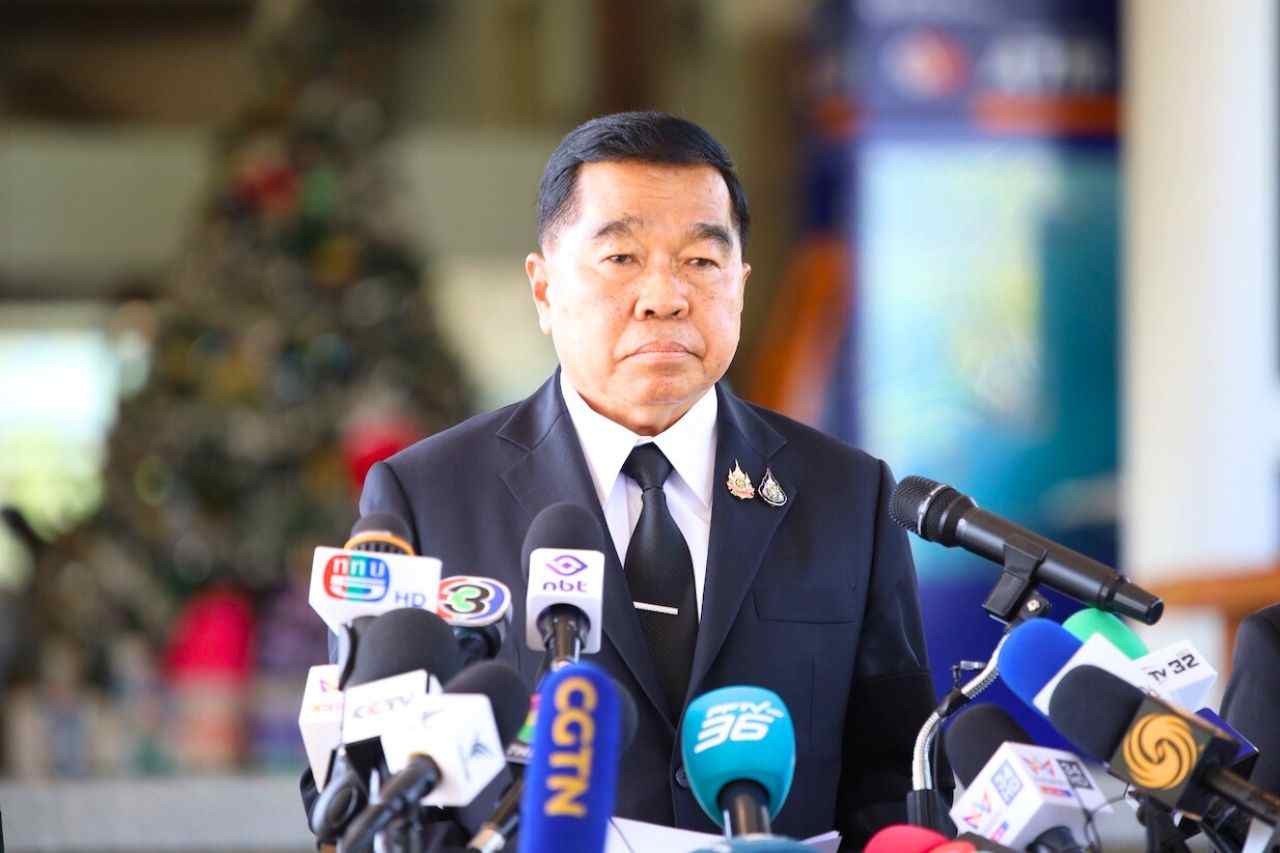
Defense Minister Nattaphon Narkphanit addresses journalists after the meeting of the General Border Committee in Chanthaburi on December 27, 2025. Photo: Public Relations Department
The ceasefire came into effect at noon.
General Nattaphon stated that the initial 72-hour ceasefire period would be an "observation period to confirm that the ceasefire is real".
The 16-point joint statement reiterates the commitment of both parties to implement the ceasefire agreement and work towards peace, stability, and security along the border.
The full text can be consulted here.
Both parties agreed to freeze all troop movements and allow civilians living in border areas to return home as soon as possible, the joint statement adds.
They also agreed to cooperate in the field of demining and combating cybercrime, while Thailand has pledged to return 18 Cambodian soldiers captured if the 72-hour period elapses without further incident.
General Nattaphon said Cambodia had accepted the four key points of the agreement concluded between the two countries in Kuala Lumpur, Malaysia, in October.
The foreign ministers of Thailand and Cambodia both said on Saturday that they would travel to Yunnan on Sunday and Monday to meet with Chinese Foreign Minister Wang Yi to discuss border issues.
On Friday, Prime Minister Anutin Charnvirakul reaffirmed that Thailand would accept a 72-hour ceasefire.
However, he specified that Bangkok refused to withdraw its troops to the positions they occupied before the latest fighting, thus maintaining its presence in the areas now considered secured by the Thai army.
His statement follows a rocket attack by Cambodian troops against Ban Nong Chan, in Surin province, which killed three Thai soldiers and injured 17 others on Friday late afternoon.
Thailand claims a return to full border sovereignty
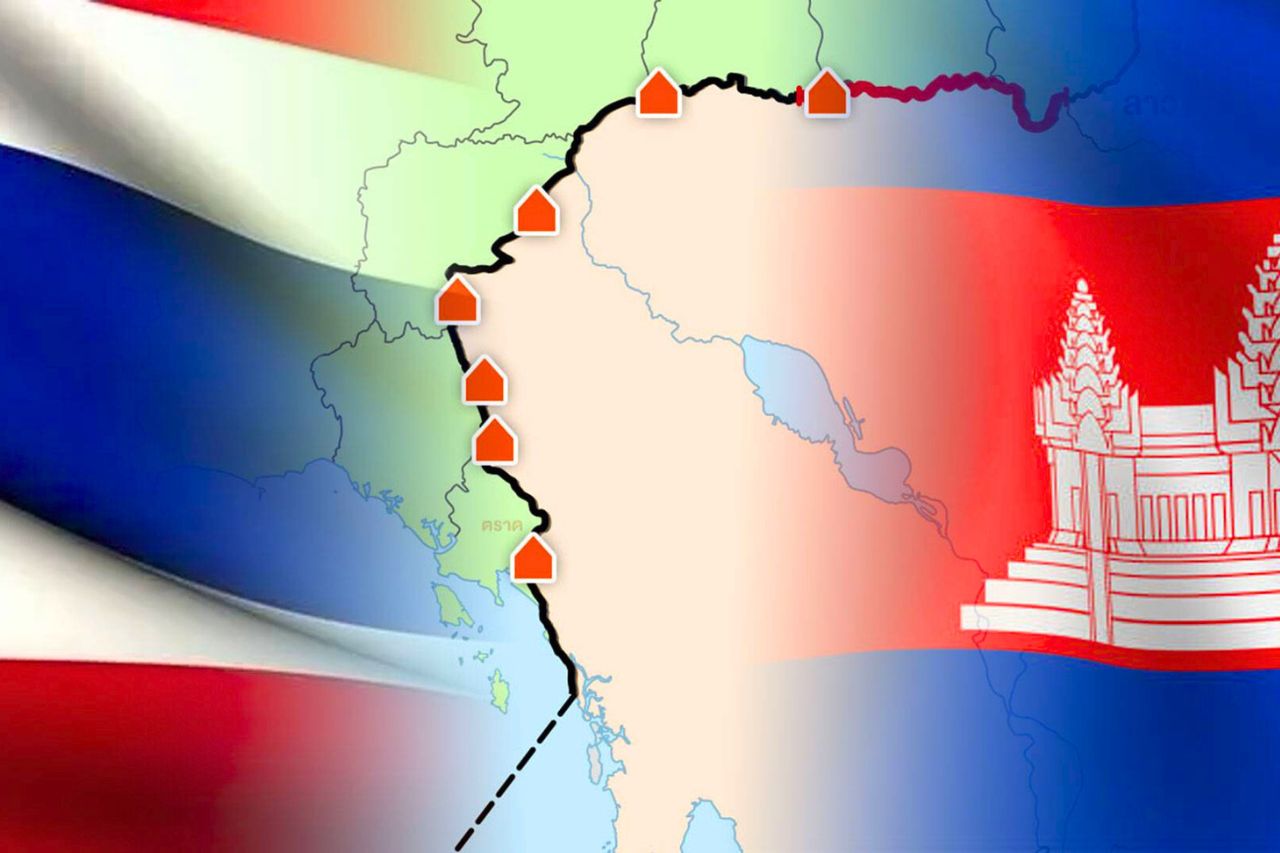
Border posts between Thailand and Cambodia.
Mr. Anutin declared on Saturday that the Thai army had succeeded in restoring "territorial integrity" in all areas, in accordance with its plans.
The Prime Minister urged the public to understand that everything was still unfolding in accordance with the objectives of the army and government.
Malaysian Prime Minister Anwar Ibrahim, who helped broker the Kuala Lumpur agreement in his capacity as ASEAN chair, welcomed Saturday's agreement.
"The decision to end fighting and keep forces in place reflects a common recognition of the need for restraint, primarily in the interest of civilians," he said in a statement.
"The joint statement defines practical and positive measures, including verification by the ASEAN observer team and direct communication between defense authorities.
These form a basis for stability, and I hope both parties will faithfully implement them."
This agreement has put an end to 20 days of fighting that has resulted in at least 101 deaths and displaced more than half a million people on both sides.
Human tolls still disputed

A bridge and a Cambodian mortar position were hit by Thai artillery fire near Ban Nong Chan, in Sa Kaeo Province, on Friday, December 12, 2025. Photo: Thai Army Military Forces
Cambodia, largely outmatched by Thailand in terms of military equipment and budget, reported that 21 civilians were killed in the clashes.
In contrast, Phnom Penh reported no military deaths.
This statement contrasts, however, with an official message posted on Facebook showing the wife of Prime Minister Hun Manet attending the funerals of killed Cambodian soldiers.
During the clashes last July, Cambodia claimed that five soldiers were killed.
For its part, the Thai army maintained that nearly 3,000 Cambodian soldiers had perished and that many bodies had been left abandoned in the combat zones.
It had attempted to return 12 bodies of Cambodian soldiers as a humanitarian gesture, but Phnom Penh had refused them, claiming they were not Cambodian soldiers.
See: Thailand: 3,000 Cambodian soldiers reportedly killed in fighting
A new agreement modeled on the one in Kuala Lumpur
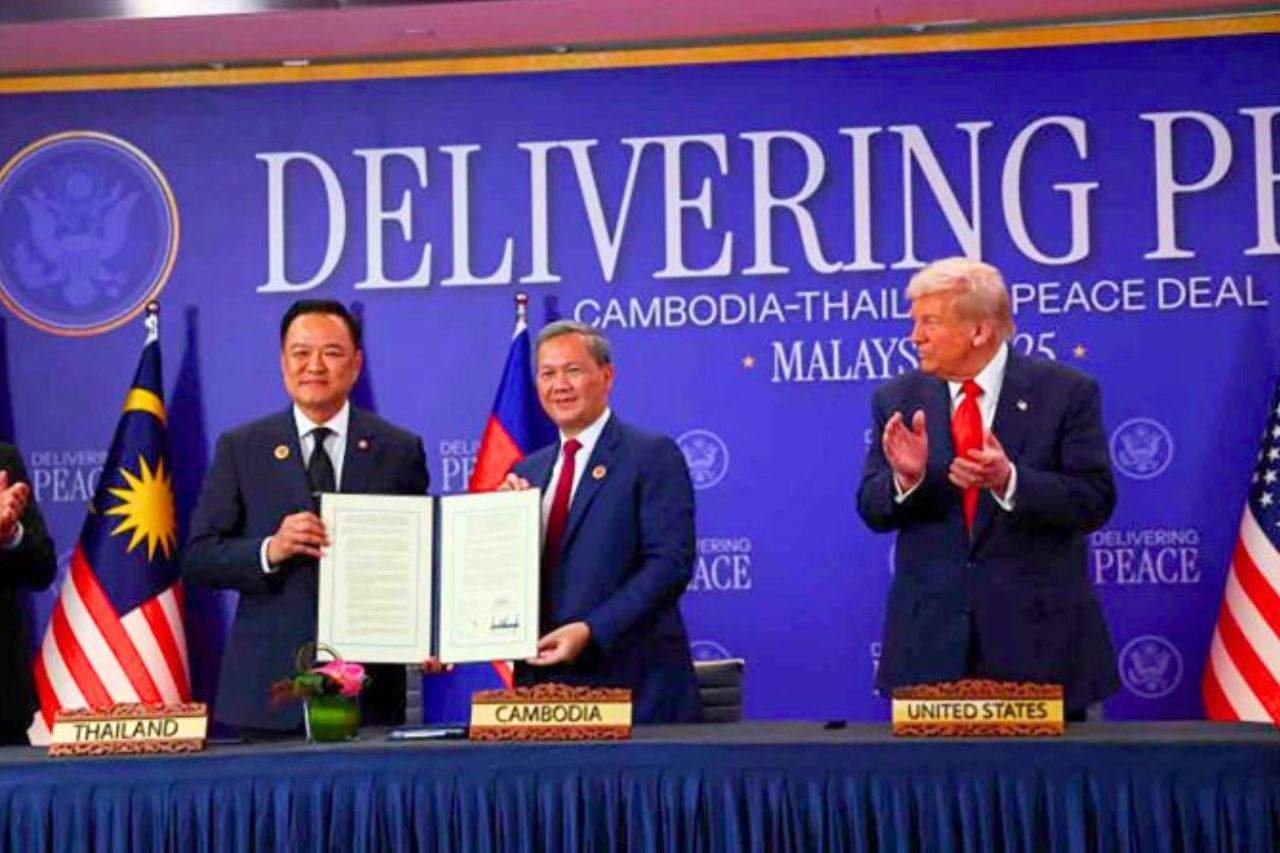
US President Donald Trump applauds as Thai Prime Minister Anutin Charnvirakul and Cambodian Prime Minister Hun Manet hold up a document during the signing of a ceasefire agreement between Cambodia and Thailand on the sidelines of the 47th Association of Southeast Asian Nations (ASEAN) summit in Kuala Lumpur, Malaysia, on October 26, 2025. Photo: Reuters
Clashes resumed in early December after the breakdown of the agreement negotiated by Mr. Anwar and US President Donald Trump to end a previous series of fighting that had lasted five days in July.
The ceasefire brings both parties back to the terms of the follow-up agreement that Thailand and Cambodia signed in the presence of Mr. Anwar and Mr. Trump in October in Kuala Lumpur.
Why the agreement remains fragile despite the signature
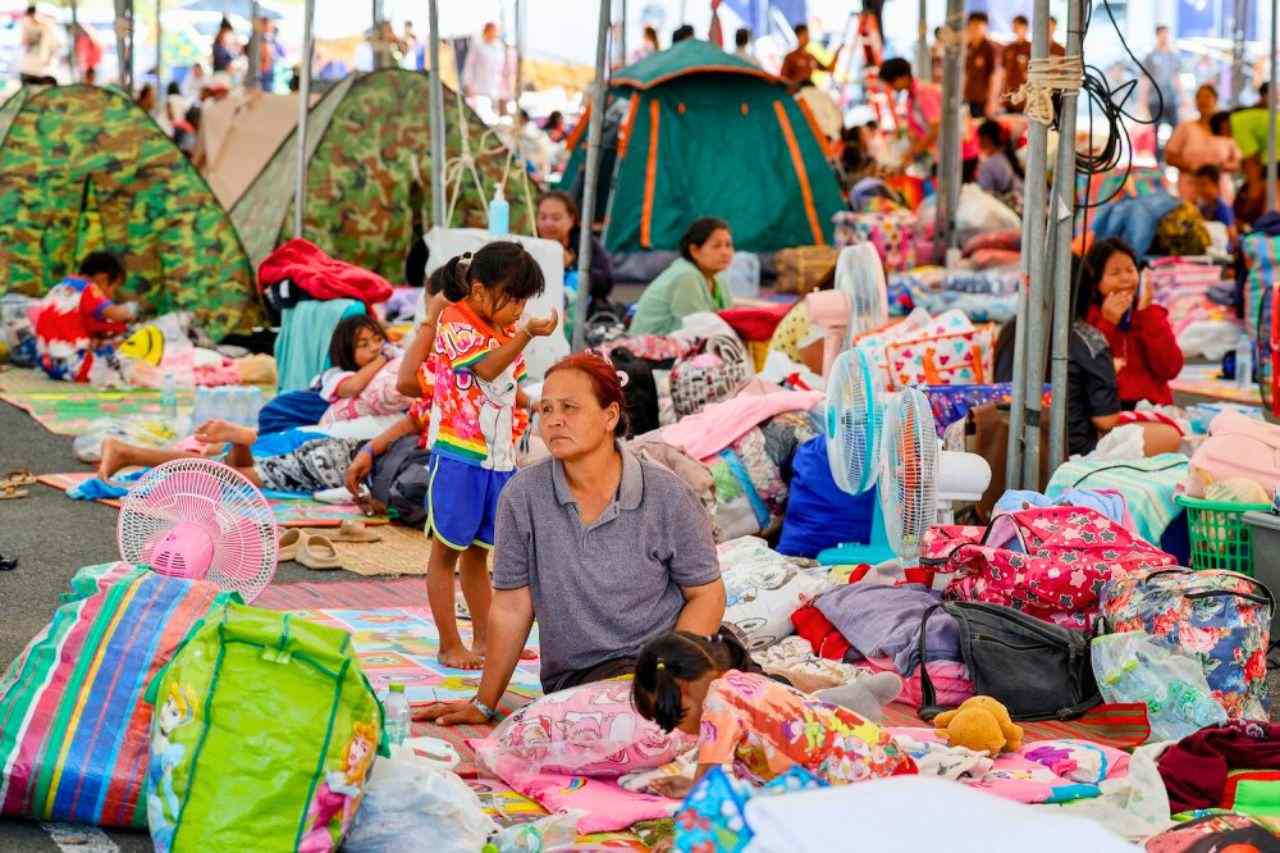
Thai civilians displaced due to the conflict with Cambodia. Photo: CTN News
There is, however, no guarantee that this agreement will hold, mainly because it does not resolve the fundamental problem: large portions of the 800-kilometer border between the two countries remain undefined.
ACM Prapas Sornjaidee, spokesman for the Joint Press Center on the situation at the border between Thailand and Cambodia, said:
“The agreement concluded on Saturday will not have any impact on the ongoing border demarcation activities between the two countries, leaving the task of resolving disputed areas to existing bilateral mechanisms.”
“War and clashes do not make either country or their people happy,” he added.
“I would like to emphasize that the Thai and Cambodian people are not in conflict with each other.”
See also:
Thailand and Cambodia agree in principle on a ceasefire
Cybercrime in Cambodia: Trip.com ends partnership
Thailand-Cambodia conflict: the army says it is targeting cybercriminals and casinos
Traveling to Thailand despite the conflict with Cambodia: what you need to know
Source: Bangkok Post
Prepare your trip to Thailand
Book bus, train, or boat in Thailand
Manage your money while traveling with Wise
If our news, tourist information, or cultural content has been useful to you and you'd like to thank us:
You can follow us on:
Twitter, LinkedIn, Facebook, Google News
Or install our app:
Install the Toute la Thaïlande app on your smartphone

1 comment
One can effectively doubt, upon reading this article, that the 72-hour ceasefire, signed this Saturday, the 27th, rests on solid ground.
When we already see that Cambodia is minimizing its military losses, and even refusing to repatriate the bodies of its military personnel killed in combat on Thai territory, arguing that they are not Cambodian soldiers, we can wonder what game the Cambodian authorities are playing again!!!
Still, hope springs eternal and this ceasefire has the advantage of silencing the guns, avoiding further casualties and allowing Thai and Cambodian civilians to return to villages on both sides of a border whose demarcation is unresolved.
However, it is the absence of a demarcated border that is the main cause of this military conflict between the two countries.
So, the conflict remains latent and at the slightest slip-up (a soldier stepping on a mine, a mortar shot, skirmishes between patrols...) we will again witness an escalation of violence, a resumption of ground fighting and new Thai air raids on Cambodian territory..
In short, nothing is settled, the tension is still very real, and the holes in the " Swiss cheese" border are still not the subject of conclusive discussions, let alone a start to a solution, just like the problem of the existence of cyber call centers that continue to victimize people and whose illicit revenues enable Cambodia and the HUN family, father, son, uncle, nephew and Co. - (very) anonymous company to accumulate profits amounting to half of Cambodia's GDP.
In other words, if these call centers disappeared, the country would be in deep structural bankruptcy overnight!!!
It is therefore utopian and completely unrealistic to believe that the Cambodian political authorities intend to combat these mafia structures…
Only international pressure, and total political, economic, financial and cyber-informatics isolationism of Cambodia could bring down this entire organization, from the top of the state to the laundering of dirty money via casinos and tax havens located abroad.
The recent initiative by the United States to block several billion dollars suspected of fraud and money laundering, placed in an investment bank, is an example that must be followed by other actions and pressure on dubious capital flows, otherwise it is just a drop in the ocean…
We see what the so-called "economic sanctions" applied by Europe for 4 years against Russia have achieved !!!