
As China turns away from the kingdom, Europe and Russia become the new drivers of tourism in Thailand.
The Thai tourism industry faced a difficult year in 2025, with several factors impacting growth, particularly a sharp decline in short-haul markets, notably China and ASEAN.
See: 2025, a black year for tourism in Thailand: the machine has broken down
Market-specific data show significant pressure on short-haul tourism.
Arrivals from China are expected to decline by 33%, those from Hong Kong by 29%, those from South Korea by 16% and those from Taiwan by 11%.
Among ASEAN countries, Vietnam shows a decline of 33%, Laos of 19% and Cambodia of 55%.
However, some markets show growth, particularly the Philippines (+19.51%), India (+16%) and Myanmar (+17%).
On the other hand, long-haul markets continued to grow throughout the year.
Long-haul markets show significant growth

Russian women in Koh Samui. Photo: Joshua Resnick.
It's now Europe, Russia and Israel that are driving growth.
Arrivals from Russia were up 12%, CIS up 9%, UK up 13% and Germany up 11%.
France (+14.3%) and Sweden (+9%) are also confirming this trend, as are Australia and the United States (+5% each).
Notably, Israel's performance was spectacular, with a surge of nearly 50%.
However, arrivals from the Middle East decreased by 0.84%.
Despite the positive performance of long-haul markets, they cannot fully compensate for the decline in short-haul markets, particularly China, which traditionally accounts for around 28% of total foreign arrivals.
This imbalance is the main factor behind the expected 7% decline in global international tourism compared to the previous year.
There is still a glimmer of hope.
According to the Ministry of Tourism and Sports, Thailand has surpassed 31 million foreign visitors by mid-December.
As of December 21, 2025, the country had welcomed 31.76 million visitors, a decrease of 7.25% compared to the same period in 2024.
Despite this, the high volume of arrivals still indicates a positive trend towards recovery.
These international tourists generated around 1,480 billion bahts in spending, thus contributing significantly to the Thai economy.
The Thai National Tourism Office (TAT) forecasts a total of 33.4 million foreign visitors for 2025, a decrease of 6% compared to the 35.54 million recorded in 2024.
This decline has also led to a decrease in tourism revenue, which is expected to be around 1,510 billion bahts, a drop of 5%.
For 2026, TAT expects the number of foreign tourist arrivals to reach 36.7 million, generating a total of 2,800 billion bahts in tourism revenue.
The focus will be on attracting high-quality tourists rather than simply increasing the number of visitors, with an average stay of 14 to 21 days and spending per trip ranging from 65,000 to 80,000 baht (1,757 to 2,162 euros).
The TAT is banking on Lisa from Blackpink to boost tourism in 2026

Thailand Tourism Authority campaign with Lisa from Blackpink.
The TAT is preparing a new campaign to strengthen the Amazing Thailand brand and create momentum for tourism in 2026.
It notably plans a teaser film featuring K-pop superstar Lalisa Manobal 'Lisa' as the ambassador for Amazing Thailand, which will be unveiled in January.
See: Thailand's bet: saving tourism thanks to Lisa from Blackpink
The TAT also plans to invite around 80 to 100 international opinion leaders (KOLs) to the launch to capitalize on the 'Lisa effect' and promote Thai tourism and culture abroad.
Alongside brand promotion, the TAT stated that it will continue to promote traveler safety and confidence through its 'Trusted Thailand' label and will intensify its efforts to revive tourism in the south of the country after the recent floods.
The revival campaign is launched under the theme 'Smile@Hatyai: Bringing a Smile Back to Hat Yai'.
It is based on a coordinated effort involving multiple sectors to help the Hat Yai district in Songkhla province regain its momentum.
The official kick-off was held on December 20, with the goal of enabling the city to welcome visitors again at full capacity.
The TAT has also highlighted 'night tourism' as a key pillar of Thailand's new image, emphasizing safe travel at all hours with new evening and nighttime experiences.
To reach niche traveler segments, TAT has stated that it is preparing new types of events related to specific interests and subcultures.
One example is the "UFO Festival" scheduled for February 2026 at the Khun Dan Prakanchon Dam in Nakhon Nayok, which TAT described as part of an effort to offer new angles and more targeted experiences to visitors.
The goal: create buzz and attract niche audiences.
TAT Director Thapanee Kiatphaibool said the agency's "New Thailand" tourism policy will focus on traveler confidence, particularly in terms of safety, while offering enriching and high-value travel experiences.
She added that 2026 will be marked by the new campaign « Amazing Thailand : Healing is the New Luxury », which presents « wellness » as the true pleasure of travel, ranging from relaxation and recharging to the rapid growth of the wellness travel segment.
In the Chinese market, Ms. Thapanee said that the TAT is targeting at least 6.7 million Chinese arrivals in 2026, the same level as in 2019, representing a growth of at least 40% compared to the estimated 4.5 million in 2025.
She said that confidence had been affected by several factors.
Notably, the negative sentiment on Chinese social media after the disappearance of Chinese actor Xing Xing near the border between Thailand and Myanmar, natural disasters such as earthquakes and increased competition from regional rivals.
She added that while Thailand has benefited to some extent from tensions between China and Japan, Chinese travelers have also opted for competing destinations such as South Korea and Vietnam.
She said that the official visit of the king and queen to China has garnered high praise among the Chinese public and helped improve Thailand's image on Chinese social media platforms.
For 2026, the TAT plans to launch a major campaign focused on China under the banner 'Zhong Tai Yi Jia Qin' (China and Thailand are one and the same family).
See: Thailand is banking on a strong return of Chinese tourists, +40 % in 2026
This campaign will begin with a large-scale familiarization trip in January, followed by activities for the Chinese New Year in February and a major promotional tour in Shanghai in March.
Then there will be the key campaign of the Songkran festival in April, which aims to attract visitors from around the world.
The experts from the Nation Visionary Club roundtable, entitled 'Rebuilding Thai tourism trends: traveling for the new generation', discussed the short-term decline in tourism.
They highlighted the need to restore traveler confidence, improve infrastructure, and offer experiences tailored to the expectations of modern tourists, in order to preserve Thailand's status as a destination of choice.
Dr. Kamonmarn Jaenglom, senior analyst at the Siam Commercial Bank Economic Intelligence Center (SCB EIC), recalled that Chinese tourists accounted for 20% of total arrivals in January 2025.
However, a decline quickly followed, due to concerns related to scams and the earthquake that occurred in March.
In October, Chinese tourism had not rebounded, with many preferring Vietnam to Thailand.
Kamonmarn stressed that long-haul tourists would not entirely compensate for the loss of Chinese visitors, as many countries, including Vietnam and South Korea, have introduced visa exemptions to attract them.
She insisted on the need for Thailand to target both new and returning visitors.
In addition, she called for better collaboration between the government and the private sector, noting that the lack of man-made attractions and underdeveloped infrastructure in Thailand are factors that contribute to its competitive disadvantage.
“How can we stand out from other countries?” she asked, urging Thailand to offer unique attractions.
She emphasized the need for a proactive long-term strategy to guide the country's tourism in the right direction.
Marisa Sukosol Nunbhakdi, Executive Vice President of The Sukosol Hotels & The Siam, echoed concerns about losing Chinese tourists, particularly during the low season.
She highlighted the importance of the Chinese market for its purchasing power and adventurous travelers.
She also suggested promoting Thai art and reducing import taxes on foreign art to attract cultural tourists.
In addition, Marisa highlighted the growing demand for sustainable tourism, particularly in the MICE sector, and called on the government to support the certification of small businesses in terms of sustainability.
Dr. Buranin Rattanasombat, President of the Thai Marketing Association, highlighted the role of tourism in stimulating GDP and supporting small towns.
He called for a better understanding of customer expectations and improvement of infrastructure to meet the needs of younger generations.
He also emphasized the importance of a strong national brand image to enhance Thailand's attractiveness as a destination.
"If a country has a strong brand image or reputation, it becomes easier to attract travelers," he said.
Thailand needs to restore tourist confidence and respond to changing demand
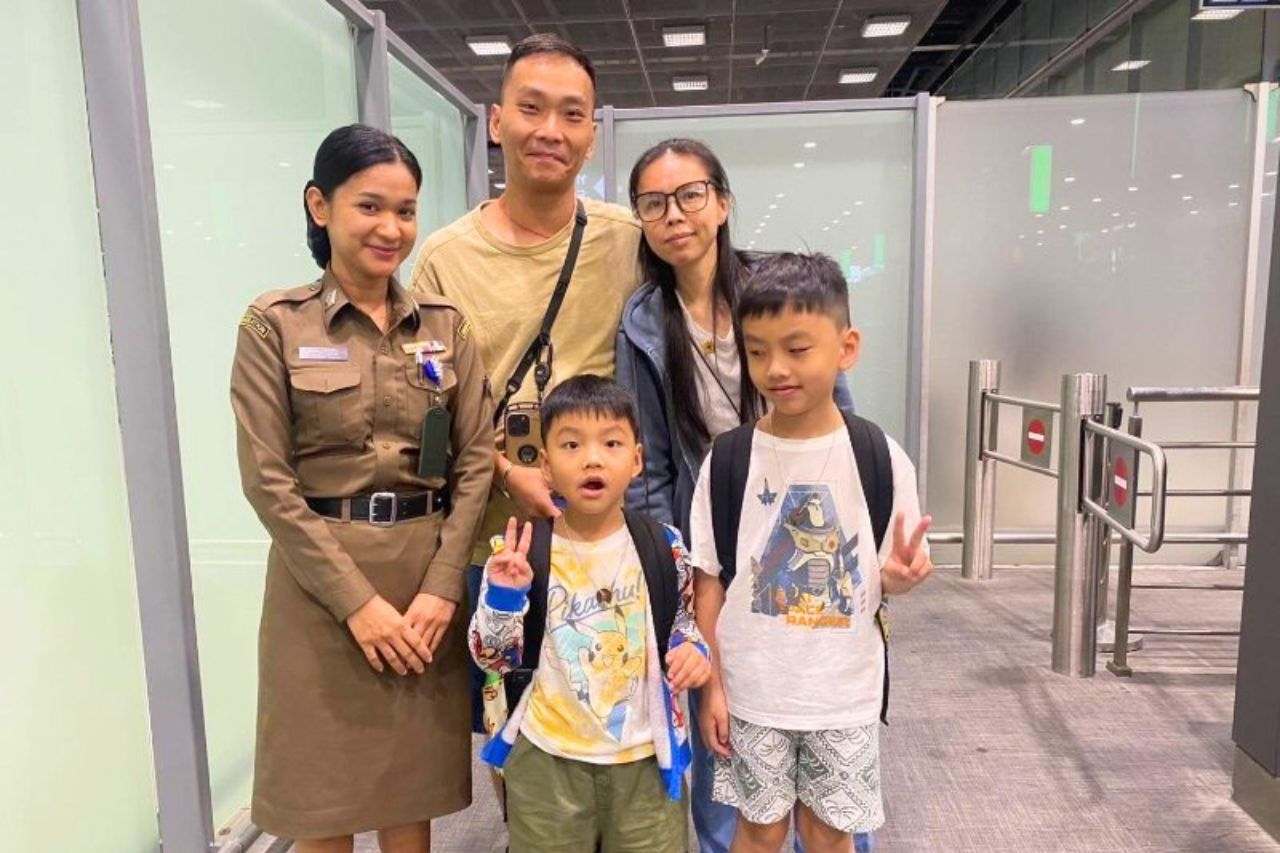
Chinese family with an immigration officer in Thailand. Photo: Siam Rath
Nithee Seeprae, the TAT's vice-governor in charge of marketing communications, attributed the decline to a decrease in visitors from nearby destinations, particularly China, but highlighted growth in distant markets such as Europe and the United States.
He emphasized the importance of adapting to changing trends, with young travelers increasingly choosing destinations that were once popular with older generations.
« La nouvelle génération de voyageurs veut quelque chose de différent », a-t-il déclaré.
"That's why we need to change perceptions.
Of course, we use pop culture and content to attract young people."
Nithee has called for the creation of new attractions, the preservation of cultural heritage, and collaboration with online travel agencies and influencers to promote lesser-known destinations like Chanthaburi.
Echoing the views of the TAT, Chai Eamsiri, CEO of Thai Airways International (THAI), reported a 10% increase in long-haul travelers.
Particularly from Europe and Australia, which helped offset the decline in Chinese visitors.
He attributed this decline to security concerns, increased travel costs, currency appreciation, and competition from countries offering artificial attractions.
Mr. Chai highlighted the need to find solutions tailored to different markets and stressed the importance of addressing the security concerns of Chinese travelers.
He warned that ignoring this issue could have long-term consequences.
He also stressed the need for collaboration among all tourism stakeholders, particularly government agencies.
“Tourism is not just the responsibility of the TAT; it’s a collective effort, particularly in terms of security,” he said, adding that with concerted efforts, Thailand could regain tourists’ confidence in a few months.
Thienprasit Chaiyapatranun, president of the Thai Hotel Association, noted that while the number of foreign visitors remains lower than last year, the gap is narrowing and he expects the total number of arrivals to reach around 34 million by the end of the year.
He remains confident that Thailand remains among the top three destinations for Chinese tourists, with independent travelers (FIT) accounting for 80-90% of visitors.
To improve the situation, he highlighted the need to improve connectivity, particularly by addressing the shortage of flights, and suggested developing an affordable rail link between ASEAN and China.
Thienprasit also called for the creation of new artificial attractions, urging Thailand to leverage its cultural heritage, street food, and hospitality to remain competitive.
New tourism strategies suggested to strengthen Thailand's global appeal

Herbal massage in Thailand. Photo: The Nation Thailand
Sunai Wachirawarakarn, president of the Thai Spa Association, discussed the growing role of wellness tourism in stimulating Thailand's tourism sector.
He emphasized that wellness tourism now accounts for 7.8% of all trips, with wellness travelers spending more than average tourists.
He also highlighted the challenges faced by the spa industry, including the negative perception of Thai massage due to sex tourism.
Sunai suggested expanding the offer, for example with wellness packages, to attract more high-spending visitors.
He mentioned successful investments in wellness in Singapore, Dubai, and Italy, and proposed that Thailand develop large-scale wellness facilities, like Disneyland, focusing not only on physical but also mental well-being.
Sunai emphasized that wellness is not limited to massage, but also encompasses healthy Thai cuisine and the famous Thai hospitality.
He urged Thailand to use its soft power assets, such as cuisine and hospitality, to create new tourist experiences.
“ We no longer need an economic model based on human resources.
We need something that generates revenue from the facility itself,” he said.
“ If we do this, we will rely more on the facility and we can use Thailand's space and natural resources.”
“ I am convinced that in every city, once we have this type of space, we can make it more creative.
It should not focus only on physical well-being, but also on mental well-being.”
Supakarn Jariyapichest, a Thai tourism content creator, commented that foreign travelers still associate Thailand with destinations such as Phuket and Pattaya.
He stressed the need for Thailand to innovate its tourism offerings to remain competitive, particularly in the face of countries like Vietnam, which has introduced new attractions.
Supakarn suggested that Thailand focus on developing unique attractions in secondary cities and control travel prices to attract both backpackers and big spenders.
"We're becoming increasingly dependent on social media.".
Even if it's not the fastest or most efficient way, when information goes viral, it stays there,” he said.
“Most of the tourist attractions people see today are from countries like Vietnam, Singapore, and Malaysia, and I see people showcasing those places in Thailand.
“We need to do more to create new and unique content,” he concluded.
Suvita Charanwong, CEO of Tellscore, emphasized the need to improve infrastructure and events in Thailand to compete with tourism leaders like Japan and China.
Although Thailand has solid infrastructure, Suvita stressed the importance of improving intangible infrastructure, particularly communication.
She argued that positive messages about safety, inclusivity, and LGBT-friendly offers in Thailand could help counter negative perceptions.
Suvita also highlighted the role of content creators, particularly in China, in reshaping Thailand's tourism image and promoting long-term engagement.
"The best influencers are the travelers themselves.
When they talk about Thailand and come back, that's the key", she said.
In 2026, Thailand will not only need to bring back visitors, but reinvent what it means to travel to the Land of Smiles.
See also:
Tourism in Thailand: the Chinese remain the most spendthrift travelers
Thailand: five new links with Europe boost tourism
The major trends in tourism in Thailand for 2026
Source: The Nation Thailand
Prepare your trip to Thailand
Book bus, train, or boat in Thailand
Manage your money while traveling with Wise
If our news, tourist information, or cultural content has been useful to you and you'd like to thank us:
You can follow us on:
Twitter, LinkedIn, Facebook, Google News
Or install our app:
Install the Toute la Thaïlande app on your smartphone

2 comments
Israeli tourists are paid and encouraged by the Netanyahu government to spend their vacation days there…
They are mostly IDF soldiers on leave.
Be careful !!! Thailand is bought !
It's not just military personnel on leave, there are also many Israelis leaving the country with their families due to fear of new tensions with Iran or Yemen.
The famous Iron Dome did not stop numerous missiles…