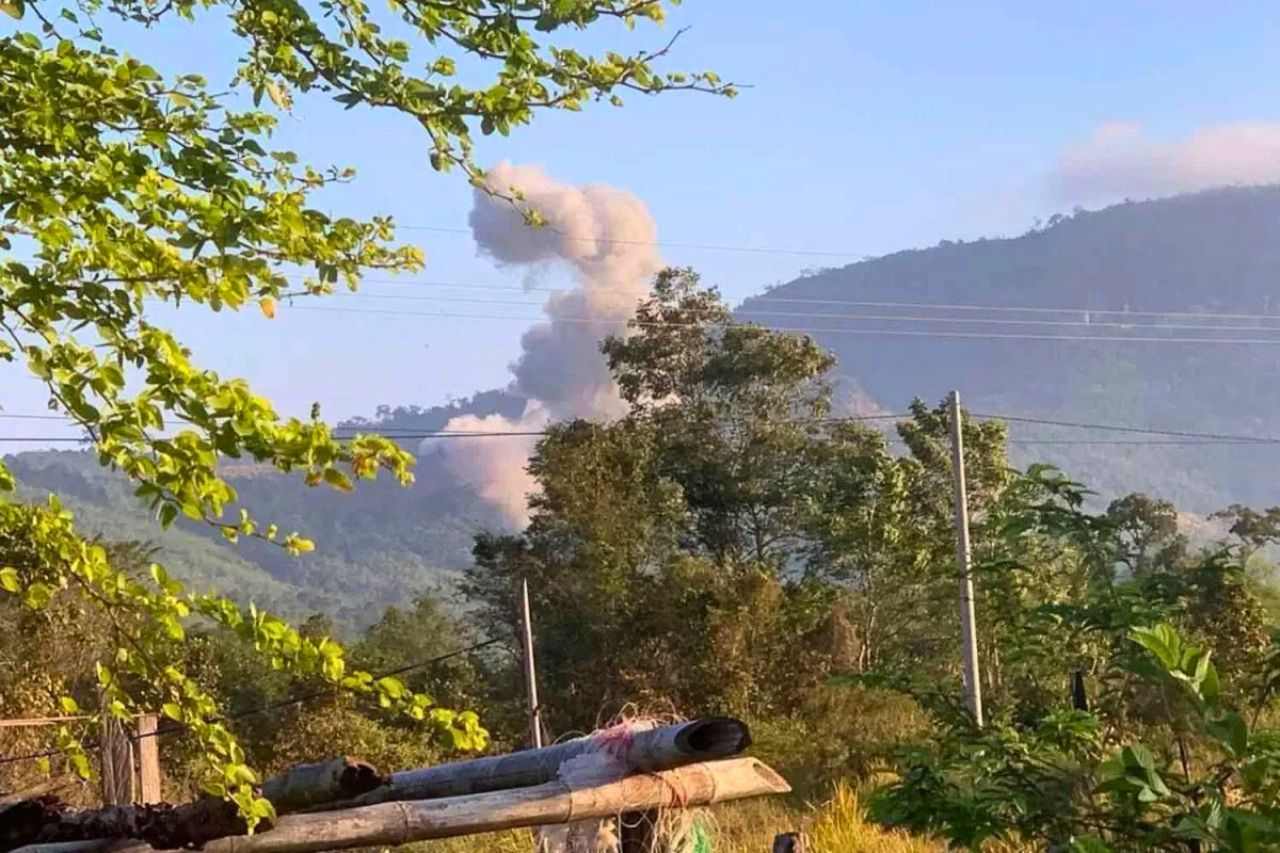
On Monday, December 8, fighting resumed between Thailand and Cambodia, marking the definitive collapse of the fragile ceasefire.
Clashes broke out following a skirmish in which a Thai soldier was killed on Sunday night.
Since then, heavy artillery and rocket fire have spread over much of the country's 817 km land border, with each side accusing the other of firing first.
Bangkok reported four soldiers killed and 68 wounded, accusing Cambodian BM-21 rocket units of firing blindly on civilian areas.
On Tuesday, December 9, Thai F-16s struck Cambodian positions in Preah Vihear Province, killing at least nine civilians and wounding 20, according to the Cambodian Ministry of Defense.
What began as sporadic clashes around ancient temples and disputed ridges has turned into airstrikes, rocket barrages, and a mass exodus of civilians.
More than 300,000 people have already fled their homes.
Cambodia appears to be provoking Thailand
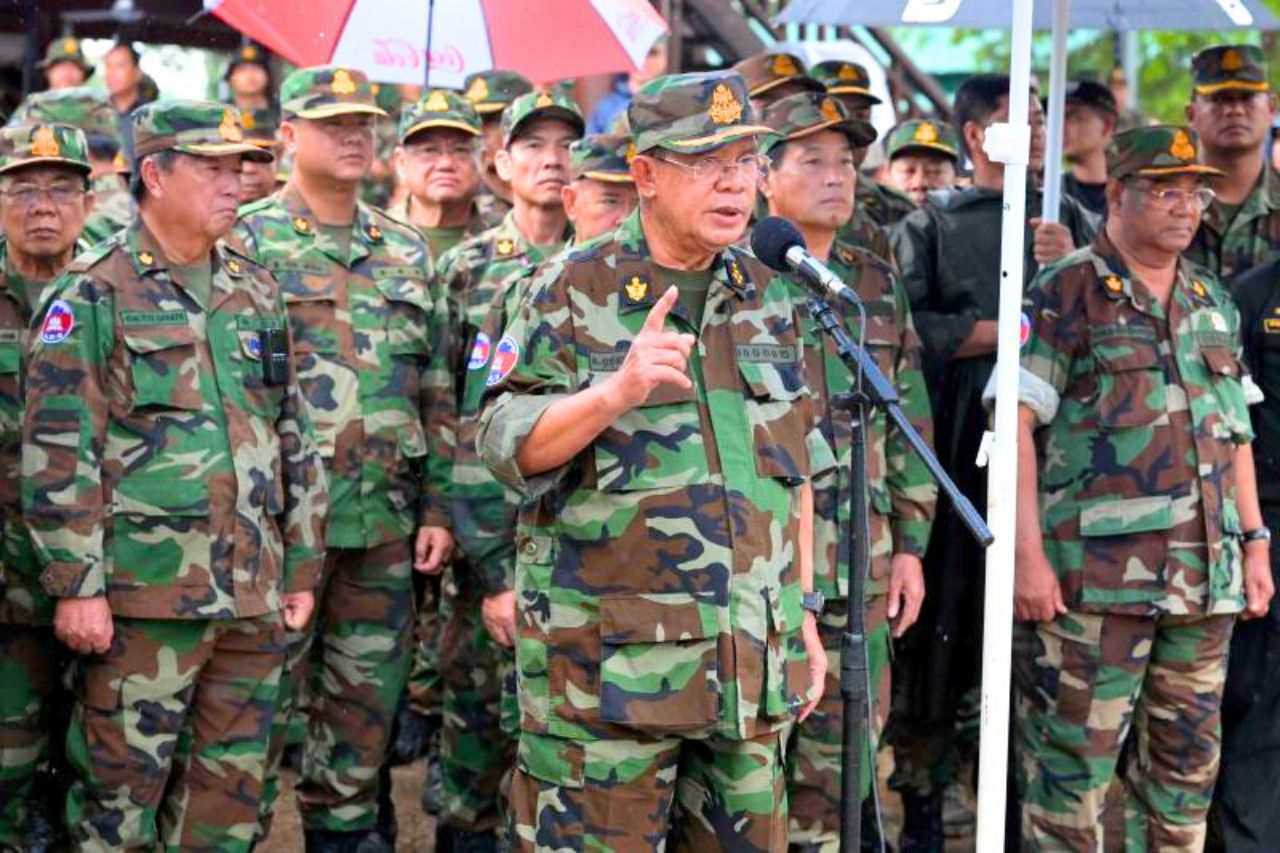
Hun Sen, Senate President and five-star general, addresses soldiers during his visit to armed forces stationed along the border in Preah Vihear province on Thursday, June 26, 2025. Photo: Bangkok Post
Cambodia, still marked by the authoritarian legacy of the Hun family, appears to be provoking its large neighbor, Thailand.
Military experts compare Phnom Penh's behavior to 'teasing a tiger with a twig'.
With Thailand having a clear military superiority and preparing a stronger response, Cambodia could lose ground and be exposed to a strategic collapse.
'This goes far beyond a minor border conflict; it's a planned escalation,' says Carl Schuster, former Director of Intelligence for the US Pacific Command.
'The Cambodian leaders are banking on global sympathy and Chinese support, but Thailand outdoes them in every respect.'
The actions of Cambodia appear to be methodical rather than accidental.
Analysis of satellite images by the Australian Strategic Policy Institute (ASPI) shows that Phnom Penh has reinforced 33 distinct positions since March.
In contrast, Thailand has taken 14 measures that ASPI describes as de-escalation.
"Cambodia's behavior clearly betrays its intentions," says Nathan Ruser, an analyst at ASPI.
"They are fortifying the heights, stockpiling artillery, and preparing fallback positions.
This looks like defensive aggression, aimed at pressuring Thailand into making concessions."
Domestic politics is adding fuel to the fire.
Former strongman Hun Sen, now Senate President, and his son, Prime Minister Hun Manet, have turned to nationalism as the economy slows down.
In the midst of the crisis, they announced mandatory conscription for 2026, a measure that critics see as a political staging disguised as patriotic rhetoric.
A conflict possibly linked to fraudulent Cambodian call centers

Cambodian flag and call center. Illustration: The Nation Thailand
Analysts believe that the resumption of the border conflict that started last May was triggered by Cambodia to divert international attention from its fraudulent call centers, as numerous actions are taken against them.
See: Cambodia provokes Thailand to protect its scam centers
Just before the resumption of clashes, several international reports, including that of the United Nations Office on Drugs and Crime (UNODC), accused the country of being a major center of transnational cybercrime, with the complicity of the ruling elite.
See: Fraudulent call centers: Thailand accuses Cambodian elite
Thailand is now supported by eight countries, the FBI and Interpol in its fight against these transnational networks.
See: FBI and eight countries with Thailand against Cambodian call centers
Those responsible for these call centers have suffered several major setbacks, including the freezing of billions of dollars in assets.
See: Hard blow to cybercriminals in Cambodia and Myanmar
According to a United Nations report, fraudulent call centers contributed between 40 and 60% of Cambodia's gross domestic product.
In this context, several analysts believe that the conflict with Thailand could also serve as a political and geopolitical diversion, aimed at protecting an illegal but vital economic pillar, now increasingly threatened.
The shadow of history on the border
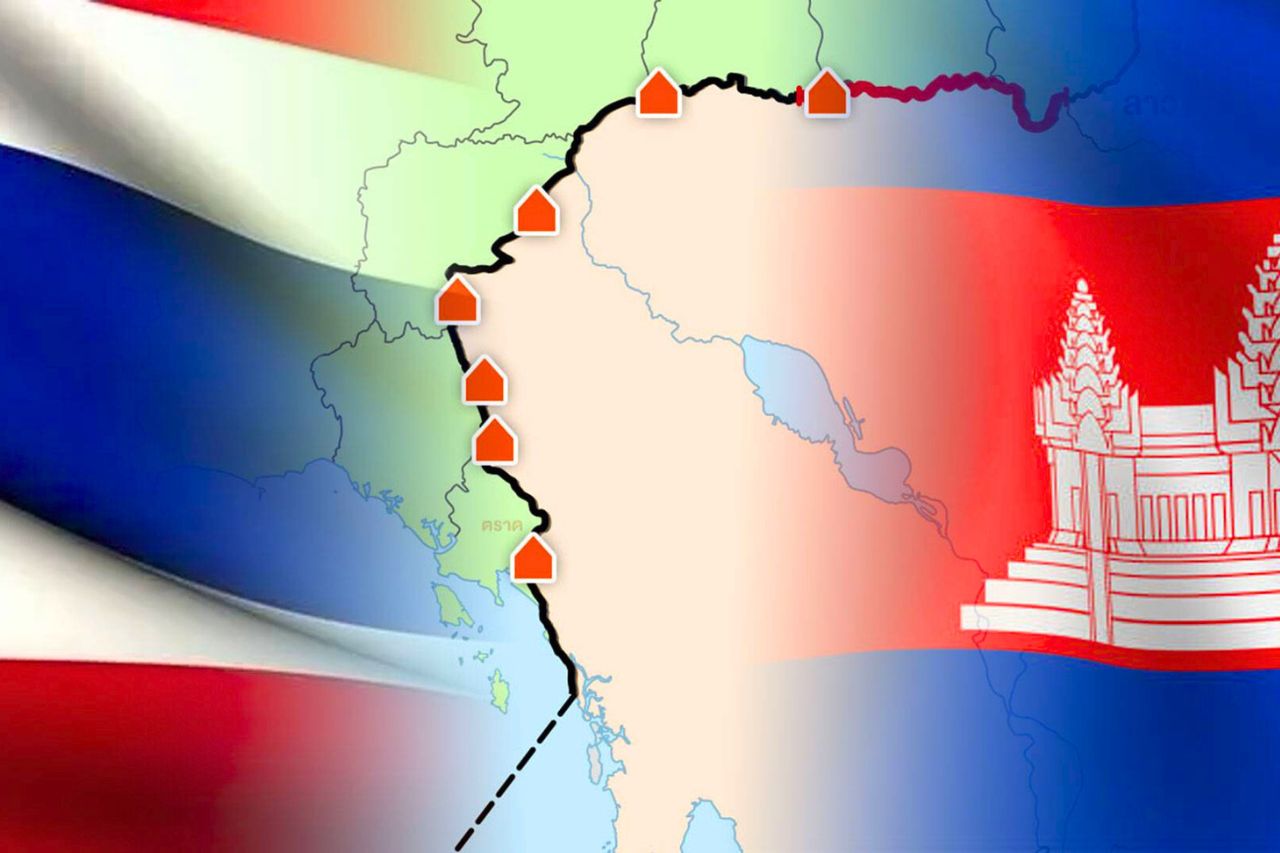
Border posts between Thailand and Cambodia.
The origins of this crisis date back to maps drawn by France in 1907.
These documents established the 817-kilometer border between Siam (now Thailand) and French Indochina (now Cambodia), but left enough ambiguity to sow distrust for decades.
One of the most sensitive hotspots is the Preah Vihear temple, dating back to the 11th century.
The International Court of Justice (ICJ) awarded the temple to Cambodia in 1962, but the surrounding land is claimed by Thailand.
The clashes between 2008 and 2011 resulted in 20 deaths and thousands of displaced persons.
The fighting in 2025 marks a more dangerous phase.
Tensions flared up again on May 28 in the Emerald Triangle, at the junction between Cambodia, Thailand, and Laos.
The Cambodian forces had reinforced their positions in this region.
A clash ensued, causing the death of a Cambodian soldier.
Phnom Penh accused Thailand of invading its territory, while Bangkok accuses its neighbor of laying new landmines along the border.
See: Mines: Thailand unveils new damning evidence against Cambodia
On July 24, the conflict had intensified, leading to violent exchanges near the Ta Muen Thom temple.
Five days of intense fighting, involving rockets and artillery, resulted in 48 deaths and displaced around 300,000 inhabitants.
A truce negotiated by Donald Trump in Kuala Lumpur briefly eased the front, but Thailand suspended the agreement in November after a landmine seriously injured a Thai soldier.
Bangkok claims that this mine was recently laid by Cambodian forces.
Military comparison: Thailand's clear superiority
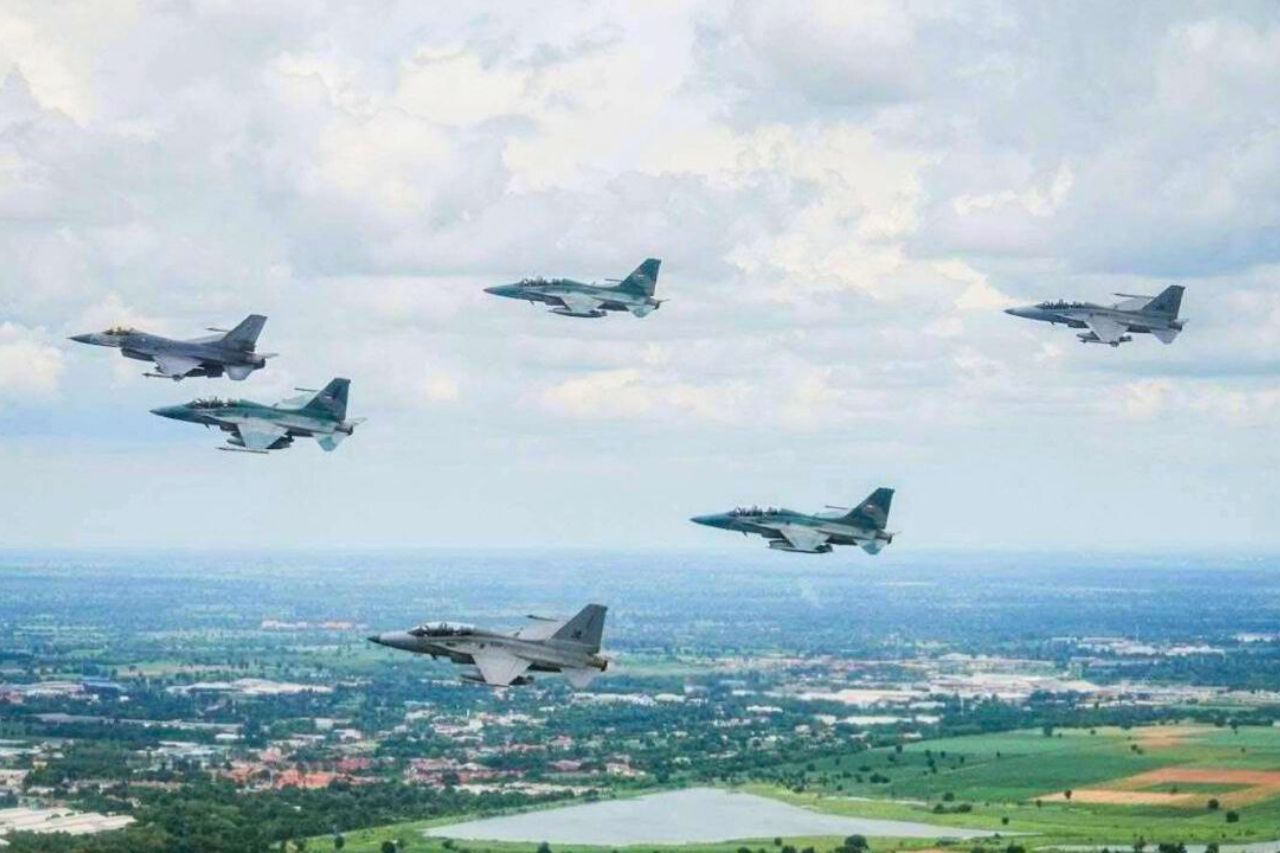
Thai F-16 aircraft. Photo: Thai PBS World
Any prolonged war would be marked by a glaring power imbalance.
The Thai military is larger, better funded, and far more advanced.
The Global Firepower Index (GFP) 2025 ranks Thailand 25th globally, with a power index of 0.4536.
The lower the scores, the stronger the forces.
Thailand ranks third in ASEAN, behind Indonesia and Vietnam.
Cambodia ranks 95th with a score of 2.0752, indicating significant structural weakness.
The International Institute for Strategic Studies (IISS) reaches a similar conclusion in its Military Balance 2025 report.
It describes the Thai armed forces as "significant, well-funded, and among the best-equipped in Southeast Asia," with a clear advantage in airpower thanks to their modern Saab Gripen and F-16 fighter jets.
Cambodia relies on a mix of aging Soviet-era systems, supplemented by Chinese aid, but still lacks a credible air force.
Thailand allocates around 1.1% of its GDP to defense, which is enough to fund high-end purchases such as VT-4 tanks and new frigates.
Cambodia's $860 million budget, approximately 1.5% of GDP, is primarily used to ensure basic operations.
Phnom Penh's significant lead in rocket launchers suggests a focus on long-range bombardment and guerrilla tactics.
Experts claim, however, that this will have little impact once Thai aircraft and drones enter the fray.
“Cambodia can fire rocket salvos across the border, but Thailand controls the airspace,” says Mr. Schuster.
“The terrain favors Cambodian access in some areas, but that will be of little comfort if F-16s can destroy their artillery in a few hours.”
A war that Cambodia cannot win
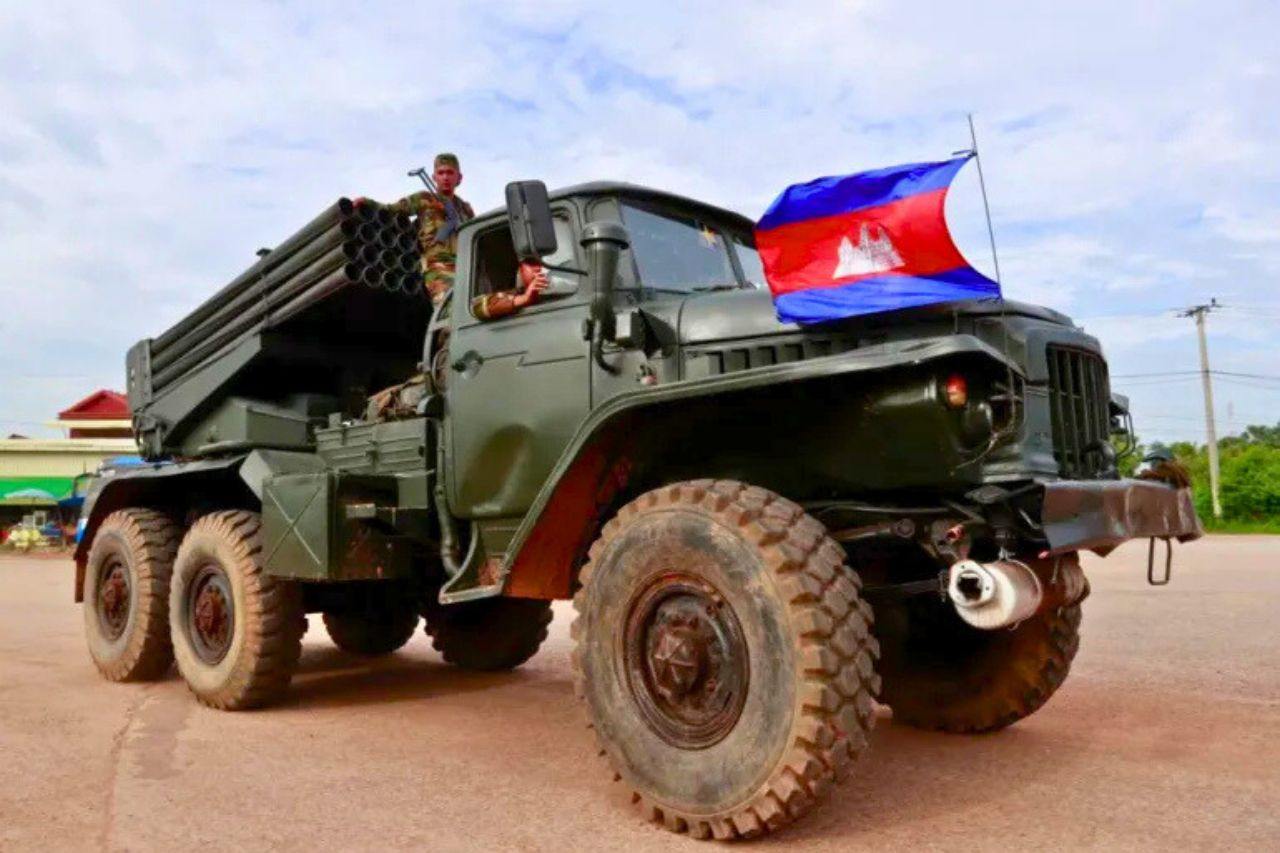
Cambodian soldiers on board a multiple rocket launcher in Oddar Meanchey Province on July 25, 2025 Photo: Kith Serey/EPA
Most military experts predict the same outcome if fighting escalates into a full-scale war.
Cambodia could cause damage and increase costs, but it would almost certainly lose.
“Thailand is ahead in both numbers and quality,” says Mr. Schuster.
“Its special forces, aircrews, and logistics units are far more effective.
They could cut off Cambodian supply lines in a few days and turn fixed border defenses into deadly traps.”
The IISS notes that Thailand has around 361,000 active military personnel, about three times Cambodia's actual combat force, and has long-standing ties with the United States.
Cambodia, on the other hand, relies heavily on China and still depends on old T-55 tanks and MiG-21 aircraft that belong in museums, not on modern battlefields.
Joshua Kurlantzick of the Council on Foreign Relations (CFR) warns against reckless decisions made by struggling elites.
“Hun Sen's system feeds on nationalism.
Provoking a conflict with Thailand could strengthen his support in the short term, but it could lead to a humanitarian catastrophe.
The Thai military also sees it as an opportunity to strengthen its position ahead of the elections, while Cambodia hopes Washington will intervene to curb Bangkok.
The Lowy Institute's war games paint a grim picture for Phnom Penh.
In most scenarios, Thailand seizes all disputed territories within weeks.
It also uses its navy to block key ports, strangling Cambodian imports of fuel and ammunition.
“Phnom Penh's conscription plan is more about the political scene than the battlefield,” says Mr. Schuster.
“It swells the ranks, but doesn't produce trained pilots, mechanics, or officers.”
The number of casualties could reach several thousand if both sides fully engage and begin using their heaviest weapons.
ASEAN leaders have attempted to intervene
Logo of ASEAN and flags of member countries.
Malaysian Prime Minister Anwar Ibrahim took the initiative, but talks are at a standstill.
Indonesia and Vietnam, fearing being drawn into the conflict, are watching every move.
On December 9, UN Secretary-General António Guterres called for new dialogue, but Thai Prime Minister Anutin Charnvirakul insists that 'there will be no talks until our sovereignty is guaranteed'.
Hun Manet speaks of restraint in public, but at the same time, he calls on reserves and accuses Thailand of blatant aggression.
Each party presents itself as the victim, a position that makes compromise more difficult and increases the risk of misjudgment.
A region on the brink: human cost and economic shock
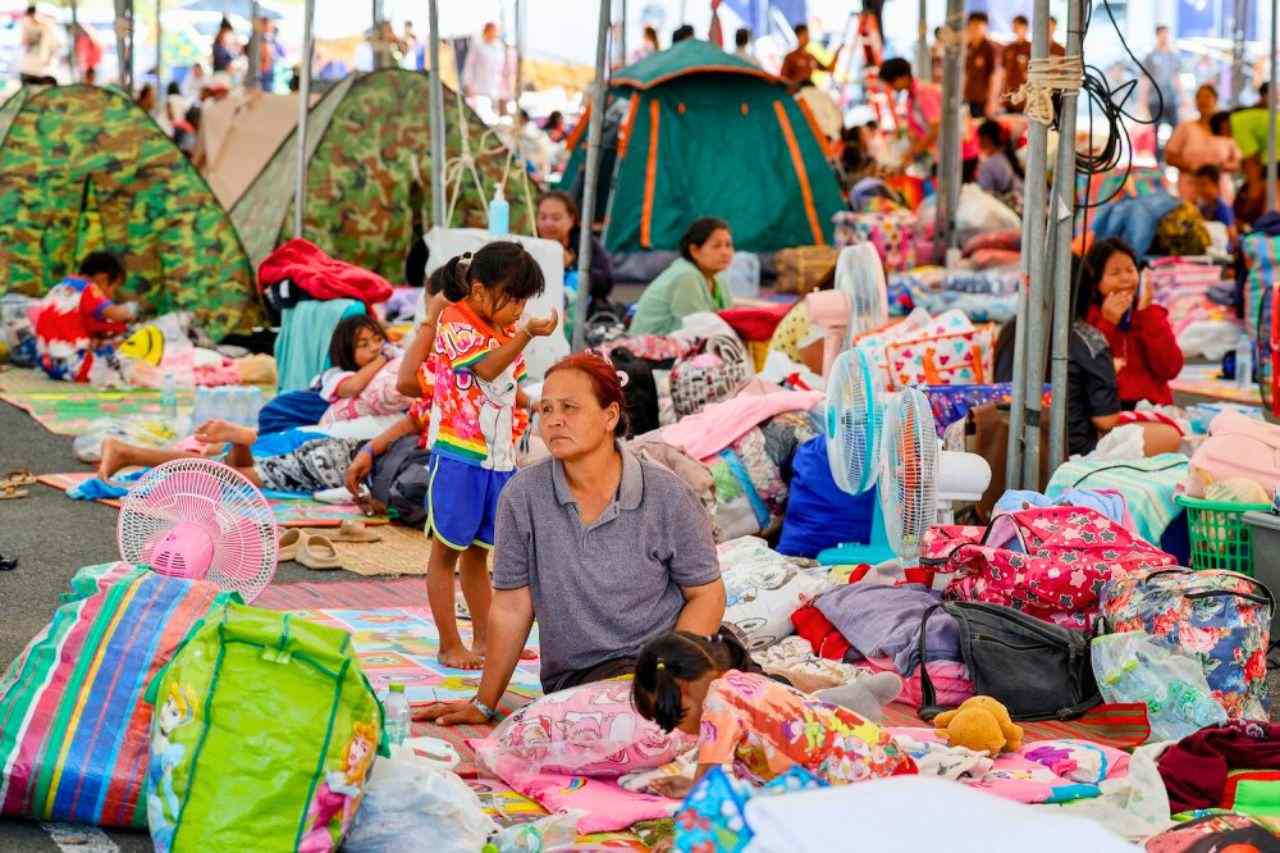
Thai civilians displaced to camps due to conflict with Cambodia. Photo: CTN News
The pain is particularly acute for those living along the border.
More than 125,000 Thai civilians have taken refuge in makeshift camps in Buriram province.
On the other side of the border, Cambodian families are fleeing to Siem Reap on tractors, trucks, and on foot, taking with them what they can.
Cross-border trade is practically at a standstill.
Tourism has collapsed in neighboring provinces.
Economists estimate losses at several billion dollars if the crisis continues.
“It's not just old stones and temple walls, but people who have lost everything,” explains a displaced farmer from Oddar Meanchey, clutching a bag of clothes and family documents.
Regional experts are calling for stronger diplomatic pressure.
Sothirak Pou of the Cambodian Center for Regional Studies argues that the ICJ's decisions must be respected and implemented, or else similar conflicts could erupt elsewhere.
But global attention is scattered.
Trump is focused on his re-election campaign, while Xi Jinping is more concerned about Taiwan and internal pressures.
Schuster issues a stern warning.
“If diplomacy fails, Cambodian leaders will realize they have awakened a monster much bigger than they can handle.
They could trigger a conflict that will destroy their own state before anyone can intervene to stop it.”
Night is falling on a battered border that has seen empires rise and fall, and once again the future looks fragile.
The guns could fall silent or grow louder in the days ahead.
For now, the tiger is stirring, and Cambodia is dangerously close to its claws.
- The ceasefire between Thailand and Cambodia has collapsed, sparking fighting on an unprecedented scale.
- More than 300,000 civilians have already fled the area, while Bangkok and Phnom Penh are accusing each other of firing first.
- Experts highlight Thailand's strong military superiority and fear a regional escalation that is difficult to contain.
Source: CTN News
Prepare your trip to Thailand
Book bus, train, or boat in Thailand
Manage your money while traveling with Wise
If our news, tourist information, or cultural content has been useful to you and you'd like to thank us:
You can follow us on:
Twitter, LinkedIn, Facebook, Google News
Or install our app:
Install the Toute la Thaïlande app on your smartphone
⚠️ Cryptocurrencies involve risks: Invest only what you are willing to lose.

2 comments
And there we are…
Thailand and Cambodia at the foot of the decision wall: aggravating the conflict, transforming, for various and antagonistic reasons depending on the side we are on, a dangerous but manageable tension between neighbors into a declared armed conflict in a "state of war", involving significant risks of human losses on both sides and fighting between the two armies recalling Thai military supremacy on land, sea and air, which, as the article says, could crush the Cambodian armed forces massed at the border in 2 to 3 weeks, leading them to surrender, or even to a mass desertion of its poorly trained, poorly commanded, and poorly equipped personnel…
If international pressure does not intervene quickly and strongly enough in the coming days to silence the guns, I fear the worst, and personally, I see little chance of a military de-escalation in the current state of the situation, with a provocative Cambodia and unconscious leaders, not very concerned with sparing the lives of military personnel and civilians in the border regions, and a Thailand, aware of its military superiority in all areas…
Hello… Donald… (champion of armed peace treaties)?
Is anyone on the other end of the line???
Unfortunately, another conflict between two elites involved on both sides in criminal activities.
And as usual, to avoid getting caught red-handed, these leaders prefer to create chaos, make noise.
Courage to the Thai and Cambodians victims of the greed of their "leaders".