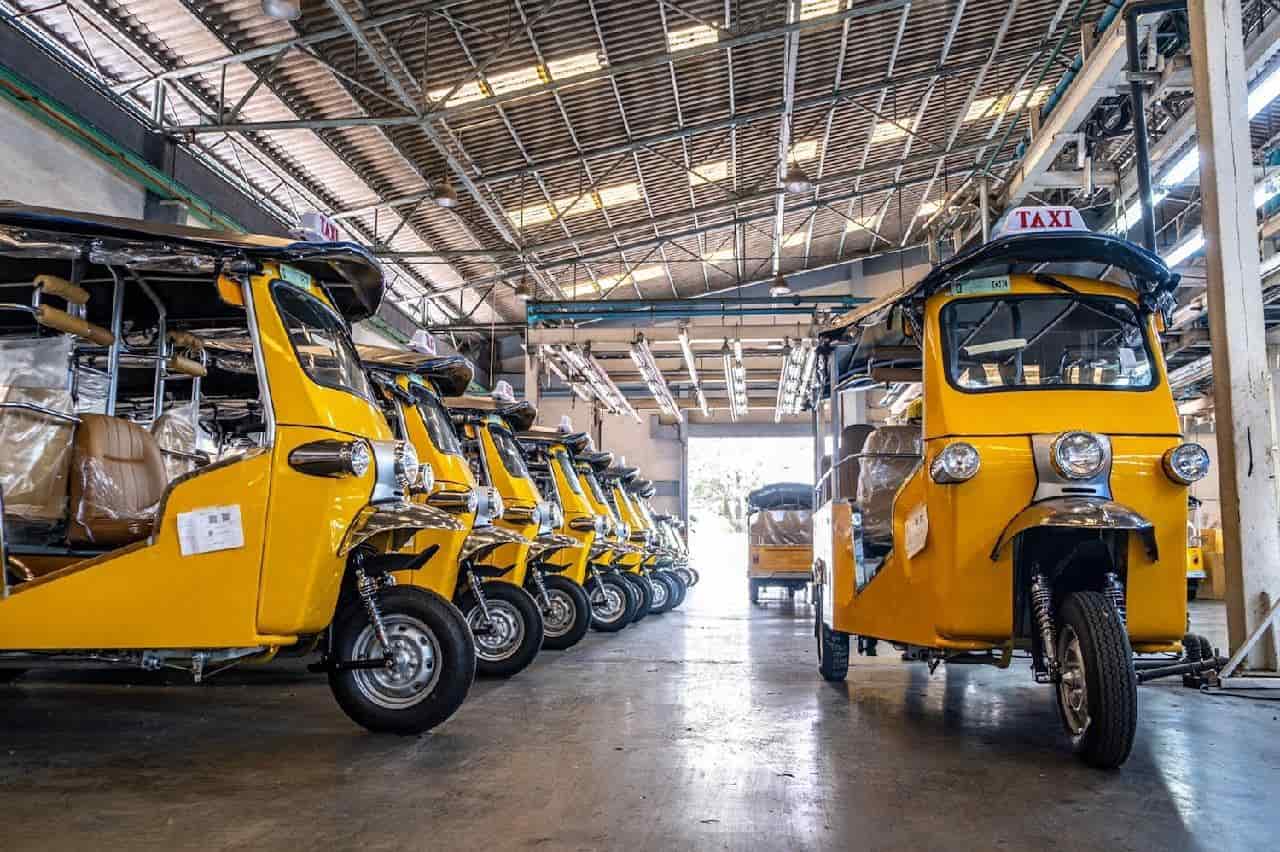
Thailand has seen a 380% increase in electric vehicle (EV) registrations in 2023 compared to the previous year.
The Electric Vehicle Association of Thailand (EVAT) has released a summary of the EV landscape, showing significant growth and a promising future for electric mobility in the country.
New registrations of battery electric vehicles (BEVs), particularly electric cars, reached 76,366 units in 2023, marking a substantial increase from 9,678 units the previous year.
Overall, new registrations of EVs of various types reached 100,219 units in 2023, a growth of 380% compared to the 20,816 units recorded in 2022.
Distribution of registrations by type of EV in 2023
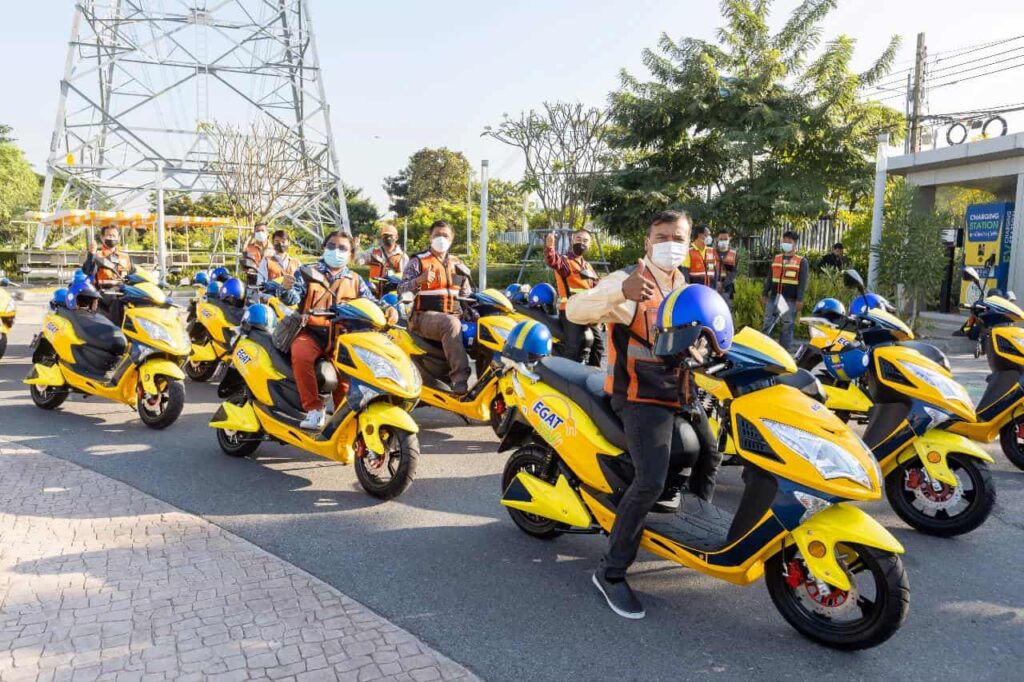
Electric motorcycles in Thailand. Photo: Electricity Generating Authority of Thailand (EGAT)
The BEV category has seen significant growth, from 32,081 units in 2022 to 131,856 units in 2023, a growth of 311%.
New registrations for battery electric vehicles:
- BEV cars: 76,366 units
- BEV motorcycles: 21,927 units
- BEV passenger vehicles: 1,218 units
- Tuk-tuk BEV: 432 units
- BEV trucks: 276 units
Remarkable growth thanks to subsidies
Chinese automakers, including Chang'an, SAIC, and Great Wall Motors, have played a leading role in signing the EV 3.5 privileges.
EV 3.5 is the name of the new subsidy scheme for electric vehicles introduced in Thailand.
The current subsidy program, which ranges from 70,000 to 150,000 baht (1,806 to 3,871 euros) per electric vehicle, will expire at the end of the year and will be replaced by a subsidy of up to 100,000 baht (2,580 euros) per EV from 2024 to 2027.
See: Thailand cuts electric vehicle subsidies as sales boom
This reflects a continued upward trend in the Thai electric vehicle market, with these companies participating in the second phase of the Electric Vehicle 3.5 (EV 3.5) program, the EVAT association said.
This initiative, in collaboration with the Ministry of Land Transport, aims to support and promote the use of electric vehicles in Thailand.
Ekniti Nitithanprapas, Director General of the Revenue Department, emphasized the government's commitment to implementing the support measures of the EV 3.5 program.
This policy is expected to enable Thailand to become a hub for electric vehicle production in the region.
See: Thailand wants to become a hub for electric vehicles
The EV 3.5 policy aligns with global environmental strategies, promoting carbon neutrality and net-zero greenhouse gas emissions.
Electric vehicle imports are estimated to reach around 175,000 units between 2023 and 2024.
This is expected to boost domestic production, with an estimated 350,000 to 525,000 electric vehicles rolling off assembly lines in Thailand by 2026.
Financial support for the EV 3.5 policy is estimated at around 34.06 billion baht.
See also:
Big misunderstanding: Thailand is not the 3rd richest country in lithium
Thailand has more than half a million electric vehicles
Thailand wants 100% electric public transportation within 10 years
Source: The Nation Thailand
Prepare your trip to Thailand
Book bus, train, or boat in Thailand
Manage your money while traveling with Wise
If our news, tourist information, or cultural content has been useful to you and you'd like to thank us:
You can follow us on:
Twitter, LinkedIn, Facebook, Google News
Or install our app:
Install the Toute la Thaïlande app on your smartphone
