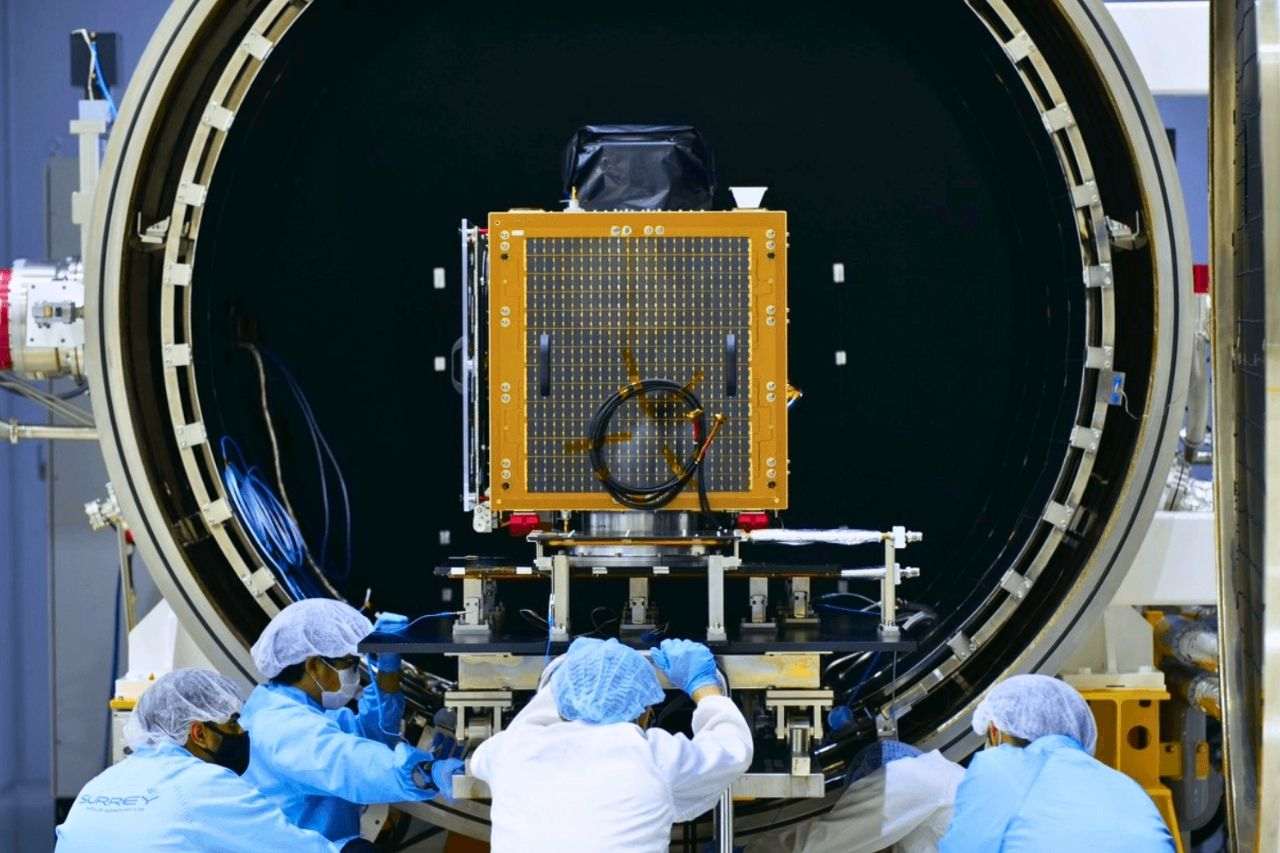
Despite the failure to launch the THEOS-2A satellite from India on Monday, January 12, Thailand is not giving up on its space ambitions.
See: Hard blow to Thailand: failure to launch THEOS-2A satellite
- The Thai satellite THEOS-2A was lost during its launch from India following a malfunction of the PSLV launcher.
- GISTDA states that this failure does not undermine the morale or determination of its teams.
- The satellite and its launch were insured, allowing for the construction of a replacement satellite.
- Plus de 20 ingénieurs thaïlandais ont été formés pendant deux ans au Royaume-Uni pour concevoir et tester THEOS-2A.
- Thailand intends to sustainably strengthen its technological capabilities in the space sector.
According to the Thai Geo-Informatics and Space Technology Development Agency (GISTDA), this incident will not affect the morale or determination of its teams.
A new satellite is already in preparation to sustainably strengthen the country's space technological capabilities.
GISTDA declared:
« Technological know-how was not lost with the satellite, the knowledge and experience accumulated by Thai engineers and industry during the construction of the unfortunate satellite are invaluable invisible assets, which remain intact. »
It added that the satellite and its launch were insured, so that a replacement can be built and deployed.
The Thai space agency stressed that it did not buy the satellite abroad, but sent more than 20 Thai engineers to the manufacturer in the UK for about two years.
During this period, they learned from experts and participated in the design, development, assembly, and testing of satellites.
The THEOS-2A satellite, lost, was equipped with technology to measure solar irradiance, the geomagnetic field and a GPS system.
The Indian Space Research Organisation (ISRO) stated that a malfunction in the third stage of the Polar Satellite Launch Vehicle C62, which was carrying THEOS-2A and 15 other satellites, caused an anomaly in attitude control.
This resulted in a deviation from the flight path, preventing the satellites on board from being placed into orbit.
For Thailand, this failure is a hard blow, but also a formative investment in building a genuine national space industry.
See also:
NASA to help Thailand in its space conquest project
Thailand partners with France in space technology
Thailand partners with China to explore the Moon
Thailand to go into space in 2023-2027
Source: Thai PBS World
Prepare your trip to Thailand
Book bus, train, or boat in Thailand
Manage your money while traveling with Wise
If our news, tourist information, or cultural content has been useful to you and you'd like to thank us:
You can follow us on:
Twitter, LinkedIn, Facebook, Google News
Or install our app:
Install the Toute la Thaïlande app on your smartphone

1 comment
Well, the satellite is irrecoverable, but logically, insured against the Indian launch vehicle's failure…
So, the financial loss for Thailand and its engineers will be limited to a loss of time (the time required to commission a THEOS 2A » bis »), a delay in its launch and deployment, once successfully launched into space and placed into orbit.
All we can do is cross our fingers that the Indian rocket does its part of the job!