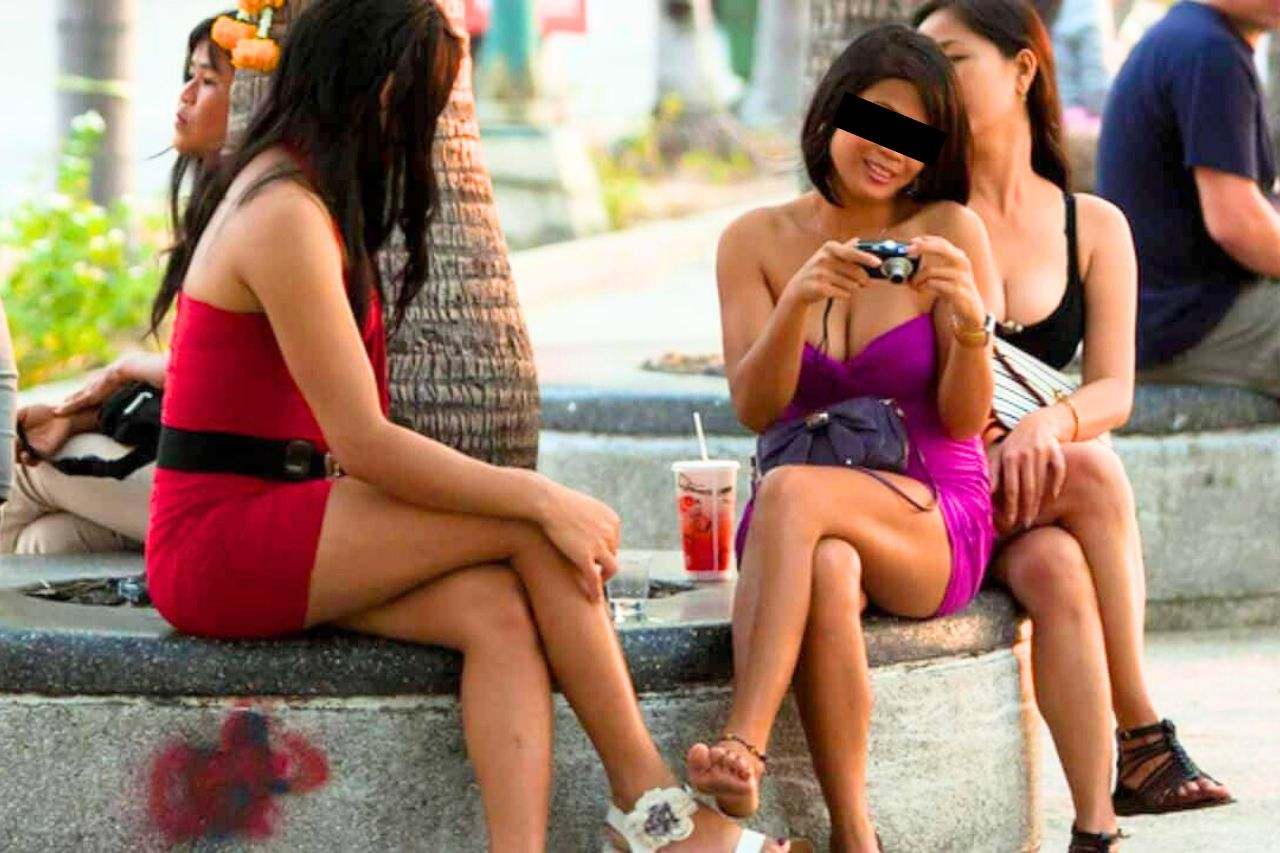
Visible on the streets, tolerated in practice, but denied by law, prostitution in Thailand illustrates a deep legal paradox.
In Pattaya as elsewhere, the state persists in affirming that this trade does not officially exist, even if it means erasing any responsibility when conflicts arise.
Prostitution is officially illegal in Thailand since 1960, an unchanged legal position that allows the State to deny all responsibility.
See: Prostitution in Thailand, what you need to know
An article from Pattaya Mail:
Pattaya and the incident that never existed

Under the palm trees of Pattaya Beach Road, an unofficial nightlife takes place in plain sight, yet is legally defined as not existing at all. Photo: Pattaya Mail
There is a story that one of our firm's lawyers likes to tell.
It always raises a knowing smile, not because it's funny, but because it reflects something deeply and undeniably Thai.
An Indian had made an appointment to buy sexual services from a person he believed to be a woman in Pattaya.
The terms had been agreed upon: a price, a place, and a mutual agreement.
The meeting went as planned.
The problems started afterwards, when the man refused to pay.
His explanation was straightforward:
"You are transgender, you are not a real woman.
I paid for a real woman."
The conflict escalated.
Voices were raised.
Eventually, both parties ended up at the police station, arriving separately by taxi-motorcycle.
The image may seem slightly comical, but for anyone familiar with the Thai legal landscape, it was quite normal.
The police listened, examined the facts, and then rendered their conclusion in a single definitive statement:
“In Thailand, the buying and selling of sexual services are illegal.
Therefore, the police cannot take any action against either party.”
And the matter rested there, no payment, no compensation.
Neither party was judged to be right or wrong.
From a legal standpoint, the incident itself was considered to have never occurred.
In 2022, police officers had threatened a foreign tourist, who had come to complain about a theft committed by a prostitute, with prosecution for violating the law on prostitution.
See: A tourist threatened with prosecution for violating the prostitution law in Thailand
A country where nothing exists, but where everyone sees
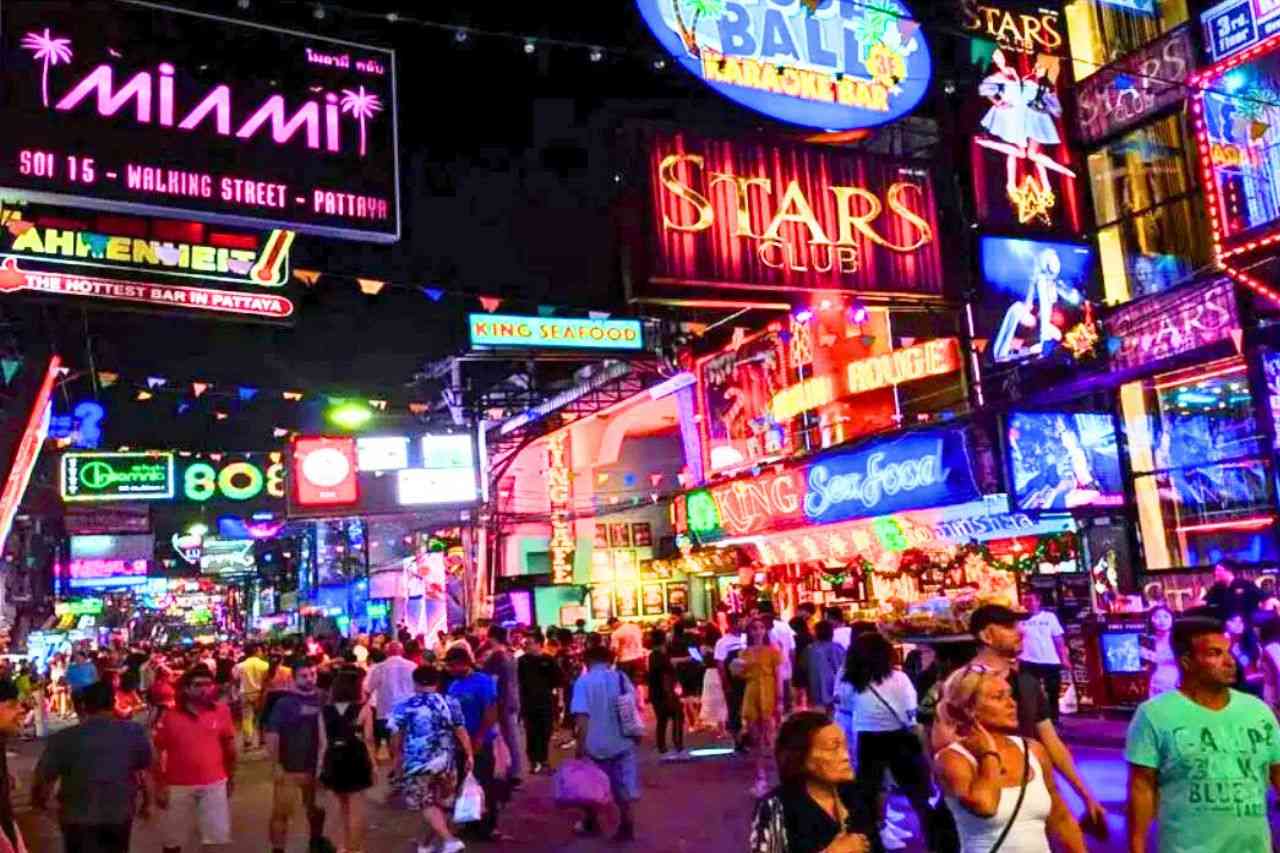
Tourists on Pattaya's Walking Street. Photo: Toast to Thailand
Anyone who has walked along Pattaya Beach Road, especially near Walking Street, will recognize the contradiction.
Under the palm trees, women and other people who don't quite fit the legal definitions are sitting or standing, smiling at tourists and striking up conversations.
Sometimes these interactions go beyond small talk.
In our office, we half-jokingly call this part of the street the 'Palm Bar'.
There's no sign, no license, no official recognition, just palm trees, streetlights, and a tacit understanding shared by everyone present.
Legally, however, none of this exists.
Thailand does not recognize sex work as a legal profession.
There is no legal status for sex workers and, therefore, from a strictly legal point of view, there is no sex trade.
It's a technically correct position, but totally at odds with everyday reality.
When the law chooses to turn a blind eye

Hostesses outside a go-go bar in Pattaya. Photo: Pattaya Unlimited.
The Thai police are neither naive nor unaware, and the public is not blind, everyone knows what's going on.
The law simply chooses to turn a blind eye, until it decides not to anymore.
This moment generally arrives when complaints are filed, when Thailand's tourist image is threatened, or when too many foreigners are involved.
It is then that law enforcement intervenes.
Arrests are made, charges are brought, and visas are revoked.
The headlines follow, then the pressure eases, the palm trees remain, the street lamps continue to shine, and the activity that officially does not exist quietly returns to daily life.
A joke that shouldn't be funny

Ladyboy prostitutes in Pattaya. Photo: The Weird Network/YouTube.
The story of the Indian man and the transgender woman still makes us laugh in our office.
One thought they had bought a service, the other thought they had provided one.
The State, for its part, insisted that nothing had happened.
And when nothing happens, no one is responsible for anything.
The question that no one wants to answer

Hostesses in a bar in Pattaya.
Some countries choose to legalize sex work, not to approve it, but to recognize the reality, preferring regulation to denial.
Thailand has chosen a different path.
This choice is the prerogative of the State, but as long as the official position remains that "Thailand has no sex trade", while crowds continue to pass in front of these palm trees every night, another truth must also be accepted:
Sometimes the things that the law claims do not exist are the most visible realities of all.
See also:
Thailand: the paradox of a sex tourism illegal but globally known
Calls for the legalization of prostitution in Thailand
Thailand ranked in the top 10 globally for sex workers
Thailand: disappointed by a prostitute's body, tourists call the police
Thailand: a tourist in a wheelchair robbed by 3 prostitutes in Pattaya
Source: Pattaya Mail
Prepare your trip to Thailand
Book bus, train, or boat in Thailand
Manage your money while traveling with Wise
If our news, tourist information, or cultural content has been useful to you and you'd like to thank us:
You can follow us on:
Twitter, LinkedIn, Facebook, Google News
Or install our app:
Install the Toute la Thaïlande app on your smartphone

2 comments
And that's not to mention the 'corruption' side of this state of affairs, corruption coming from police officers towards nightlife establishments, bars, karaoke bars, massage parlors, nightclubs that hire prostitutes under the cover of jobs as barmaids, masseuses, singers, dancers or hostesses, so that these establishments pay them a few bills monthly in exchange for 'protection' of their employees and criminal immunity in the event of a dispute with foreign tourists who will pay the broken pots and will also have to go through the cash drawer to avoid a few days in the cells of a police station or worse, a charge for 'purchase of sexual services'…
Thailand is no stranger to paradoxes, but this one is probably one of the most lucrative aspects of international tourism in the Land of Smiles, which is not limited to the lips of the face, thanks to its specificity and the publicity it receives abroad!!!
This situation is not unique to Thailand; in France, it's not much better.