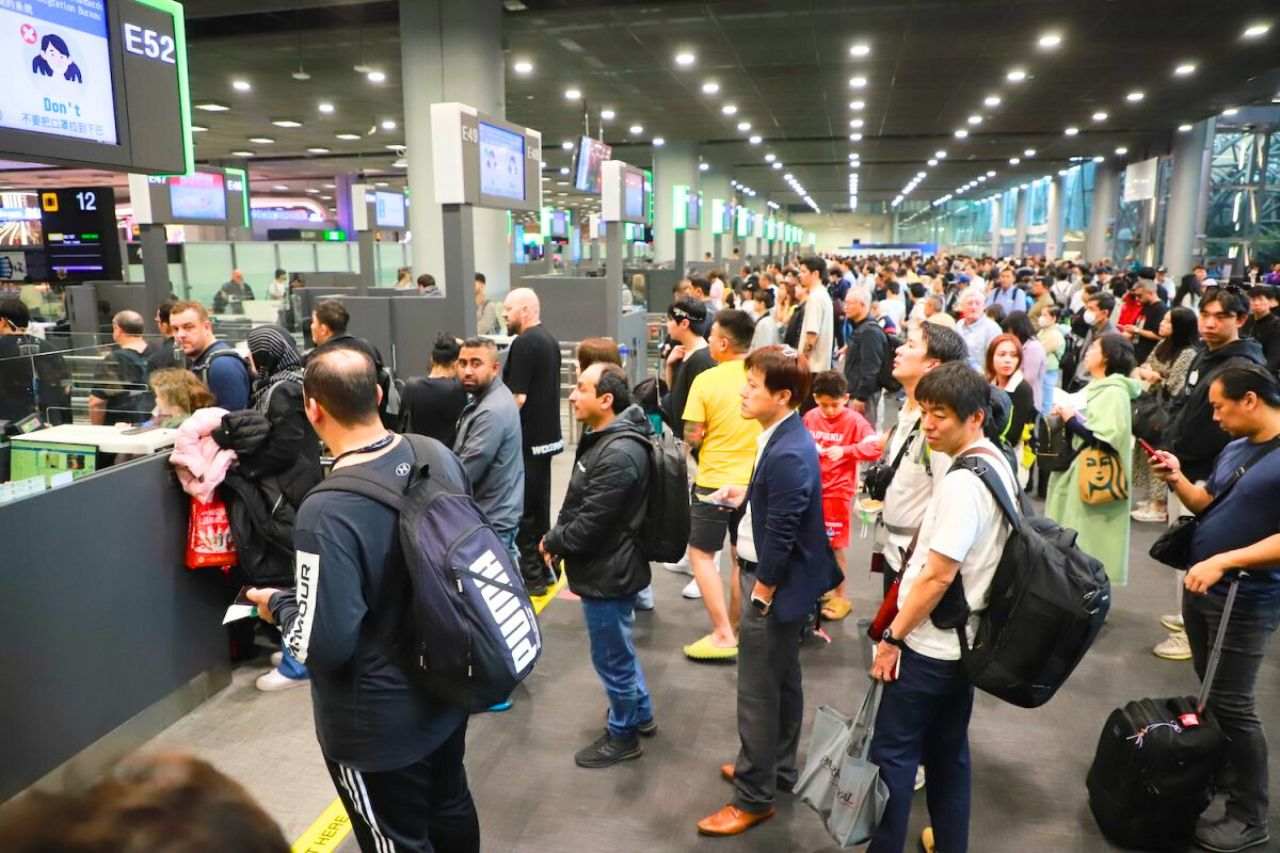
Faced with the rise in entry refusals in Thailand, tourism professionals are calling for clearer and more widely disseminated rules.
Last month, the Immigration Bureau announced four new measures aimed at preventing foreigners from entering Thailand as tourists while engaging in cybercrime, illicit networks, money laundering, gang activities, or forced labor.
See: Thailand: crackdown on tourists making multiple visa-free entries
One of these measures involves tightening restrictions on multiple 90-day visa-free entries, often used by foreigners to make round trips without returning to their home country.
Foreigners are now limited to two round trips, and those who exceed this limit without a valid reason are denied entry at airports and border checkpoints.
Updated on January 18, 2026 :
Thailand: No, visa-free entry is not limited to twice a year
But as could be expected, many travelers were denied entry even though they had valid reasons to stay longer.
Operators are calling for clear and transparent communication of the rules
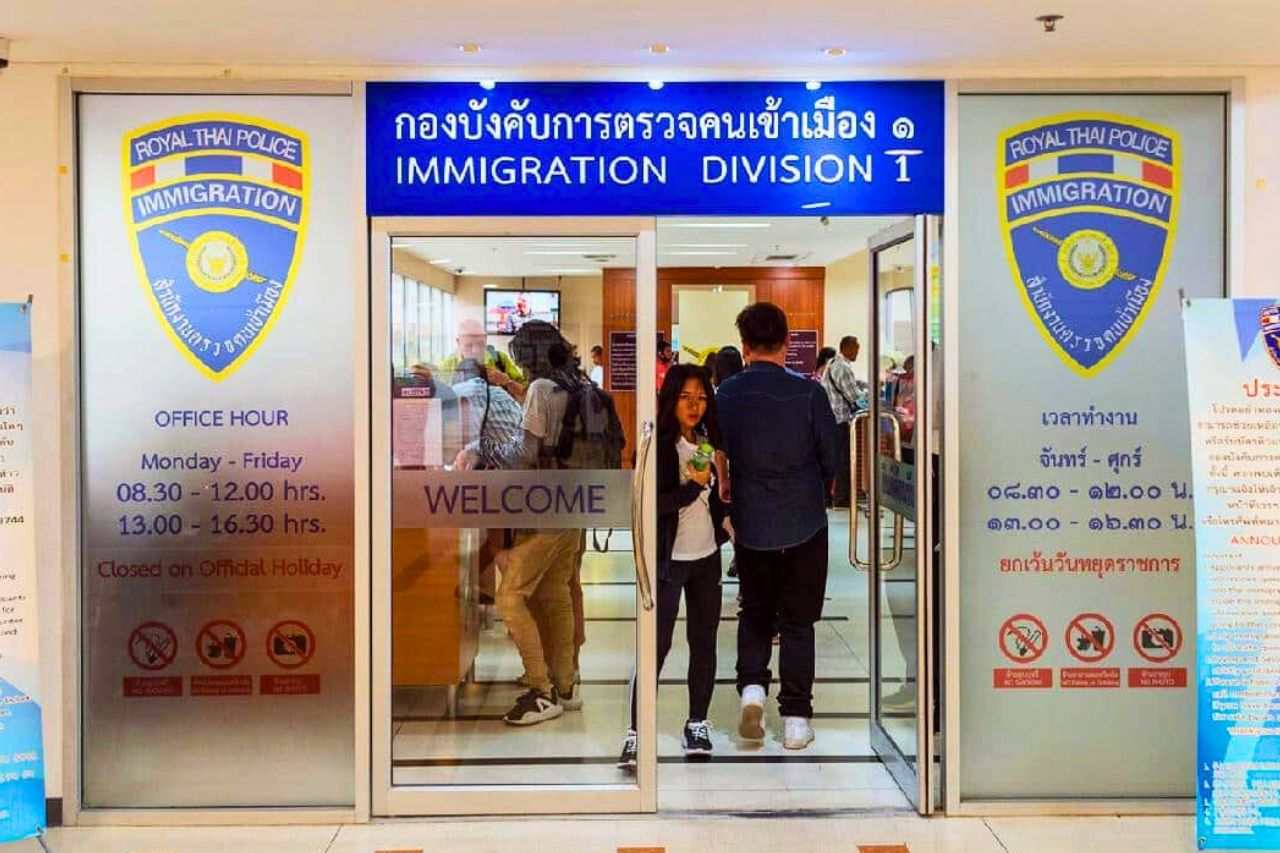
Entrance of an immigration office in Thailand.
Tourism operators are therefore urging the government to regularly publish updated rules and to rely more on pre-selection methods.
Thienprasit Chaiyapatranun, President of the Thai Hotel Association (THA), said:
"Hotels have recently encountered cases of clients being refused entry under visa exemption privileges, as well as social media posts by foreigners facing a similar situation."
He added that such cases could create unnecessary uncertainty among tourists who have not yet visited the country or are planning to do so.
The agencies concerned should clarify the updated rules and ensure that the information reaches all tourists entering under the visa exemption program.
If possible, they should also explain why some cases circulating on social media were refused entry.
"The current situation has undeniably led people to consider two possibilities behind these refusals: tourists may unwittingly break the rules, or some officials exploit loopholes to extort tourists," he said.
Mr. Thienprasit said that leaving control to the discretion of officials or randomly checking tourists at immigration was not an appropriate method.
Towards a system of pre-selection and pre-approval of travelers?
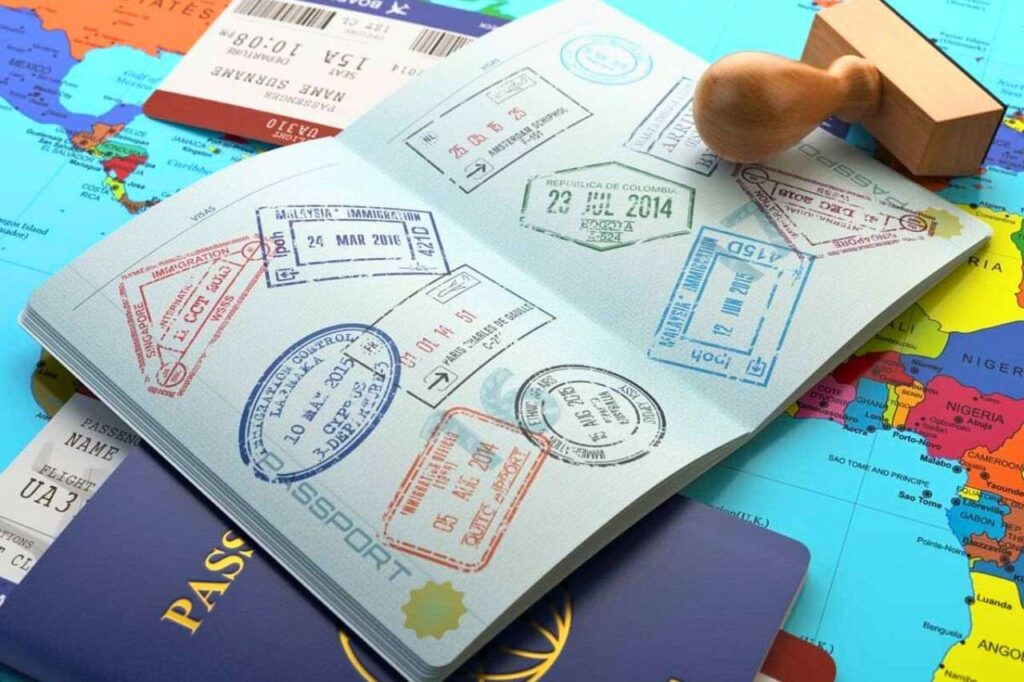
Pages of a passport filled with visa stamps. Photo: Jakarta Post
He added that some countries use pre-screening procedures and automated immigration gates upon arrival.
If travelers' files show no issues, they can quickly pass through the gates, with only those flagged as suspicious being subject to face-to-face interviews.
He added that since Thailand already requires tourists to fill out the online digital arrival card (TDAC) three days before their arrival, immigration authorities already have their information.
As the government considers introducing a pre-approval system for visa-exempt travelers, similar to South Korea's electronic travel authorization, he said:
"The private sector supports this policy as it improves entry control and reassures tourists about the smoothness of their trip."
Foreign tourist arrivals continue to decline
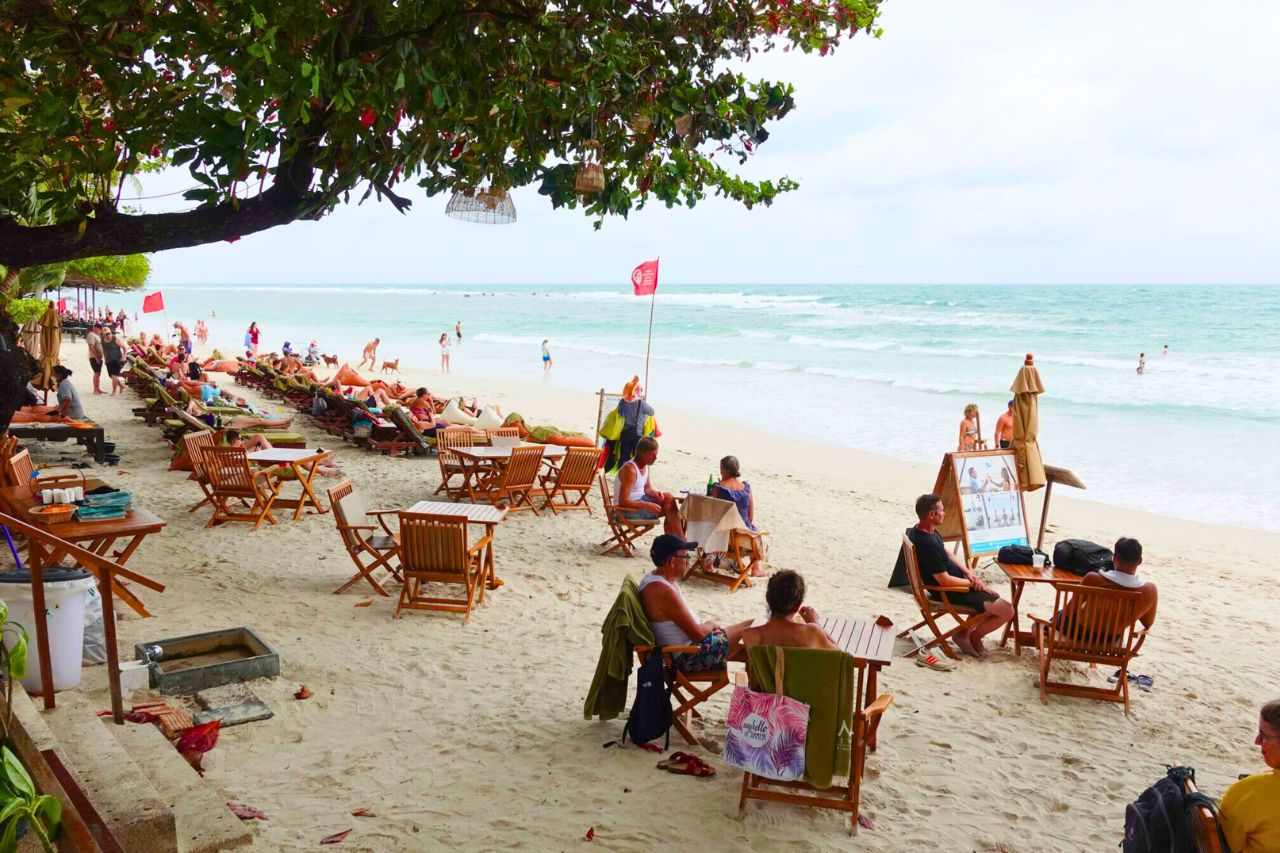
Tourists on a beach in Koh Samui. Photo: Khaosod
As of December 7, Thailand had recorded 30.2 million foreign arrivals, a decrease of 7.19% compared to the previous year.
This decline mainly affects Chinese travelers and follows cases of tourists being kidnapped by fraudulent call centers in Myanmar or Cambodia.
See: Thailand: cancellations or traveling with fear for Chinese tourists
To address this, Thailand has launched a communication campaign to try to reassure travelers.
See: Tourist security: Thailand launches its "Seal of Trust"
Malaysia, China and India remained the three main markets, with 4.23 million, 4.18 million and 2.28 million visitors respectively.
- Two visa-free round trips are now allowed before risk of refusal.
- Tourists are being turned away due to lack of clear rules.
- The tourism sector is calling for transparency and a pre-selection system.
See also:
Thailand cracks down on tourists who chain 'visa runs'
The major trends in tourism in Thailand for 2026
Thailand: end of the ban on alcohol in the afternoon to boost tourism
Thailand launches a plan to boost wellness tourism
Thailand urged to create an independent tourism authority
Source: Bangkok Post
Do you like Toutelathailande.fr?
👉 Leave us a review on Trustpilot.
Your review strengthens the credibility of our work and the trust of our readers.
Useful links to prepare your trip to Thailand
Book bus, train and boat in Thailand
Manage your money while traveling with Wise
If our news, tourist information, or cultural content has been useful to you and you'd like to thank us:
You can follow us on:
Twitter, LinkedIn, Facebook,Google News
Or install our application: Install the application of All Thailand on your smartphone

7 comments
Establishing clear and precise rules regarding tourists benefiting from visa exemption and a 60-day stay permit (+ possible 30-day extension) seems to be an extremely difficult and complicated task for Thai legislators and immigration authorities !!!
So, in order to help the minister in charge of immigration, the farang that I am takes the liberty of proposing a solution in just 2 simple, but effective points, which must be applied to the letter by the agents responsible for checking passports at airports, seaports and land border crossing points.
1. Foreign tourists, whose nationality meets the visa exemption criteria for a period of 60 days (+ a possible extension of 30 days, which for a "true" tourist is not justified and should be removed) and who leave Thai territory must respect a period of 60 days (2 months), calculated from the day of departure from the country, (whatever the duration of the stay), before being able to return to Thailand.
Note: when a tourist re-appears before the immigration officers for a second stay, they can easily check whether this waiting period of 60 days has been respected, by checking, in his passport, the stamp of the departure date of the tourist during his last stay in Thailand, and the day he re-appears at a border post for a new stay.
If this period between the 2 dates is less than 60 days, he will not be allowed to stay and will be refused entry.
It would also be desirable to add to the TDAC form to be completed 3 days before arrival in Thailand, the end date of the last previous stay, which would make it possible to immediately notify the tourist by a notification that he will not be allowed to return to Thailand before a date corresponding to a latency of 60 days.
2. If, however, a foreign tourist exempt from visa requirements under normal circumstances wishes to return to Thailand before the 60-day period from the end of their previous stay, they will no longer be exempt from visa requirements, but to avoid being turned back at the border, they can apply for a visa with a maximum duration not exceeding 90 days, with the 60-day waiting period rule still applying for a future stay with visa exemption.
Note: In this way, any "fake" tourist who, for various reasons, wants to stay in Thailand by accumulating entries multiple times a year without respecting the 60-day period between "tourist" stays, will be forced to go through their embassy for a visa application in due form for each stay in Thailand that is not separated from the previous stay by a period of 60 days.
This solution will not harm in any way the real tourist stays of real tourists, who most often stay for a period not exceeding 3 weeks in 90% of cases.
On the other hand, people who take advantage of loopholes in visa exemption rules to engage in unauthorized activities, occupy jobs reserved for Thais, or wish to benefit, for various reasons, from long-term stays illegally will be identified and officially recorded by the obligation of a mandatory visa application with a limited duration of 90 days maximum.
Simple also to control by immigration police officers:
Tourist benefiting from a 60-day stay permit who respects a 60-day interval between 2 stays: no problem for multiple tourist stays.
Tourist benefiting from a 60-day residence permit not respecting the 60 days between 2 stays: mandatory passage through the embassy for a visa application if he does not want to be refused at the border…
So, maybe I'm going the wrong way somewhere, and if someone spots a "blunder" on my part, I would be happy if they shared their personal idea with me…
Hello Hansson, I really can not agree with you on this proposal.
I'm just going to take the example of my next trip.
– I'm flying to Bangkok where I'll only stay one night (just long enough to drop off my big suitcase with my son and continue my journey with a more suitable backpack for the rest of the trip).
– The next day I fly to China and stay there for 21 days before returning to Thailand where I plan to spend ± 55 days with my family and do some administrative tasks that will take me some time.
– My tickets were purchased since mid-June 2025.
Why on earth should I wait 60 days before returning to Thailand when I'm only staying for one night to drop off a piece of luggage and have a bite to eat at a restaurant with my son ???
Why bother honest travelers with rules that make no sense when they've done nothing wrong??
By constantly changing the rules, we end up understanding nothing anymore.
So it's 90 days in Thailand and if I want to spend 1 month in Vietnam, 1 month in Cambodia and come back to Thailand for 90 days without returning to France, we don't have the right?
Pilou, well yes, you have the right…
You are not necessarily required to return to France while waiting for your next stay in Thailand…
When you leave Thai territory to stay elsewhere on the planet where your passport allows you to, for Thai immigration services, you have left Thai soil, wherever you go…
What makes certain "tourists" suspicious is that they leave Thailand for a few days and then return, at a rate of 3 or 4 "tourist" stays of 90 days under visa exemption.
Refusals of entry to Thai territory target these people...
It is up to immigration officers to show discernment (not always the case) to avoid abuse of power and send back home people (annuitants, retirees) who actually come several times a year, on vacation for their leisure and not to engage in illicit activity...
90 days + 2 round trips... that's quite a lot!!!
Beyond that, if you have a valid reason to stay, it's because you have an activity and therefore there is certainly an appropriate visa for this valid reason...
Otherwise, the rule is very simple, two round trips and no more... in many countries, there isn't even one round trip...
Tourism professionals complain that too many "tourists" return and harm the country's image, and when there are controls, they also complain !!!
Tourism professionals should focus on making people want to come to Thailand and especially on making them want to come back…
By focusing solely on individuals who abuse the 60-day visa exemption + 30-day extension by engaging in illegal activities, you overlook the many farangs who, like me, are retired (but cannot live in Thailand year-round) and legally benefit from this exemption.
This year, out of 180 days spent, nearly 120 in hotels, my daily expenses being the same as the tourists you use as a model and who stay for 2 weeks.
A calculation, within the reach of a child, allows us to conclude that I spend about 12 times more, which seems good to me for the resumption of tourism, unless something escapes me.
Thailand continues to make the wrong choices by criminalizing and penalizing all tourists for a minority that causes problems.
Let them target the fraudsters and inflict exemplary punishment on them, even a lifetime blacklist, but for pity's sake, let them leave the tourists alone who have no other fault than spending their satangs.
Dear Charles Alexi..
Indeed, we must take into account people in your situation...
But by re-reading my comment, or Luc 555's, and keeping the possibility of the 60-day extension + 30, you can easily keep your 180 days of presence in Thailand each year, which allows you to escape a tax return imposed on residents of more than 180 days…