Slowdown in the Chinese market, geopolitical instability, regional competition: Thai tourism is navigating a turbulent zone.
To cope with this rollercoaster year, the authorities are opting for a more selective strategy, focused on value and market diversification.
Revenue below target for 2025
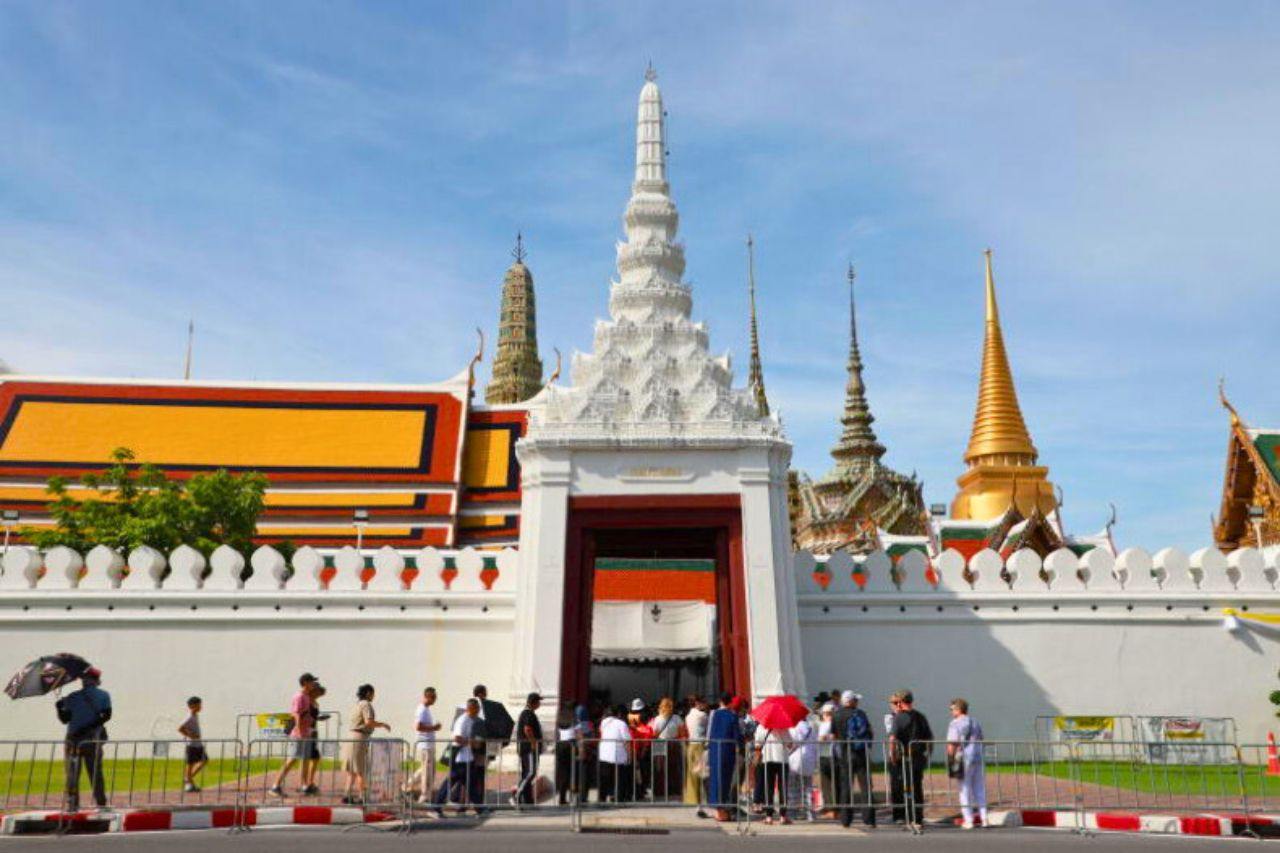
Tourists wait in front of the entrance to the Grand Palace in Bangkok in June 2025. Photo: Somchai Poomlard/Bangkok Post
The Tourism Authority of Thailand (TAT) expects revenue of 2.87 trillion bahts, less than the target of 3 trillion.
This deficit is mainly due to the slowdown in the Chinese market and current global uncertainties
See: Thailand: tourism is collapsing due to the decline in Chinese visitors
TAT remains optimistic, targeting 7% growth to reach 3,000 billion baht by 2026
The proposed introduction of a 300-baht tourist tax has been postponed to next year to avoid deterring tourists.
This decision was made at the end of a meeting of the TAT's 2026 Action Plan held on Monday, July 14, during which strategies were discussed to shape the future of tourism in Thailand.
TAT Governor Thapanee Kiatphaibool compared this year's tourism landscape to a "roller coaster" due to its volatility
Thailand is turning to other markets

A couple of Western tourists on a beach in Thailand. Photo: Anyaberkut
Given the security concerns affecting major markets such as China, the TAT is turning to new opportunities in regions such as the Middle East.
European markets, particularly the UK, France, and Germany, are expected to make a significant contribution, each attracting around 1 million visitors.
The overall target for foreign arrivals has been set at 35.5 million, the same as in 2024, and is expected to generate 1.77 trillion bahts, while domestic tourism is expected to add at least 1.1 trillion bahts.
To revive international interest, incentive measures for charter flights and partnerships with global airlines are being developed.
A strategy focused on quality and sustainability by 2026
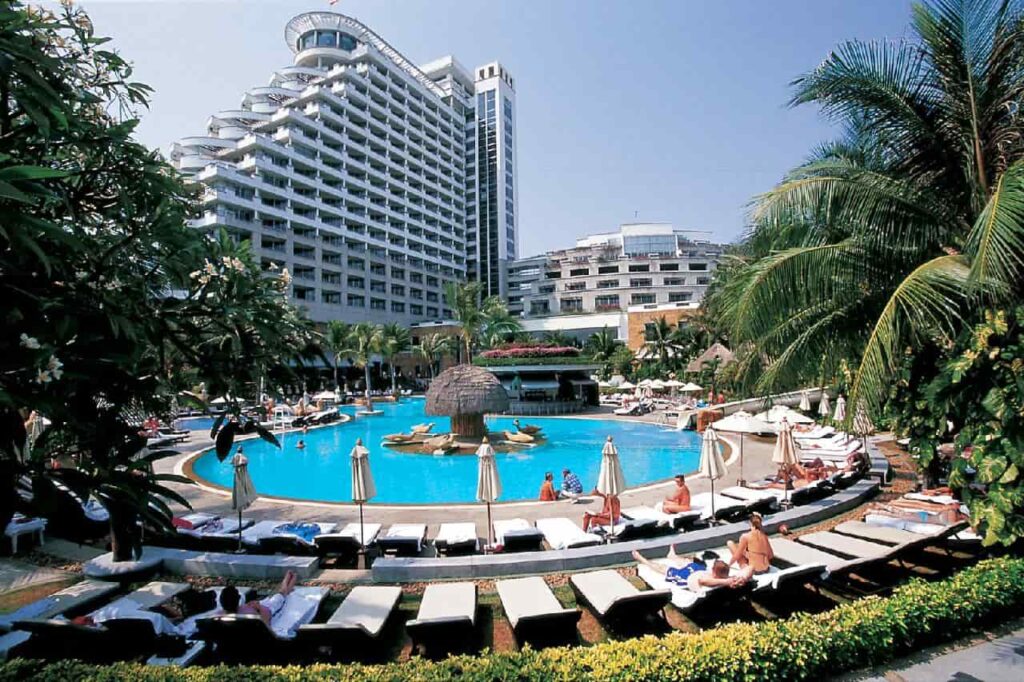
Tourists enjoy the pool at Hilton Hotel in Hua Hin
By 2026, the TAT plans to focus not on volume, but on value and tourist spending, with the aim of regaining 2019 revenue levels.
Efforts will focus more on attracting high-potential traveler segments, strengthening Thailand's image in terms of security, and positioning it as a reliable destination.
Key development areas include sustainable tourism, improving the supply chain, and promoting Thailand's cultural assets.
The Deputy Tourism Minister, Jakkaphon Tangsutthitham, emphasized the need for Thailand to adapt and remain competitive amidst geopolitical uncertainties and fierce regional competition.
The tourist tax project is expected to be revisited in the second or third quarter of 2026
Despite the persistence of challenges, the Thai tourism sector is strategically positioning itself for recovery, with the hope of a steady growth trajectory and increased revenue by 2026.
See also:
Thailand: the subsidy to revive domestic tourism is a flop
Decline in tourism, industrial downturn: Thailand's economy slows down
Thailand is banking on Jurassic World: Renaissance to revive its tourism
Source: Bangkok Post
Prepare your trip to Thailand
Book bus, train, or boat in Thailand
Manage your money while traveling with Wise
If our news, tourist information, or cultural content has been useful to you and you'd like to thank us:
You can follow us on:
Twitter, LinkedIn, Facebook, Google News
Or install our app:
Install the Toute la Thaïlande app on your smartphone

6 comments
Once again, the government refuses to admit that a THB that costs +13% compared to July 2024 can only make tourists think twice.
But when will the government pressure the Bank of Thailand to lower its key rate!
Meanwhile, Vietnam and Indonesia are delighted with their occupancy rate.
This strategy is like a sea serpent, it comes back up at every drop in attendance.
And like here, they do the opposite of what they say since they keep increasing the capacity of their airports, which is in total contradiction with the desire to attract only wealthy tourists.
Between political instability, an artificially high THB, likely for the greatest benefit of certain financial scam artists, ever-increasing prices, growing insecurity, a deteriorating environment, etc... and neighboring countries becoming more attractive, the future looks worrying for tourism in Thailand.
@Dave "prices that are constantly increasing"... one wonders if they're even aware of this aberration.
An example, that of 2 tomatoes, I mean 2 tomatoes (300 g) sold just a few days ago at the price of 65 bahts at Lotus.
Today, these same tomatoes cost 89 bahts, a more than 35% increase.
Who can afford to buy tomatoes at this price in Thailand?
And this is just one example among many…
As a recent former Prime Minister (who was a military man. You know who I'm talking about) said: "if you don't have the money to buy it, you do without". Lol.
The Thais accept this without flinching.
@Jean-Pierre,
And you who are on the spot, how are these astonishing increases justified by the sellers?
@Dave You're right, it would be interesting to know.
The problem is that you should ask a store manager, because if I ask the guy or girl in charge of the fruit and vegetable section, they will surely answer 'chan mai ru'.