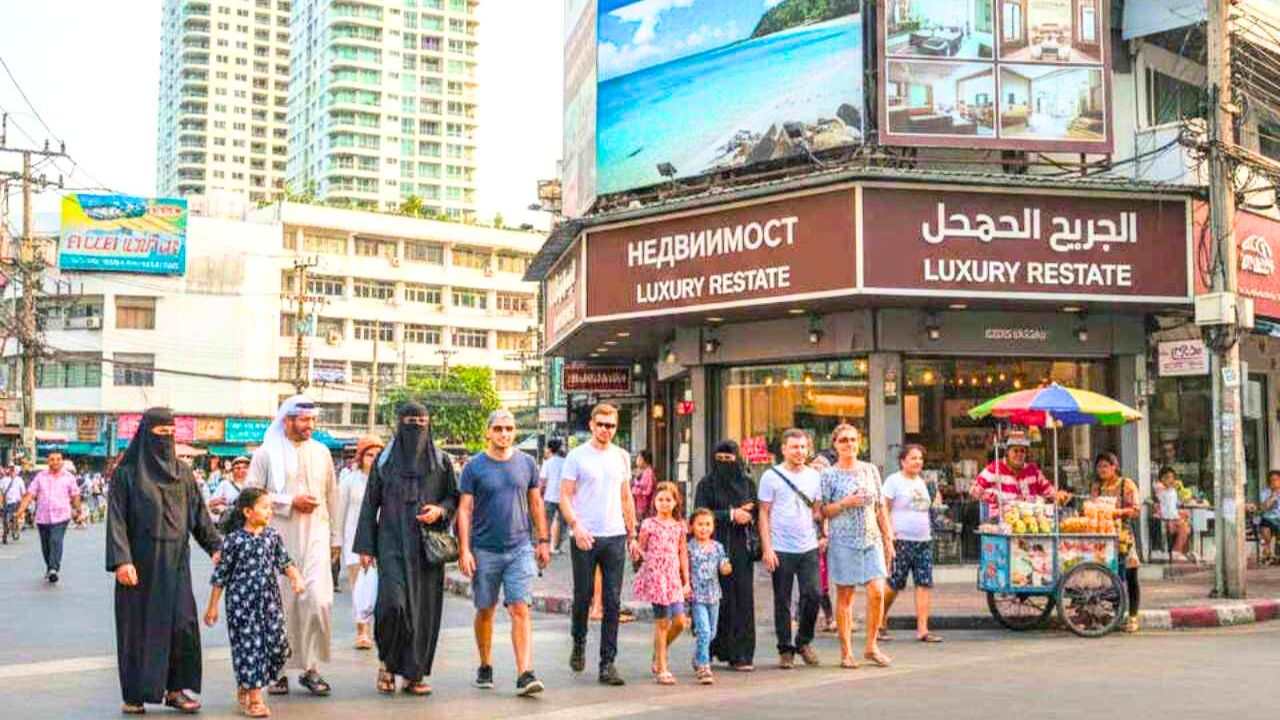
Geopolitical tensions could drive foreigners living in conflict zones to seek a safe haven in Thailand.
- Thailand could be seen as a refuge destination by populations living in regions affected by conflicts.
- Airspace disruptions in the Middle East are already affecting some international airline routes.
- The experience of the influx of Russian tourists after the war in Ukraine shows that these movements can have significant economic and real‑estate effects.
- Authorities are called to prepare for the ’arrival of visitors or long‑term residents from areas affected by conflicts.
Thai tourism should prepare for this influx of ’foreigners, similar to the wave observed during the war between Russia and ’Ukraine.
The number of Russian visitors reached 1.74 million in 2024, which had a significant impact on the real estate markets of tourist cities.
Yuthasak Supasorn, president of the Thai Industrial Zones Authority and former governor of the Tourism Authority of Thailand (TAT), said :
« The current conflict in the Middle East reminds the tourism industry of the war between Russia and Ukraine, where the short‑term impact is first felt on fuel prices, then on international air fares, which reduces long‑haul markets.
Airlines operating between Europe and Asia have seen their fuel consumption increase on average by 14.8%.
Flights between North America and Asia recorded an increase of 9,8 % due to the closure of Russian airspace and the rerouting of flights that resulted from it. »
The situation was exacerbated by the price of kerosene, which peaked at $150 per barrel in 2022.
Yuthasak added that while the war in Eastern Europe has affected the long-term cost structure of aviation, the conflict in the Middle East has, in turn, caused immediate disruptions to regional flight schedules.
Airstrikes have led to periodic ’emergency closures of the ’airspace in several Middle Eastern countries.
The conflict in the Middle East is disrupting flights to Thailand
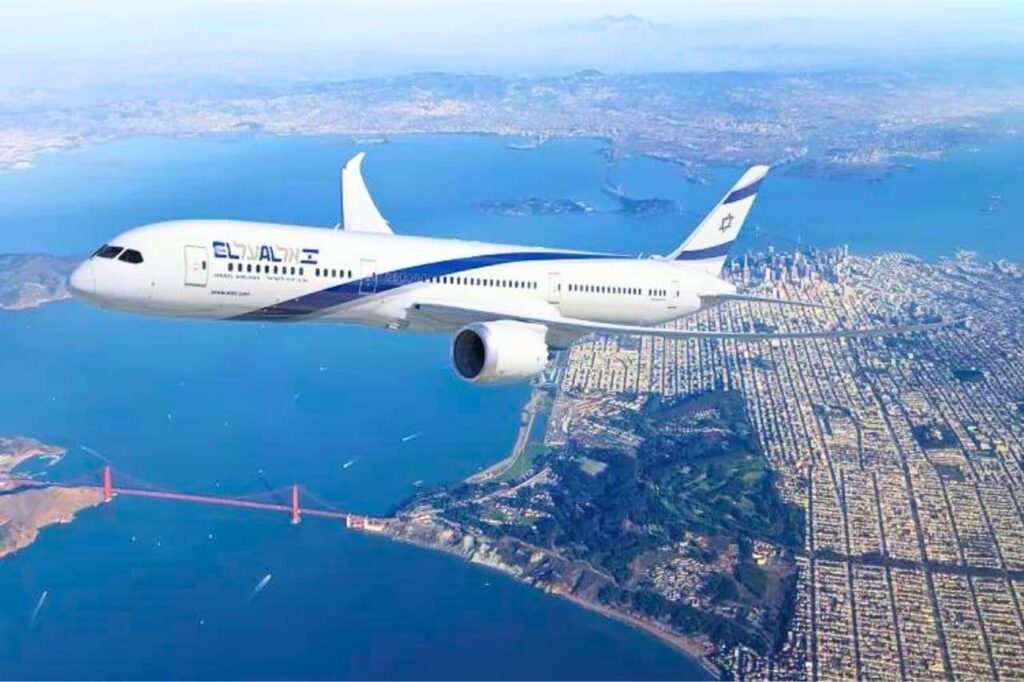
El Al Israel Airlines plane. Photo: Delta Airlines
Major airlines linking the ’Europe, the ’Middle East and Thailand have had to face ’significant challenges in managing their routes.
See : Thailand tourism hit by the Middle East conflict: cancelled flights and stranded tourists
Among them are notably Emirates, Etihad Airways, Qatar Airways, Turkish Airlines, Flydubai and Oman Air, forced to avoid high‑risk areas.
The Iranian airline Mahan Air was forced to temporarily suspend its direct flights to Bangkok and Phuket when Iran's airspace was closed, which led to the complete disappearance of the Iranian market.
The TAT indicated that airspace closures and flight schedule adjustments during the peak of the conflict could strongly affect tourist flows.
See: Thailand: tourism could lose 40 billion baht due to the war
According to its estimates, the number of visitors from five key Middle Eastern countries — Iran, Iraq, Jordan, Lebanon and Syria — could drop by 30 to 50 %, about 3,500 to 5,000 fewer tourists in a month.
The impact should be particularly visible during the Eid al-Adha holiday in May, which is a peak period for the Middle East market.
Thailand increasingly perceived as a safe haven

Couple of travelers in the Buddha ’emerald temple in Bangkok. Photo: Varuth Hirunyatheb
« Geopolitical conflicts have redefined the objective of international travel.
Thanks to its balanced foreign policy, its internal stability and its visa opening policies, Thailand is increasingly perceived as a safe haven by the populations of regions affected by the conflicts », said Mr. Yuthasak.
This has led to l’emergence of new traveler profiles whose motivations go beyond simple tourism.
Some are seeking to flee the war, to find temporary shelter or to recover, while others are considering relocation or investment in Thailand.
This development creates a new dynamic for the Thai tourism sector.
L’example of l’influx of Russian tourists after the war in Ukraine
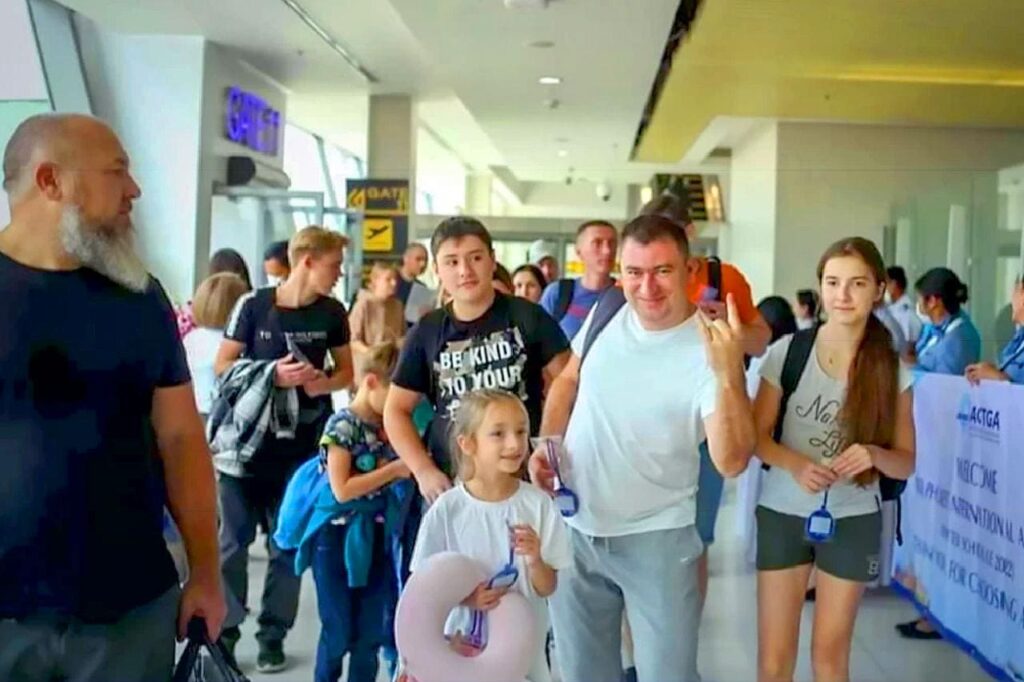
Russian tourists at Phuket airport. Photo: The Nation Thailand
Mr. Yuthasak stated that this was evident in 2023, with more than 1.4 million Russians visiting Thailand, a figure that has further increased to reach 1.74 million in 2024, representing 15% of the total departures from Russia.
« The government's decision to extend the tourist visa duration for Russian nationals from 30 to 90 days at the end of 2023 was an important catalyst that facilitated semi-permanent stays in the country », said Mr. Yuthasak.
See: Russian invasion of Thailand: they want to escape the war
Phuket and Pattaya faced the rise in l’real estate prices
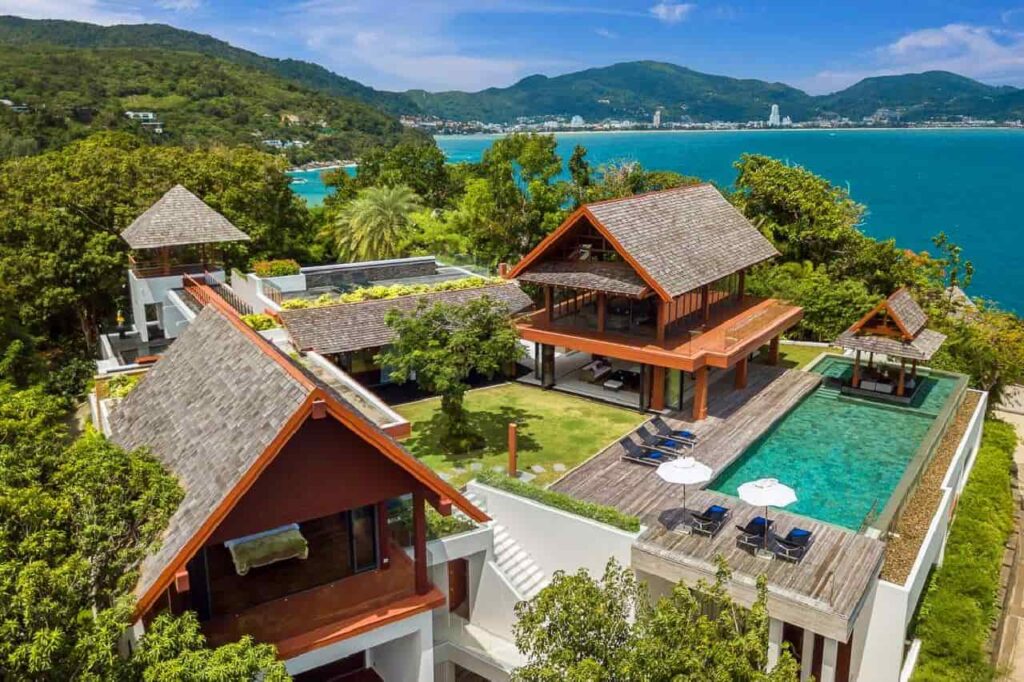
Villa Baan Santisuk in Phuket. Photo: Villa Getaways
This influx has had a direct impact on the real estate market in certain beach destinations, notably in Phuket.
Les Russes y ont représenté entre 40 et 60 % des achats de copropriétés réalisés par des étrangers.
Cette demande a fait grimper les prix de l’immobilier de 10 à 20 % sur l’île et provoqué une hausse de 300 % des loyers des logements de luxe.
Mr. Yuthasak stated that the l’influx of d’foreigners from war zones has also created certain social complexities.
He notably mentioned the emergence of significant Israeli communities in the district of Pai, in the province of Mae Hong Son, as well as on the ’island of Koh Phangan.
According to him, in these areas, the presence of people seeking to recover from war‑related trauma has raised local concerns about a possible erosion of the ’identity of these cities.
See:
Thailand: Disrespectful Israeli tourists cause chaos in Pai
Thailand: Tensions between residents and Israelis on the island of Koh Phangan
Thailand must prepare for l’arrival of long‑term residents
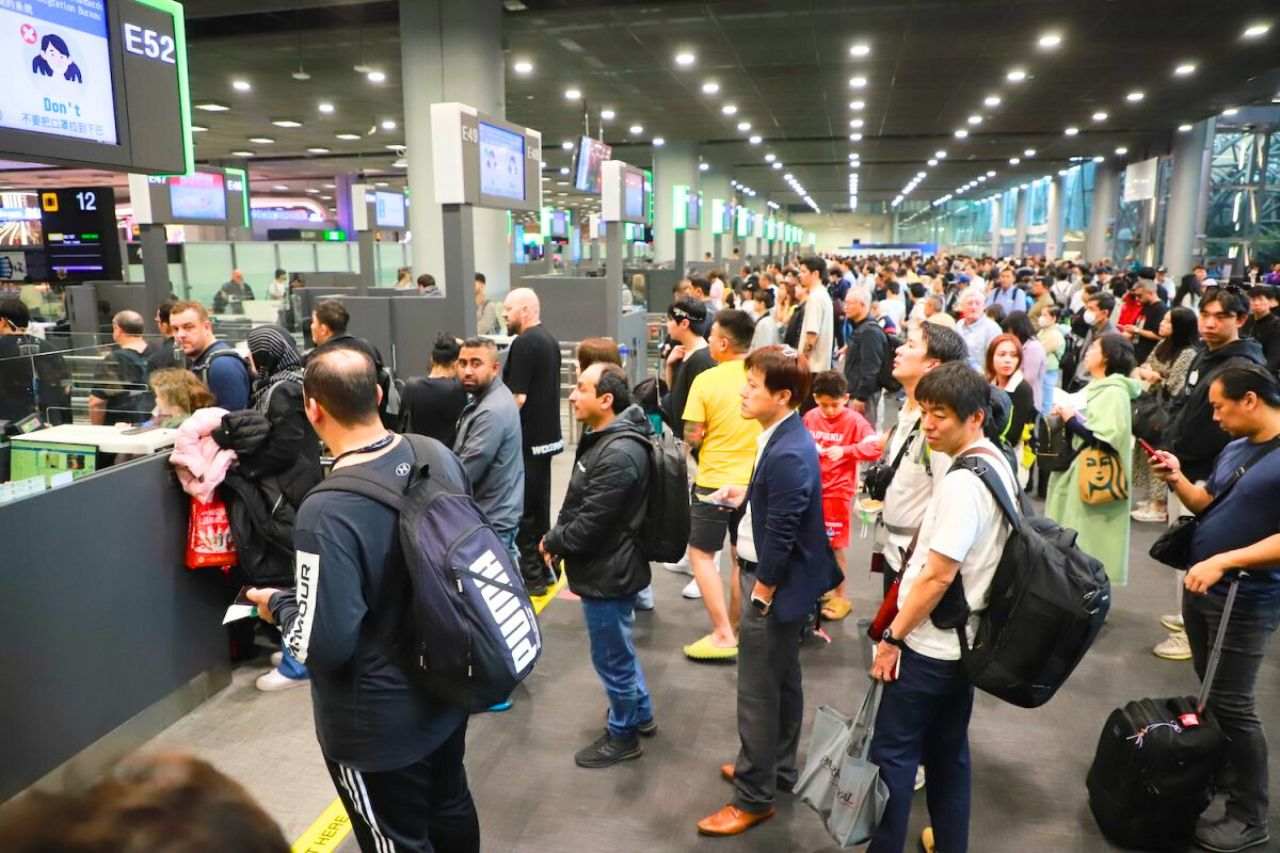
Foreign travelers wait to pass immigration formalities at Suvarnabhumi Airport. Photo: Somchai Poomlard/Bangkok Post
The demand generated by global tensions remains fragile and can create several challenges.
Parmi eux figurent l’inflation locale, la hausse du coût de la vie, des tensions sociales et des risques concurrentiels à long terme.
In this context, Mr. Yuthasak believes that the government should prepare for an increase in the number of people seeking to s’settle in Thailand in the long term.
He added that Thailand must strengthen integrated security risk management, as public safety perception remains lower than in destinations such as Vietnam and Singapore.
It is essential d’improve digital security and strengthen the fight against transnational crime.
The country must also maintain a prudent diplomacy, as it continues to welcome visitors and long-term residents from regions affected by conflicts.
Among them are notably nationals from countries such as Russia and Israel.
The concentration of foreign investment and strong demand for long‑term stays in Phuket and Pattaya have contributed to driving up the prices of l’real estate.
Encouraging tourists and expatriates to turn to secondary cities could help better distribute the economic benefits.
This would also help ease the pressure on the local cost of living.
To support travelers and investors from regions affected by sanctions, Thailand should develop other financial corridors and adopt more flexible cross-border payment systems, while ensuring rigorous transparency and compliance.
Regulatory reform is also important to attract high-value-added migration.
The streamlining of rules related to medical tourism could strengthen Thailand's competitiveness.
The acceleration of improvements made to the long‑term resident visa program would also be in this direction.
According to Mr. Yuthasak, these measures would make the country more attractive to skilled professionals, retirees and investors seeking stability.
The risk of tensions between foreign communities in Thailand

An Israeli allegedly assaulted an elderly foreigner following a dispute over the Middle East conflict. Photo: Facebook/Phuket Times
L’arrival of visitors or residents from conflict regions could also increase the risk of tensions between certain foreign communities present in Thailand.
An incident that occurred on March 5, 2026 in Phuket illustrates this risk of tensions imported from l’foreigner.
According to the Facebook page Phuket Times, an Israeli allegedly assaulted another foreign national on Bangla Street after a dispute related to the Middle East conflict.
L’altercation would have escalated into physical aggression before l’intervention d’a Thai police officer present on the scene.
According to witnesses, the Israeli allegedly then pushed the officer's chest while the crowd shouted: « Stop him, stop him ».
If this type of incident remains isolated, the presence of significant foreign communities in certain tourist destinations could sometimes give rise to rivalries linked to international conflicts.
In this context, Thai authorities may be required to monitor these dynamics in order to prevent tensions imported from abroad from disrupting public safety or the country’s tourism image.
See also:
Middle East war: Thailand prepares for an economic shock
Air tickets: Thailand advises booking in advance because of the conflict
Thailand fears up to& rsquo; 25 % fewer tourists because of the war
Source : Bangkok Post
Notice to Adblock users
Toutelathailande.fr is an independent media outlet financed solely by advertising.
Automatic and intrusive video formats have been removed for several months to improve your reading comfort.
If our articles are useful to you, you can support the site by disabling your blocker for this domain.
Useful links to prepare your trip to Thailand
Book bus, train and boat in Thailand
Manage your money while traveling with Wise
You can follow us on:
Twitter, LinkedIn, Facebook, Google News
Or install our app:
All Thailand Application on your smartphone
