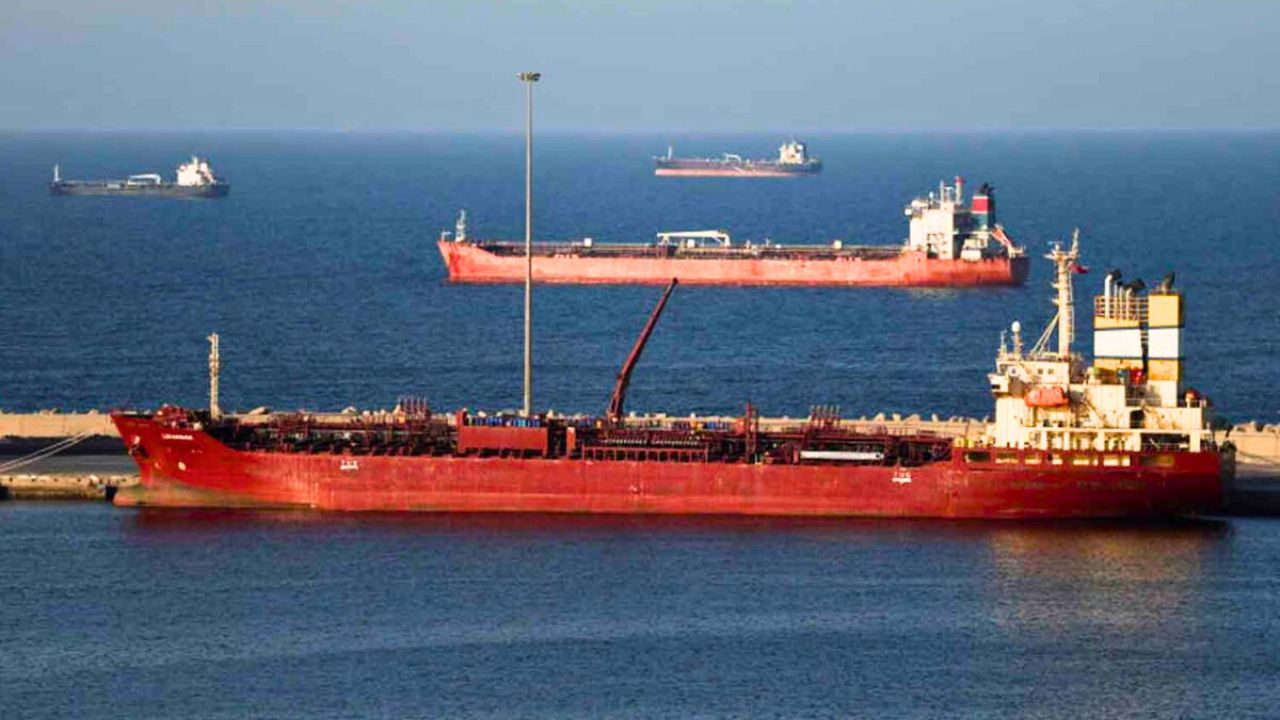
The ’escalation of the conflict in the Middle East and the disruptions in the Strait of ’Hormuz pose a heavy threat to the ’Thai economy.
- Tensions around the Strait of Hormuz threaten Thailand's energy supply and could raise the cost of living.
- Economists fear a lasting economic shock if the conflict drags on and disrupts maritime routes.
- Tourism is already affected by flight cancellations and travelers stranded in the south of the country.
- Thailand could however benefit from ’a postponement of certain Asian tourists if travel to Europe or the Middle East becomes more difficult.
If the short‑term repercussions affect tourism, exports and energy prices, experts warn that the country risks suffering a « structural shock » significant if the conflict extends beyond a few weeks.
Rise in ’energy prices and risk of ’inflation
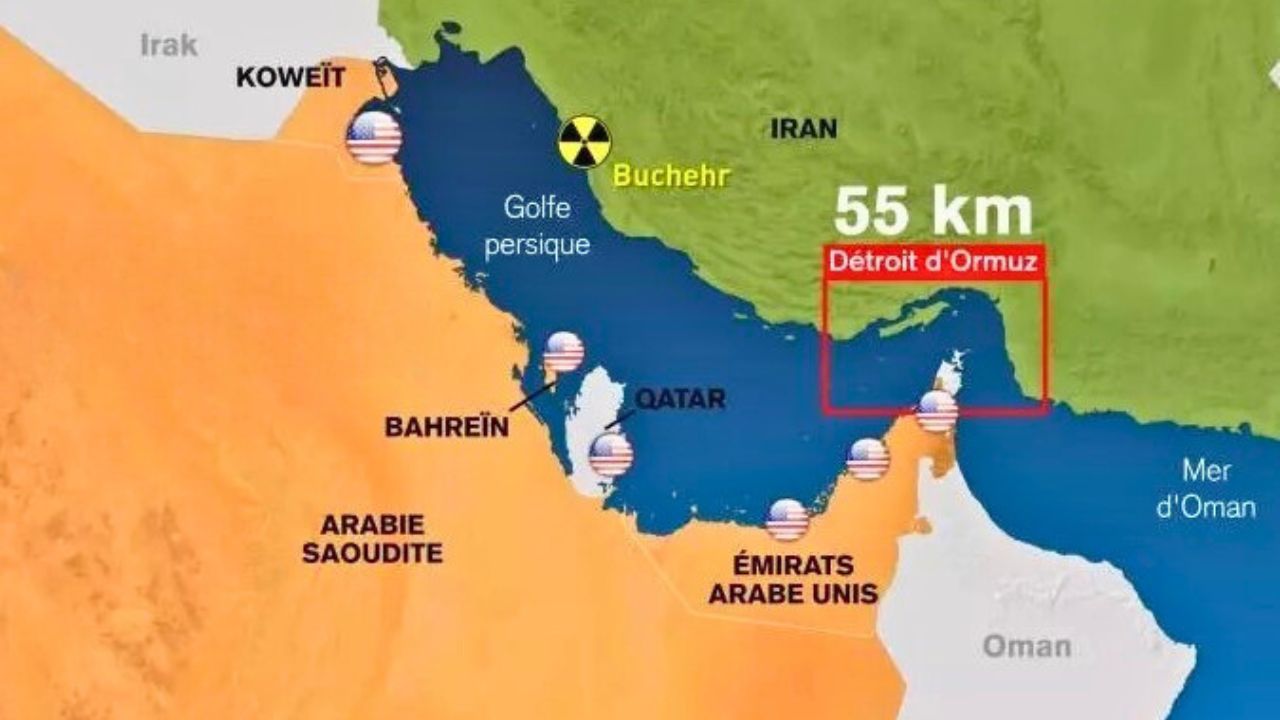
Map showing the Strait of ’Ormuz between ’Iran and Oman, strategic passage for global oil transport. Image : Le Quotidien
The immediate repercussions of the conflict have been felt in the rise of energy prices, particularly natural gas in Europe, which has almost doubled.
However, academics and entrepreneurs are more concerned about the possibility of d’a deeper and long‑term structural shock.
If the conflict persists for three to four weeks, the combined pressure of inflation and rising transportation costs will represent a significant challenge for the government, which will need to find longer-term solutions.
Thailand is vulnerable because it depends on the Strait of Hormuz for a significant share of its energy imports, notably crude oil and natural gas intended for electricity production.
See: Thailand deprived of half its oil after the closure of ’Ormuz
However, according to Iranian officials, the Strait of Hormuz is not officially closed, although some restrictions may target vessels linked to the United States or Israel, while several tankers linked to Western interests have been attacked in the area.
Nonarit Bisonyabut, researcher at the Foundation of the Thailand Development Research Institute (TDRI) stated:
« Any disruption of this vital maritime route will inevitably cause a surge in the cost of living at the national level due to the soaring rise in ’energy prices. »
The burden will weigh heavily on the population as long as the conflict continues.
Mr. Nonarit presents two scenarios for the conflict.
The first foresees a relatively short commitment of about 40 days, as the United States predicts.
« However, the most alarming perspective is that of a ’guerrilla» characterized by attacks of drones or missiles targeting critical infrastructure such as tankers or pipelines», he said.
Such a scenario would lead to sustained global inflation, which would remain high for an extended period.
Associate Professor Somjai Phagaphasvivat, independent scholar specialized in economics and politics, said:
« If oil prices have seen a certain increase, it’s mainly a temporary effect resulting from the potential but not yet effective » closure of the Strait of Oremus. »
Maritime carriers modify their routes to avoid the area considered dangerous, which leads to an increase in transport costs rather than ’a real oil shortage.
He notes that global oil demand is ’about 104 million barrels per day, while production capacity stands ’at 108 million barrels per day, leaving a surplus of 3 to 4 million barrels.
Thus, unless the large refineries of countries such as Saudi Arabia suffer irreversible damage, the structural integrity of global oil prices should not be severely affected.
He also estimates that a total closure of the Strait of Hormuz would not be beneficial for Iran or its allies, because it would disrupt the global economy on such a scale that Iran would find itself in a defensive position.
It foresees that international pressure would lead to a swift resolution within a period of three to four weeks in order to ’avoid further damage to the global economic structure.
« Snowball effect » on consumption

Customers in a supermarket in Thailand.
Mr. Nonarit emphasizes « l’snowball effect » of l’uncertainty on financial markets.
Stock markets generally react negatively, panic selling driving prices down.
This gives asset holders the feeling of ’being « poorer », which leads to a more general slowdown in consumption.
Ce comportement motivé par la peur s’étend au-delà des investisseurs et touche le grand public.
When people receive information about future risks, they save to cope with the ’uncertainty.
« Fear gradually erodes the national economic activity, even if Thailand isn’t directly affected by the conflict », he said.
The situation also affects Thai workers in conflict zones.
Although their remittances do not represent a significant share of national income compared to tourism, they constitute an essential element of the local economy (microeconomics).
If the conflict ’intensifies to the point of ’causing evacuations or job suspensions, household incomes could decline and further weaken the ’country's economic activity.
Mr. Nonarit also sees opportunities for agricultural and food products during the crisis.
War conditions often lead to an abnormal accumulation of consumer goods.
If Thailand manages its exports efficiently, processed food products and medical supplies could see an increase in demand.
En revanche, les secteurs de la haute technologie et de l’électronique pourraient ralentir en raison de la baisse du pouvoir d’achat mondial.
It proposes to redefine national security, which should no longer be limited to the accumulation of weapons, but include the « security of livelihoods ».
Cela nécessite une évaluation rapide des réserves alimentaires et énergétiques afin de garantir leur suffisance, d’autant plus que les indices de conflit mondial n’ont cessé d’augmenter au cours de la dernière décennie.
He emphasized that the government can no longer rely on traditional measures such as demanding price reductions from the private sector.
It also calls for structural reforms, notably the acceleration of clean and electric energy systems (electric vehicles/renewable energy) in order to reduce dependence on foreign oil.
The government must also put in place mechanisms aimed at « reduce the prices of l’electricity » in order to support l’manufacturing industry and d’ease the burden on households, strengthening the country's resilience in the face of a crisis that could last three to six months.
« The government should prioritize preventing price spikes and hoarding during the crisis.
Strict regulations and severe sanctions are essential », he said.
Thailand wants to preserve its image as a safe destination
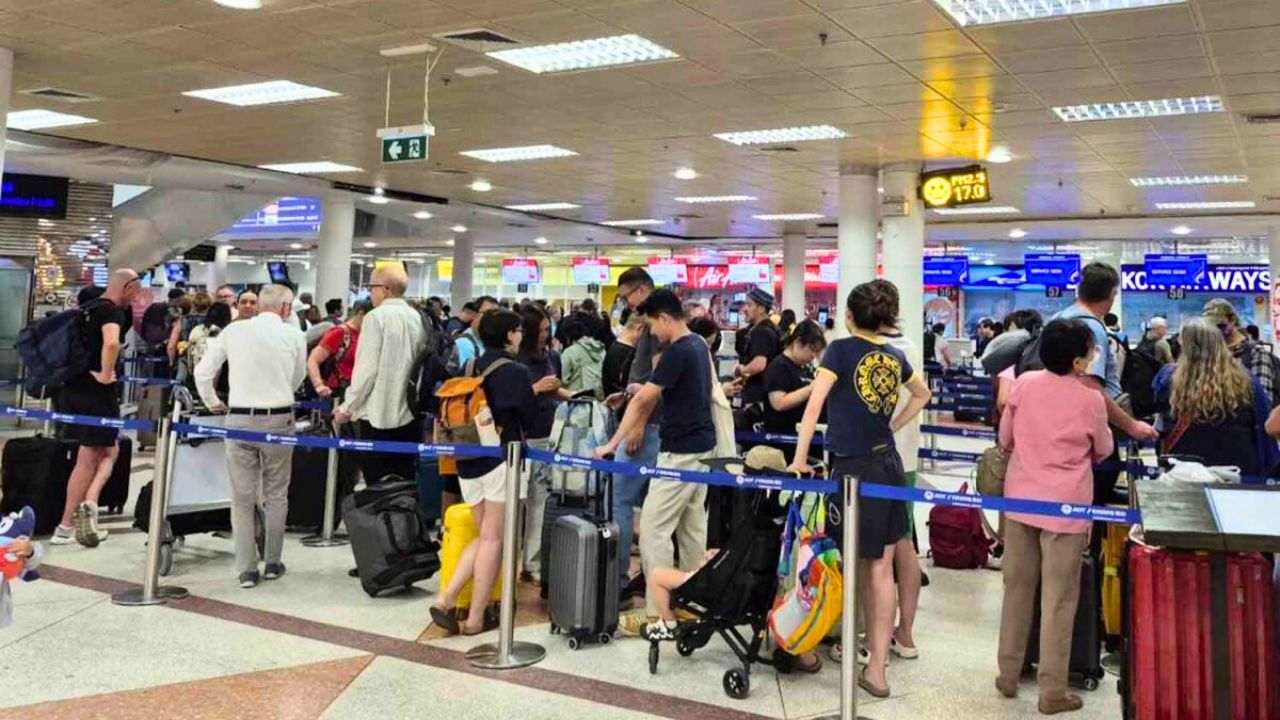
Travelers s’register at l’airport of Chiang Mai, Monday March 2, 2026. Photo : Panumet Tanraksa/Bangkok Post
The conflict in the Middle East also affects the tourism industry, vital for Thailand.
Nithee Seeprae, vice-gouverneur chargé de la communication marketing à l’Office national du tourisme thaïlandais (TAT), a déclaré :
« Many foreign tourists found themselves stranded in the south of the country after the closure of the airspace, especially in destinations such as Phuket, Krabi and Phangnga. »
The authorities, notably the Ministry of Tourism and Sports, the tourist police and tourist associations, have provided assistance to the affected travelers.
Mr. Nithee identified two main groups needing urgent assistance.
The former includes tourists who cannot travel to Thailand or those who are stranded and forced to extend their stay.
The TAT coordinated its efforts with the ’Thai Hotel Association (southern section) and tourism operators to eliminate the ’cancellation fees and ’offer special ’accommodation rates to ease the financial burden.
See: Canceled flights: Thailand activates an aid plan for foreign tourists
The second group includes travelers who are looking to return home.
The TAT works with airlines to facilitate departures, as many carriers have altered their routes in order to avoid conflict zones in the Middle East.
L’agency also urges airlines to reduce or eliminate flight change fees.
Although the number of blocked tourists remains manageable, flight cancellations have been significant.
Suvarnabhumi Airport recorded 49 cancellations, while Phuket recorded 14, Krabi three and Chiang Mai International Airport one, a total of 67 flights on inbound and outbound routes.
« Many adopt a wait-and-see attitude, which leads to a slight decline in the number of tourists in the short term », said Mr. Nithee.
Security surveillance has also been strengthened in areas where ’significant Israeli communities live, notably in the district of Pai in Mae Hong Son and in Koh Phangan in Surat Thani, alongside the ’intensification of patrols around embassies.
He stated that Thailand's priority was to reassure travelers worldwide that the country remained a safe and well-managed destination during the crisis.
Tourism is turning to alternative markets
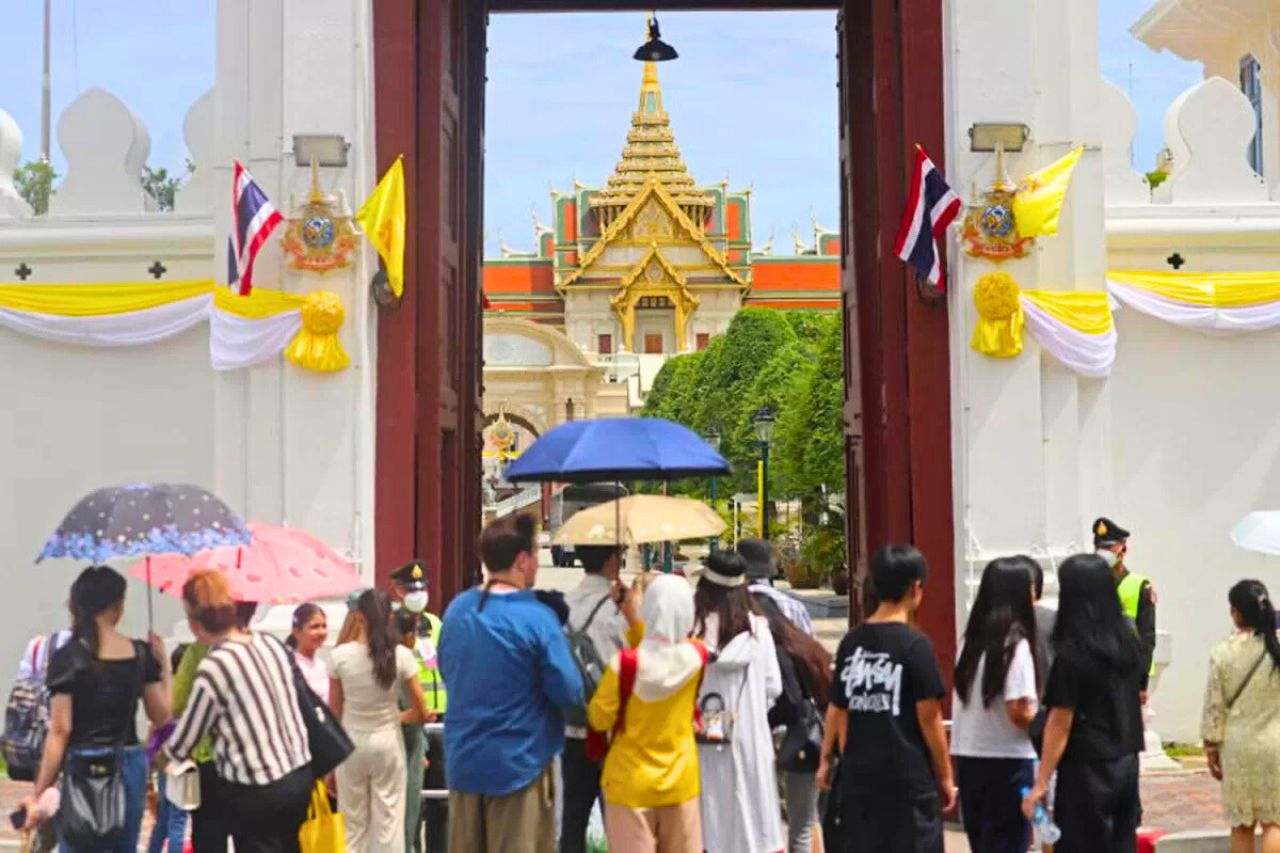
Tourists visit the Grand Palace. Photo: Varuth Hirunyatheb/Bangkok Post
Adith Chairattananon, secrétaire général honoraire de l’Association des agents de voyage thaïlandais (ATTA), a déclaré que les perturbations des vols à travers le Moyen-Orient affectaient directement les touristes en provenance d’Europe, des États-Unis et du Moyen-Orient lui-même.
However, he added that the current Ramadan period has partly mitigated l’impact, as travel from Arab markets generally declines during the fasting month.
Mr. Adith indicated that bookings for June and July remain normal, but cancellations in March and April are concerning.
Almost all bookings for these months have been cancelled, travelers reassessing the risks associated with the closure of the airspace and a possible escalation of the conflict.
The ’uncertainty also affects travel plans for the Thai Songkran festival in April.
The members of l’ATTA coordinate their efforts with airlines and the Ministry of Tourism and Sports to assist blocked travelers.
Authorities are also considering providing financial assistance to the affected tourists.
Compensation of approximately 2,000 baht (54 euros) per day to cover accommodation and certain expenses is under study in order to preserve Thailand's image as a hospitable destination.
Mr. Adith warned that the main challenge will be d’attract « new tourists » in April, especially those coming from distant European markets, where travelers usually book their trips two to four weeks in l’advance.
See: Airline tickets: Thailand advises booking in advance because of the conflict
« Consequently, the ’tourism industry must now focus on short‑distance markets in the Asia‑Pacific region », said Mr. Adith.
He also expressed his concern about the ’increase in travel costs.
Although the markets of East Asia, such as China, South Korea and Japan, are not directly affected by disruptions to air links, they could experience indirect effects.
A sharp rise in global oil prices could indeed push airlines to increase fuel surcharges and ticket prices.
These increases could weaken the purchasing power of Chinese visitors, a key market that is only just beginning to recover.
Mr. Adith estimates that there is a glimmer of hope.
If Asian travelers cannot go to Europe or the Middle East, Thailand could benefit from this as a strong short-haul destination.
See also:
Thailand: a journalist denounces the jungle law imposed by the United States
Thailand fears up to& rsquo; 25 % fewer tourists because of the war
Thailand-Europe flights: ticket prices soar by 100 %
The Thai baht could fall if the war in the Middle East drags on
Source : Bangkok Post
Notice to Adblock users
Toutelathailande.fr is an independent media outlet financed solely by advertising.
Automatic and intrusive video formats have been removed for several months to improve your reading comfort.
If our articles are useful to you, you can support the site by disabling your blocker for this domain.
Useful links to prepare your trip to Thailand
Book bus, train and boat in Thailand
Manage your money while traveling with Wise
You can follow us on:
Twitter, LinkedIn, Facebook, Google News
Or install our app:
All Thailand Application on your smartphone

1 comment
Thailand does not « risk » not undergo an economic shock… it’s a certainty, like almost all countries in the world, which are directly and indirectly concerned (I broaden the scope compared to the « involved ») or simply foreign to the conflict, but victims of its international consequences…
If the United States, which has in the Persian Gulf and especially within a radius of 600 kilometres around the d’Ormutz Strait, a huge military force, but apparently ill‑suited to securing the strait, does not within a maximum period of 2 to 3 weeks guarantee the free movement of oil tankers and gas carriers to restore the supply of oil and gas, particularly to l’Europe and l’Asia, a period of economic crisis, or even a recession more severe than that of the Ukraine crisis or, worse, the Subprimes of 2008, will set in in the medium and long term.
And it seems to me that Trump is very unhappy with the Israelis who bombed and destroyed Tehran's fuel reserves.
Furthermore, if this situation extends beyond ’another ten days, it will be very tempting for European leaders to turn to Russia to reopen the taps of ’energy oil and gas Russian, in order to ’avoid an inevitable surge in prices, which in only 3 to 4 days has taken on the dimensions of a major economic catastrophe, ’explosion of energy prices and ’inflation.
Thailand doesn’t even have the equivalent of the domestic reserves of France or Europe, which are between 2 and 3 months of reserves…
Within two weeks, Thailand will find itself in a precarious supply situation and subsequently face shortages in the coming months if the Ormutz Strait is not reopened. Currently, it is Iran and the forces of the Guardians of the Revolution who maintain a climate of fear and threaten the destruction of civilian vessels that would venture into the strait, controlling this issue, especially since the “protection” that the Americans might consider would place their own ships and crews at great risk, within range of Iranian rockets, missiles, or drones…
Trump finds himself in a complicated equation and dilemma, especially since Iran is not sparing its efforts to continue applying military and diplomatic pressure on the Gulf countries.
I believe we are heading towards an escalation of the conflict and an increase in the risk of human casualties on the American side.
When it comes to the economic shock, it will (it’s already) global and inevitable, whatever the respective national governments do, involved, concerned or foreign to the conflict !