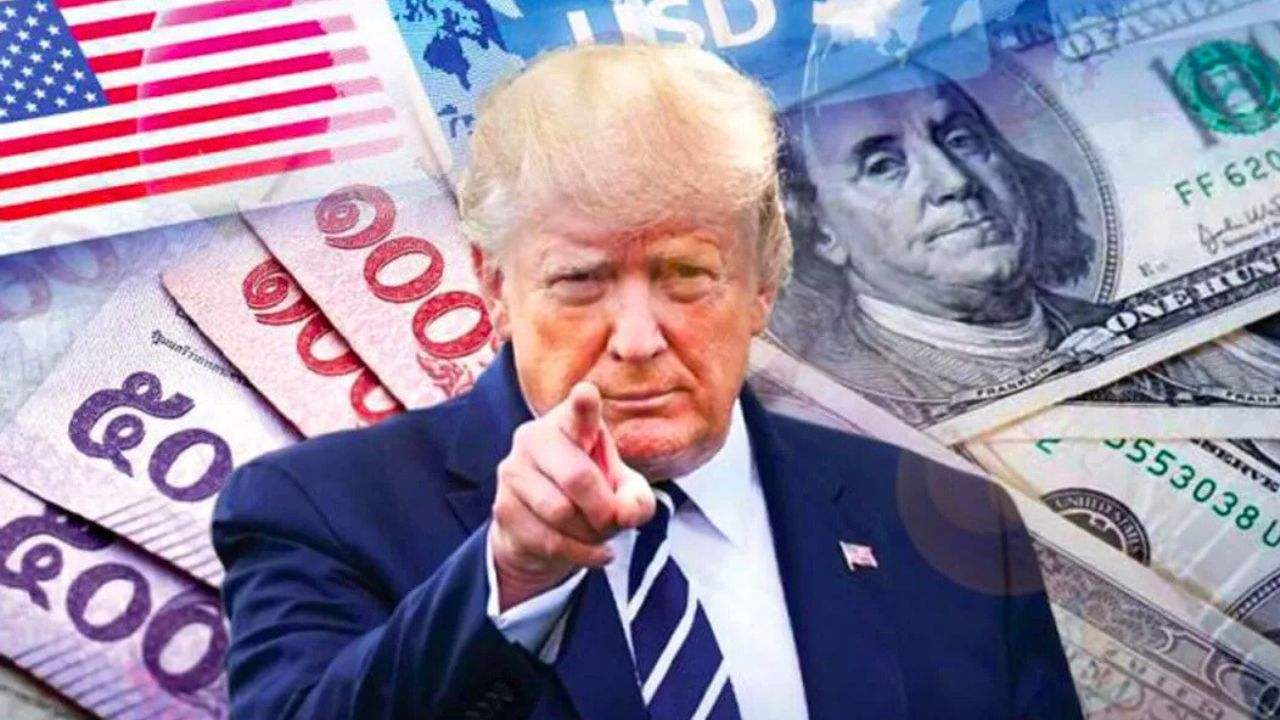
The Bank of Thailand (BoT) remains below the intervention thresholds in the foreign exchange market and should avoid an accusation of currency manipulation.
According to the Kasikorn Bank research center (K-Research), Thailand's interventions in the foreign exchange market remain well below the threshold set by the United States.
The three criteria of the US Treasury scrutinized

Flags of Thailand and the United States.
According to the US Treasury's foreign exchange market intervention criteria, net purchases of foreign currency must not exceed 2% of GDP.
K-Research estimates that the Bank of Thailand's intervention in the baht amounted to 0.9% of GDP.
Based on this assessment, Thailand should not be classified as a currency manipulator under the three criteria of the U.S. Treasury, even though the country has again been placed on its watch list for its currency practices, according to the research unit.
See: Currency manipulation: Washington places Thailand under surveillance
One of the criteria is a significant bilateral trade surplus with the United States.
Thailand recorded a surplus of US$54 billion in goods and services with the United States during the four quarters ending in June 2025.
Another standard is a significant current account surplus, defined as exceeding 3% of GDP.
During the US review period, Thailand's current account surplus amounted to 3.8% of GDP.
The US Treasury report was published last month.
Thailand was already on the watch list in December 2020 and November 2022, mainly due to its current account and trade surpluses with the United States.
The third criterion is persistent and unilateral intervention in the foreign exchange market, and Thailand does not meet the condition of intervention for at least eight months out of twelve.
A baht management system focused on stability and competitiveness
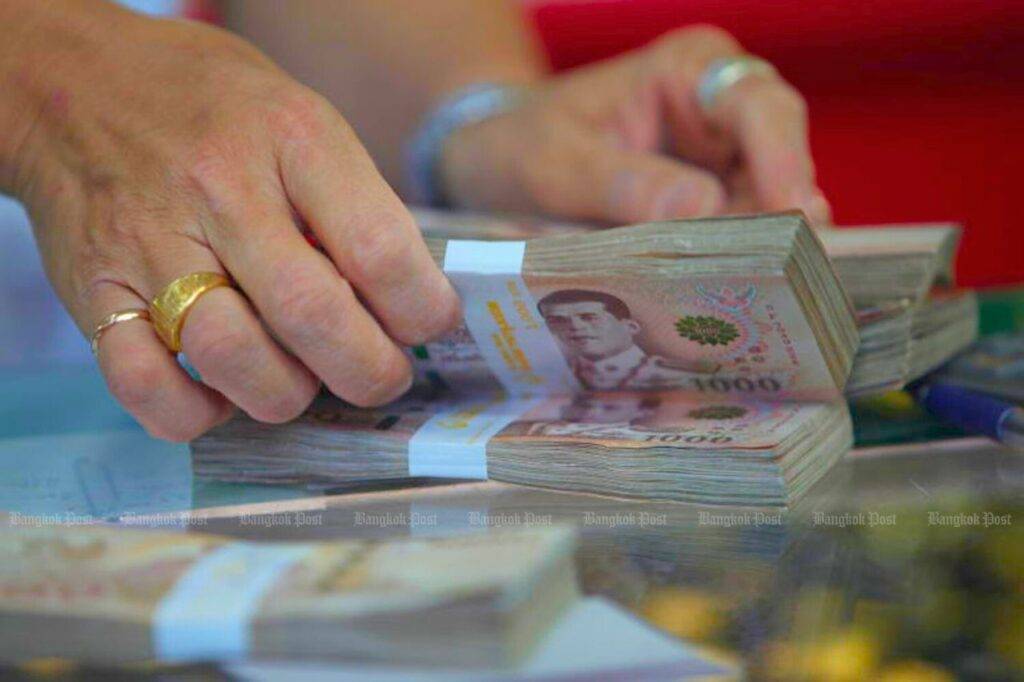
An employee counts stacks of 1,000 baht notes in a gold shop in Yaowarat, Bangkok's Chinatown. Photo: Apichart Jinakul/Bangkok Post
The Bank of Thailand has focused on reducing excessive currency volatility and preventing a sharp appreciation of the baht against the US dollar, K-Research noted.
The central bank governor, Vitai Ratanakorn, recently stated:
"A stronger baht against the US dollar, appreciating more than the currencies of neighboring countries, would harm Thailand's competitiveness, particularly in the areas of exports and tourism.
The Bank of Thailand has managed fluctuations in the baht against the US dollar in the most appropriate manner, in accordance with the memorandum of understanding concluded with the United States
However, government coordination and additional adjustments

Gold bars
In addition to its interventions in the foreign exchange market, the central bank also supervised the domestic trade in gold, which can partly influence fluctuations in the baht.
The regulatory authority has capped daily gold transactions in baht on digital platforms at 50 million baht.
The central bank is also working with the Ministry of Finance and other relevant agencies to identify additional measures to manage fluctuations in the baht.
These actions take into account Thailand's economic fundamentals and exchange rate developments in neighboring countries.
See also:
How Thailand went from economic tiger to the sick man of Asia
Thailand: the surge in gold propels the baht, but temporarily
The baht too strong threatens Thai tourism and exports
Source: Bangkok Post
Do you like Toutelathailande.fr?
👉 Leave us a review on Trustpilot.
Your review strengthens the credibility of our work and the trust of our readers.
Useful links to prepare your trip to Thailand
Book bus, train and boat in Thailand
Manage your money while traveling with Wise
If our news, tourist information, or cultural content has been useful to you and you'd like to thank us:
You can follow us on:
Twitter, LinkedIn, Facebook,Google News
Or install our application: Install the application of All Thailand on your smartphone
