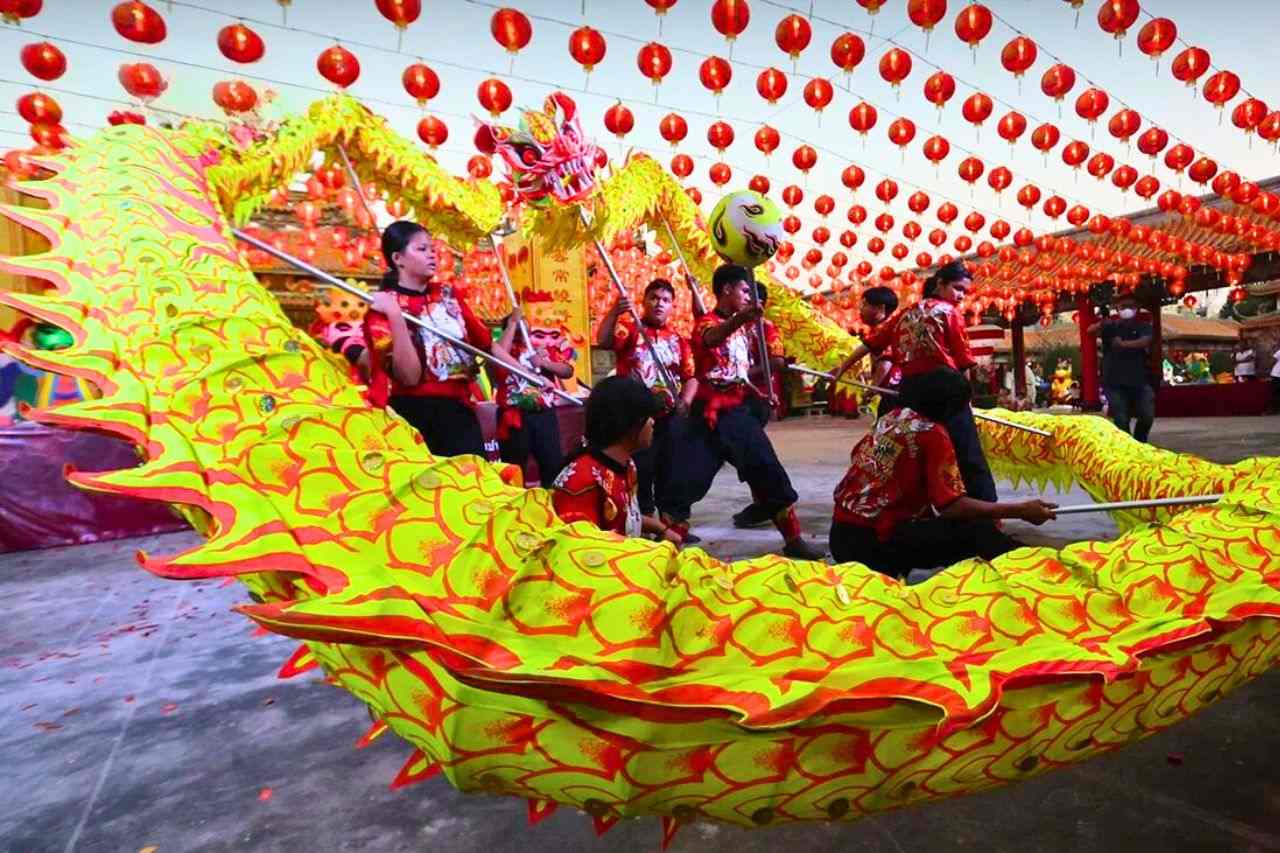
A true pillar of national identity, Chinese New Year in Thailand testifies to the deep integration of the Sino-Thai community.
- Key Date: In 2026, Chinese New Year (Year of the Fire Horse) will be celebrated on February 17
- National Identity: More than just a celebration, it is a symbol of the deep integration of the Sino-Thai community and the strengthened strategic partnership with Beijing (50 years of diplomatic relations in 2025).
- Economic Impact: It is a vital engine for tourism and retail, marking a peak season for domestic and international travel.
- Official Status: Although considered a major cultural event, it is still celebrated as a special occasion and is generally not an official national holiday.
Economic importance for tourism, family rituals and must-see sites: decoding a major event that drives the life of the country and strengthens its strategic ties with Beijing.
Although the ritual festivities traditionally last 15 days (until the Lantern Festival), the heart of the event in Thailand focuses on 3 key days: the day of shopping, the day of prayers and the day of visits.
It is during this triptych that economic and family activity is at its maximum.
In Thailand, the festival is widely regarded as a major cultural event, even if it is generally celebrated as an important occasion rather than an official holiday.
In 2026, Chinese New Year falls on February 17.
See: Chinese New Year in Thailand in 2026: the year of the fire horse
But the significance of this festival in Thailand goes far beyond a simple date.
It testifies to centuries of contact between peoples, maritime trade, migration and growing relations between states.
Deep roots, but little documentary evidence
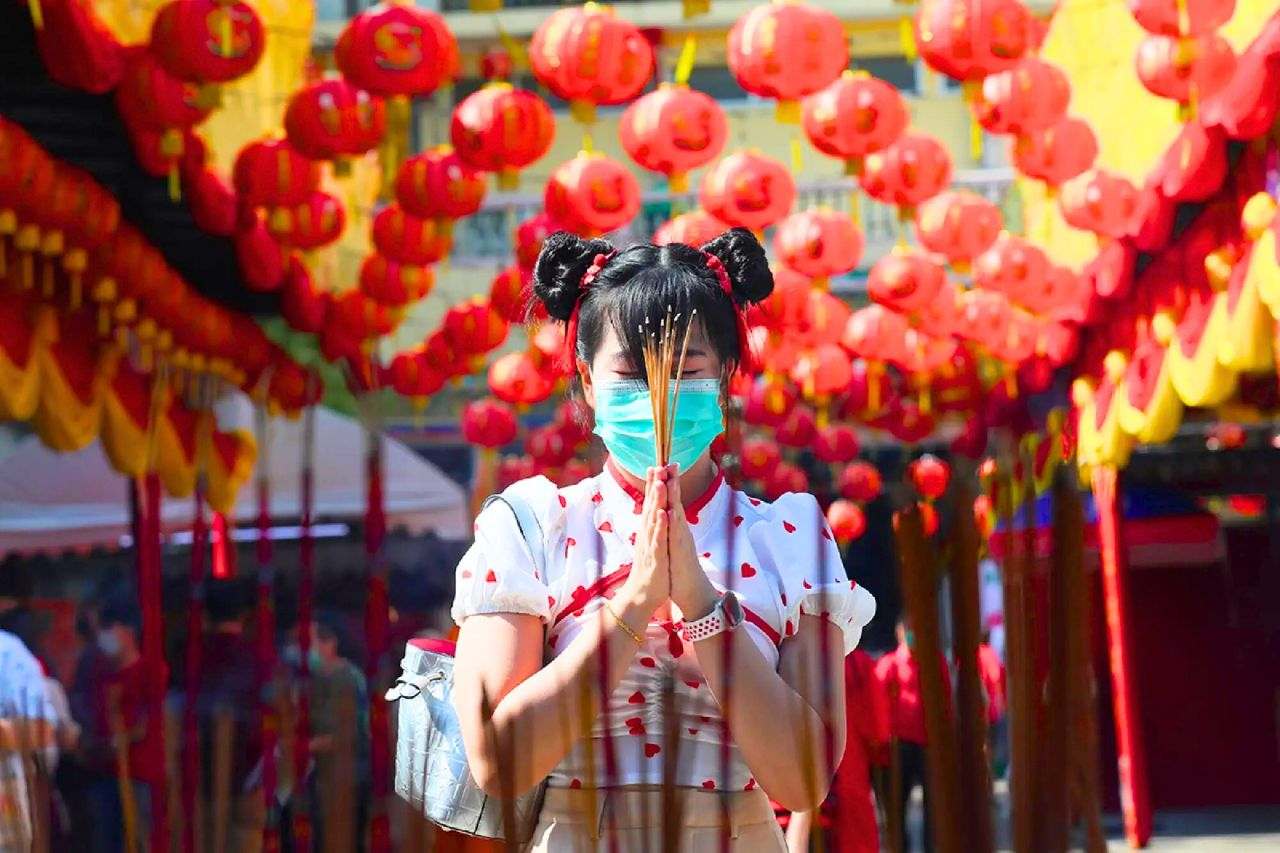
A woman burns incense in a temple during the Chinese New Year in Thailand. Photo: The Nation Thailand
Historians emphasize that long-distance maritime trade connected the earliest political communities of present-day Thailand to wider regional networks, particularly with Chinese merchants, long before the Ayutthaya period.
However, it remains difficult to identify with certainty the "first Chinese New Year celebration" in Thailand.
The surviving evidence from the earliest periods tends to focus on trade, settlement patterns, and court life, rather than providing a clear description of the festival celebrated on Thai soil.
However, during the Ayutthaya period, it becomes easier to trace the overall picture
Chinese communities were increasingly established, active in trade, and visible in the urban economy and cultural landscape of Siam.
Western accounts from the late 17th century, particularly those related to French visitors to Ayutthaya, describe the court's entertainment and performances, which included, among other things, Chinese theater.
Although this is not direct evidence of large-scale Chinese New Year celebrations, it corroborates more general evidence of sustained Chinese cultural presence and exchange.
Why is Chinese New Year important for Thailand today?
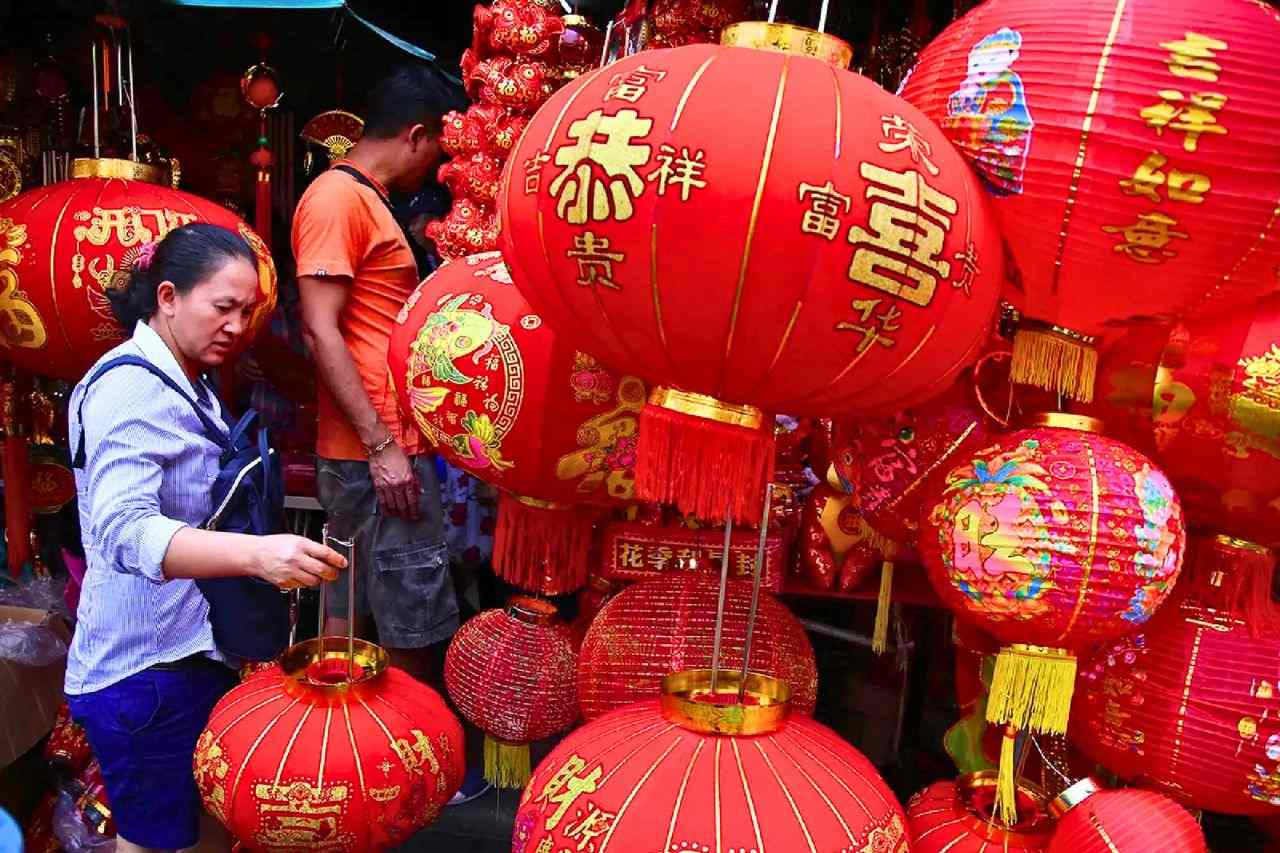
A woman shopping for Chinese New Year decorations in Thailand. Photo: The Nation Thailand
Chinese New Year is important in Thailand for three closely related reasons: culture, diplomacy, and economy.
1. A common culture in everyday Thai life
This festival has become common partly because Thai people of Chinese origin have been deeply integrated into Thai society throughout history.
Over time, many have adopted standard Thai as their main language and have become Theravada Buddhists, thus contributing to making Chinese New Year a celebration appreciated well beyond a single community
Today, it is generally considered a family celebration, centered on reunion meals, remembering ancestors, visiting temples, and acts intended to bring good luck for the coming year.
2. A symbol of the relations between Thailand and China
The Chinese New Year is also a very visible symbol of the ties between Thailand and China.
Thailand and China established diplomatic relations on July 1, 1975, and their cooperation has continued to grow since then.
In 2025, the two countries celebrated the 50th anniversary of their relations, reinforcing the idea that cultural ties and modern diplomacy go hand in hand.
In practice, the Chinese New Year celebrations often become moments of cultural diplomacy, where the common heritage is highlighted through ceremonies, shows, and events organized throughout the city.
3. An important moment for the economy and tourism
This festival is also important as it stimulates spending and travel.
The Chinese New Year has become an important period for retail, hospitality and tourism promotion, with events organized across the country in destinations with significant Sino-Thai communities.
In terms of tourism, it is a peak season that gives a boost to domestic travel and helps shape Thailand's international image as a welcoming and culturally diverse destination.
Highlights of Chinese New Year celebrations in Thailand
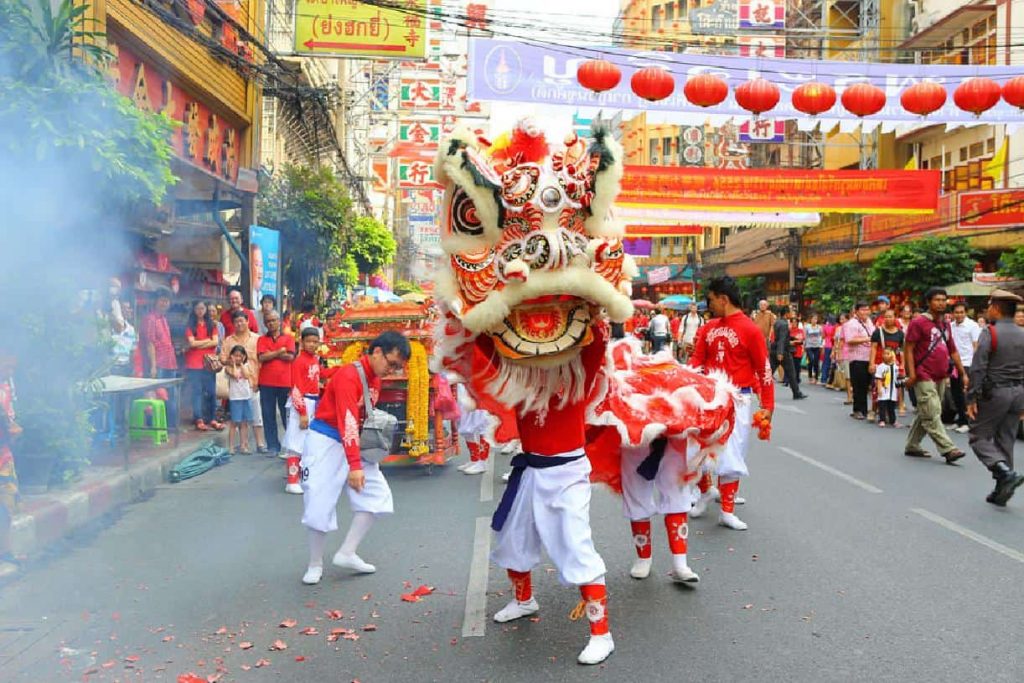
Chinese New Year in Bangkok. Photo: Learn Thai with Mod
Throughout Thailand, Chinese New Year is celebrated in a distinctly local manner, from the atmosphere of Bangkok's Chinatown to large-scale provincial processions and heritage-focused celebrations in the "old towns".
Yaowarat (Bangkok): the most famous celebration of Thailand's Chinatown
Yaowarat Road and the surrounding Chinatown remain the country's best-known destination for Chinese New Year.
The area typically features stage shows, cultural presentations, and dense crowds moving through the heart of the district.
Nakhon Sawan (Pak Nam Pho): the tradition of the "great procession"
The Pak Nam Pho procession in Nakhon Sawan city is widely regarded as one of the largest Chinese New Year celebrations in Thailand outside of Bangkok.
The festival is known for its multi-day duration and iconic processions that take place day and night, attracting large crowds and animating the city's streets late into the evening.
The old town of Phuket: heritage, soft power and modern festival format
In Phuket, the Chinese New Year is closely linked to the island's characteristic Sino-Thai heritage (Peranakan) and the revival of the old town as a cultural economy.
The latest editions have blended tradition and modernity:
- a grand parade with over 300 participants
- contemporary elements of light and sound such as video mapping
- a 40-meter dragon-shaped lantern tunnel
- hundreds of vendors throughout the old town
This has positioned the celebration as both a means of preserving culture and boosting tourism.
Overall, these celebrations show why Chinese New Year in Thailand is not simply an “imported” festival.
It has become an integral part of the country's cultural rhythm, rooted in long historical relations and reinforced by modern relations between Thailand and China that continue to shape Thailand's diplomacy, economy, and daily social life.
See also:
Parties, festivals and public holidays in Thailand, important dates in 2026
Festivals and Events in Thailand: The Agenda
Source: The Nation Thailand
Do you like Toutelathailande.fr?
👉 Leave us a review on Trustpilot.
Your review strengthens the credibility of our work and the trust of our readers.
Useful links to prepare your trip to Thailand
Book bus, train and boat in Thailand
Manage your money while traveling with Wise
If our news, tourist information, or cultural content has been useful to you and you'd like to thank us:
You can follow us on:
Twitter, LinkedIn, Facebook,Google News
Or install our application: Install the application of All Thailand on your smartphone

2 comments
Interesting article on the cultural and diplomatic importance of Chinese New Year in Thailand.
However, one can wonder about the contrast between these celebrations, the large infrastructure projects, and the social reality of the country: massive household debt, limited access to education and training, particularly linguistic.
The question is probably not cultural, but rather one of economic and social priorities: investing in the basics (education, agriculture, skills) before prestige projects.
Again, Gaspard, you're pointing to one of the major issues that could lead Thailand towards greater social justice: the education and primary and secondary instruction of Thai youth between 5 and 18 years old, a teaching method that still has aspects dating back to the 19th century, without significant reforms needed in teacher training and teaching methods, subjects, methodology, and access to analytical pedagogical methods, experiential learning, and education through free inquiry…
When we know that one of the last (perhaps still in office, but so discreet that we wonder if it still exists) Minister of Education is a general of the Thai Army, we better understand the immobility of its Ministry which seems to have as its essential guiding principle to keep a large part of the country's less fortunate youth in ignorance of educational reflection and analysis methods, leading people to a broad-mindedness and political awareness (in the broad sense of the term) and social awareness capable of moving the popular masses that make this country live…
It is well known: a people with little education at its base and a large part of its youth are more easily influenced and manipulated…