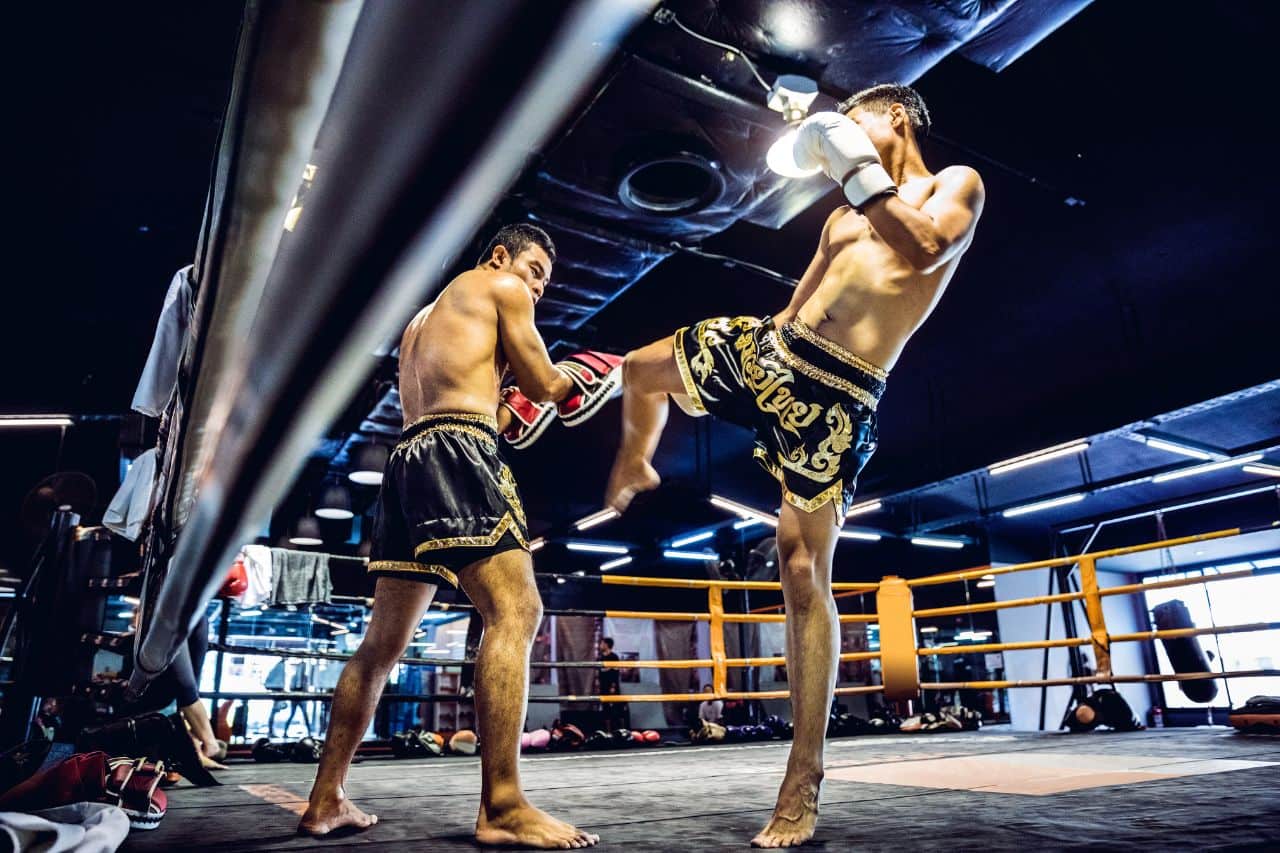
Everything you need to know before coming to Thailand to take Muay Thai classes or do a Muay Thai (Thai boxing) internship in Thailand.
It's not hard to see why someone would want to learn Muay Thai, especially in its magnificent country of origin, Thailand.
See: Muay Thai or Thai boxing: everything you need to know about the art of the eight limbs
The country has just created a special 90-day Muay Thai visa for people who want to follow a training program for several months, but there is still little information on the subject.
You can get an overview of the techniques and names of the moves by reading our article:
Muay Thai: Techniques of Thai Boxing with Illustrations
But how to get the most out of Muay Thai training?
Michael Sopon New, a Canadian settled in Thailand, with multiple activities, has prepared this practical guide based on his own training experiences over many years in excellent gyms throughout the country.
Menu
Set goals to succeed

Dance before a Thai boxing match
Before you start training, it's essential to identify what you want to achieve from it.
Setting clear goals is the key to effectiveness.
Coaches will often work with you to focus on various aspects directly related to these goals, which means you'll get much more out of the process if you know what you want from the start.
Goal 1: get in shape
Many people train to get in shape.
Muay Thai can help you lose weight, gain muscle, improve your posture, and strengthen you from head to toe.
There's nothing like having a dedicated coach to push you further than you thought possible.
It's not necessary to get hit during fitness training (unless you want to try sparring).
You won't need to spend as much time focusing on the aspects of combat and hardening your body.
If Muay Thai is just one part of a training program for you, you can easily have a conversation with your coaches to focus on the aspect you need, whether it's strength or cardio.
Goal 2: Joining a community
Of course, another reason to train may simply be to discover an important part of Thai culture and make friends.
You can meet all sorts of interesting people in Muay Thai gyms and, in a country like Thailand, it can often lead to many fun adventures in travel, food and more.
Goal 3: become a professional fighter
Others still train to become professional fighters or already are and intend to improve their techniques.
If that's what you're looking for, you can expect exhausting sessions that will push you to the absolute limit.
This form of training will condition your body to be explosive throughout a match, toughen your elbows, knees and shins to block and strike with force without hurting yourself, and really focus on optimizing your strikes, footwork and positioning.
Goal 4: Protect yourself
Some people train for self-defense.
Flight will always be the most effective strategy to avoid getting hurt, but when combat is absolutely inevitable, Muay Thai trainers can work with you to teach you different movements that are effective on several levels.
Muay Thai originates from Muay Boran, one of the earliest forms of Thai boxing developed for warfare.
You can focus more on learning how to hit hard and inflict damage quickly.
Choose a Muay Thai club
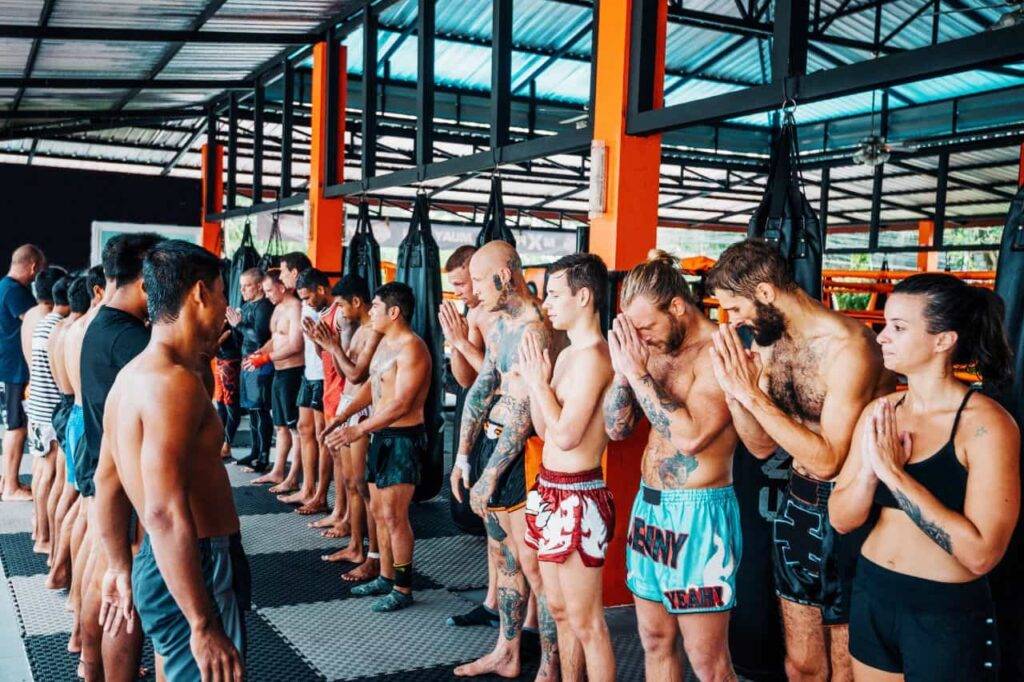
Students and teachers in a Muay Thai club. Photo: Drazen
There are many gyms that offer Muay Thai training all over Thailand.
Whether you're looking for something serious, the opportunity to train with a famous fighter, or just a relaxed group atmosphere, you'll be able to find something that meets your needs.
Many of the top Muay Thai fighters in Thailand, whether active or retired, have opened their own gym or train in a famous gym.
These places can be unique opportunities to rub shoulders with the greats of this sport.
However, not all of these places are suitable for beginners, as some are more geared towards training professional fighters.
Cost of a Muay Thai training
The cost can vary depending on the location and how you want to train.
It is clear that a high-tech gym in downtown Bangkok will cost much more than an outdoor camp in the countryside.
In general, you can expect to pay around 400 to 1,000 baht ($10.16 to $25.41 USD) per group session in Bangkok and around 200 to 700 baht ($5 to $17.79 USD) elsewhere in the country.
You can save a lot of money if you want to train for longer, as most gyms offer packages.
Some even offer room and board.
Good addresses for Muay Thai clubs in Thailand
Here are some of the best choices for beginners:
1. Luktupfah Muay Thai Camp (Bangkok metropolitan area)
2. Sinbi Muay Thai (Phuket)
3. Kiatphontip (Bangkok metropolitan area)
4. Sitmonchai Gym (Kanchanaburi)
5. Sor Vorapin Gym (Bangkok)
6. Fairtex (Pattaya)
7. Chiang Mai Muay Thai Gym (Chiang Mai)
The government has also set up a website to help enthusiasts easily find a Muay Thai club in Thailand: Now Muay Thai
What to expect during Muay Thai training?
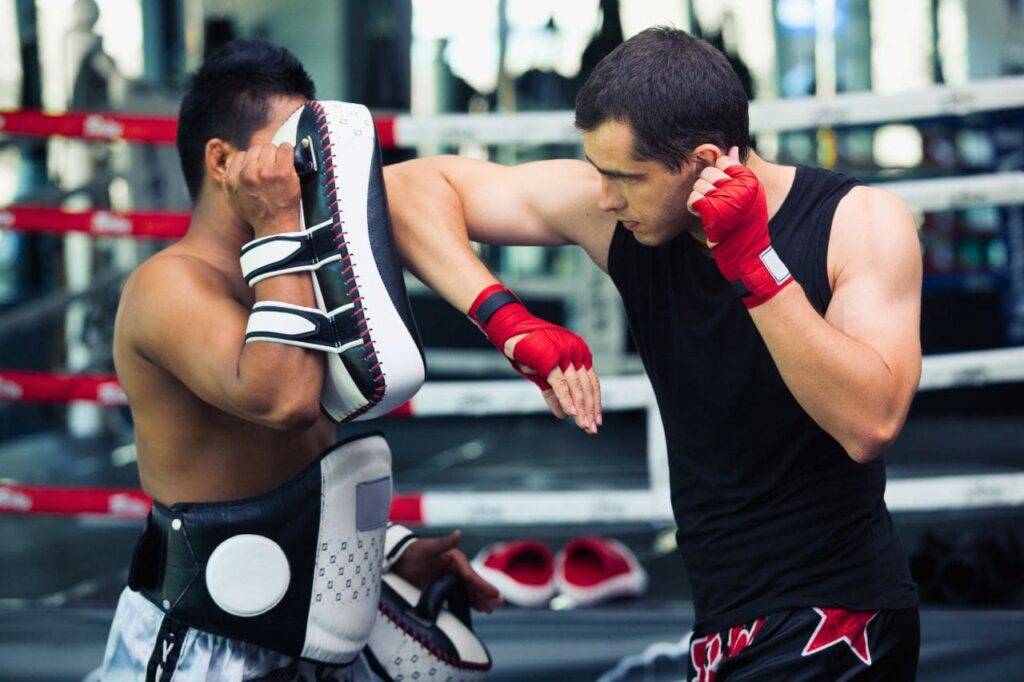
Muay Thai training. Photo: Perkus
Most gyms have hand protection and gloves that you can borrow.
You therefore only need comfortable athletic clothing that will give you a little flexibility for kicks.
A typical group training session lasts about two hours with 2 or 3 trainers.
In general, the session is divided into three parts:
- Warm-up and conditioning
- Individual time with a trainer
- Recovery
Warm-ups often take the form of light jogging or jumping rope.
It depends on the space available to the gym.
In most city gyms, there is no practical place nearby to go jogging, so we use rope jumping.
Generally, these are weighted jump ropes that are much harder to use and allow you to sweat in no time.
In addition to jumping for cardio, these exercises target your shoulders and forearms rather than your wrists.
After cardio, you should stretch to make sure you're flexible and not at risk of straining a muscle.
Now that you've sweated and loosened up, it's time to move on to training.
This is where you improve your overall fitness.
The coaches will guide you and the rest of the group through a series of exercises such as shadow boxing, push-ups, pull-ups, crunches, weightlifting and bag work.
While the main group focuses on exercises, the coaches take individuals aside for individual sessions.
In most gyms, you'll spend a lot of time one-on-one with coaches, whether you're sparring in the ring or working on your form on the mats.
They will teach you footwork and balance, how to throw different punches and block.
If you've never practiced martial arts, you'll probably realize that you can easily hit 2 to 3 times harder after just one week of training, simply because you've improved your fitness.
Good coaches will push you beyond what you think you're capable of.
If you want to spar, the trainers will wear large pads and encourage you to hit them with everything you've got.
If you're training solely to get in shape, they won't fight back.
It's a therapeutic experience.
Professional training is all of this, but three times longer and three times more intense, often in multiple sessions throughout the day.
In addition, these coaches will fight back during fights.
How to train without getting hurt
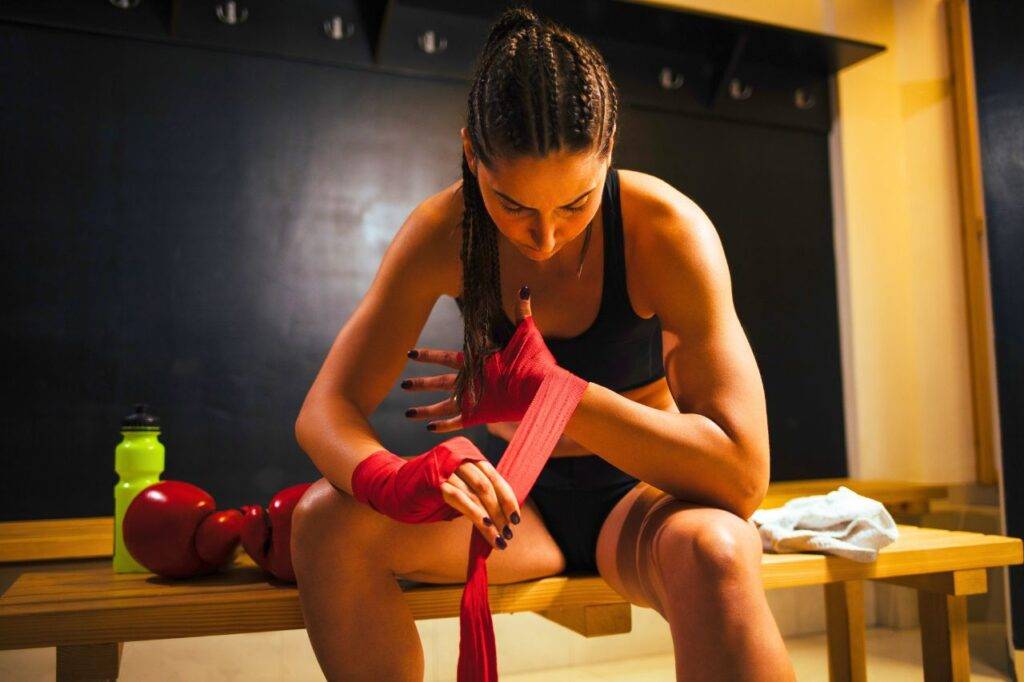
A woman prepares before a Muay Thai training. Photo: Emir Memedovski
Muay Thai is a high-impact sport.
Even if you're just training to be fit, if you're not careful, it can put a strain on your muscles and joints, damage your joints and leave you sore and bruised.
Here are four ways to avoid this as much as possible.
1. Hand wraps
The reason boxers wear gloves is to protect their hands.
Our hands and wrists are quite fragile and are certainly not designed to strike hard things like skulls.
That said, it is very important that you learn to wrap your hands properly (or ask a trainer to do it for you) to ensure that you have properly cushioned your joints and supported your wrist.
This will prevent your hands from getting hurt, especially if you plan to train often.
2. Technique first, power second
It is very important to learn and practice the technique from the start.
Throwing good punches, elbows, knees, and kicks will help you avoid getting hurt during training.
As you improve, you'll hit much harder and it will become even more important.
Trainers will also have you practice hardening your impact points over time in a process known as conditioning, which will help you a lot in handling repeated strikes.
3. Communication
If you plan to train in a local Thai camp located in a very rural area, learning a few basics of Thai will help you a lot to communicate with your coaches to explain where you feel tension and/or pain.
You can thus ensure that your trainers always work with you effectively and to the best of your ability.
Frankly, learning a bit of Thai is very useful for traveling and getting discounts.
4. Pre-training routines
As with any exercise, be sure to stretch and take enough potassium to avoid straining your muscles.
At the same time, don't stuff yourself before a workout either.
It's best to have a light snack an hour or two before.
Muay Thai training can offer you a lot of things, from fitness to self-defense, to sharpening for professional fights.
It's also a gateway to a vibrant and exciting community and a ticket to explore and live in the magnificent country that is Thailand.
If you approach training the right way, you'll be able to maximize everything you're looking for and have fun doing it.
If all this seems interesting to you, why not come to Thailand to train?
See also:
The rules of Thai boxing (Muay Thai)
The Ram Muay, a ritual dance before Muay Thai fights
Who invented Thai boxing, Thailand, Myanmar, Cambodia?
Source : Thailand Now
Notice to Adblock users
Toutelathailande.fr is an independent media outlet financed solely by advertising.
Automatic and intrusive video formats have been removed for several months to improve your reading comfort.
If our articles are useful to you, you can support the site by disabling your blocker for this domain.
Useful links to prepare your trip to Thailand
Book bus, train and boat in Thailand
Manage your money while traveling with Wise
You can follow us on:
Twitter, LinkedIn, Facebook, Google News
Or install our app:
All Thailand Application on your smartphone
