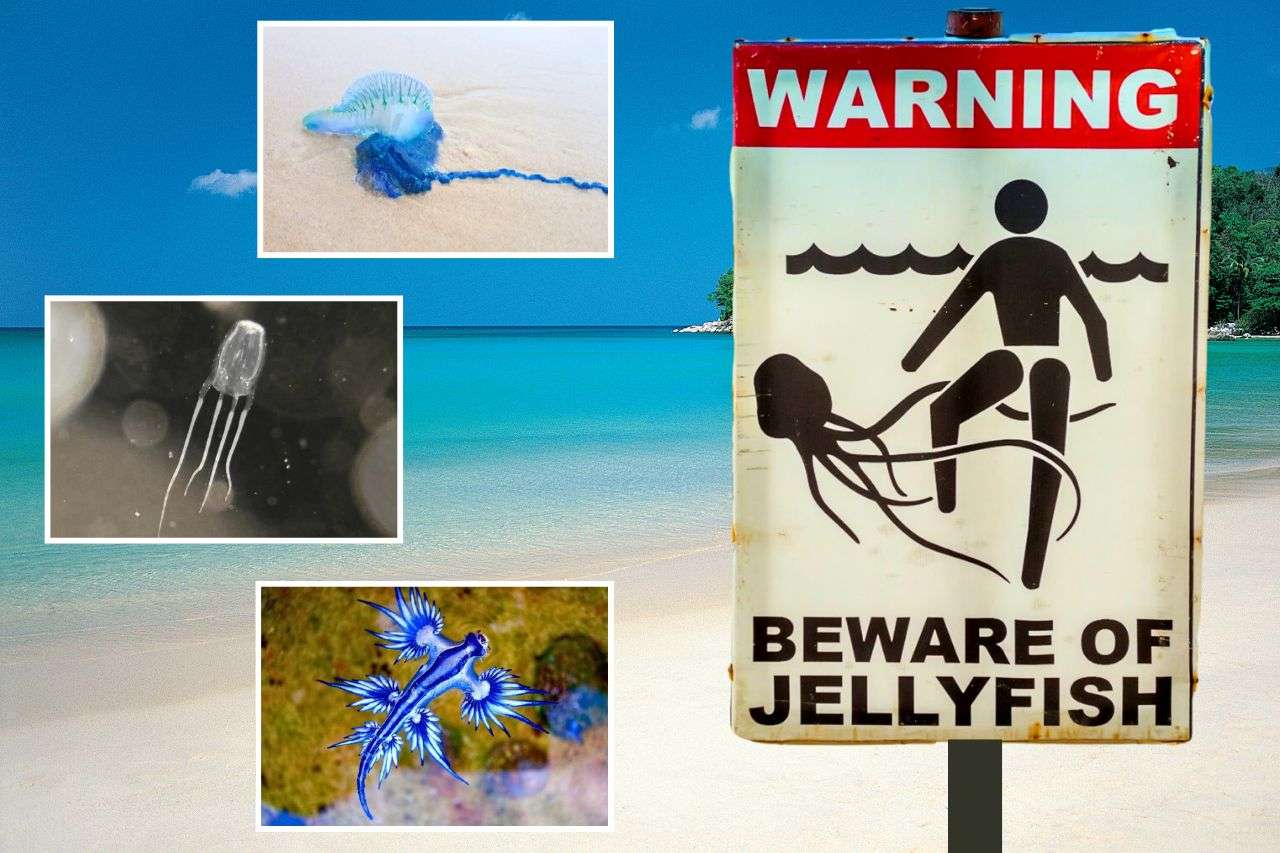
During the rainy season, jellyfish and other marine hazards may be present near beaches, here are the essential tips for safe swimming.
Travelers are advised to follow local safety guidelines.
Thai beaches are among the most beautiful in the world and attract millions of visitors every year.
Although the waters are generally safe for swimming, snorkeling, and scuba diving, travelers are reminded to be extra cautious at certain times of the year when venomous jellyfish and other marine animals may be present.
Menu
Jellyfish and other dangers in Thai waters
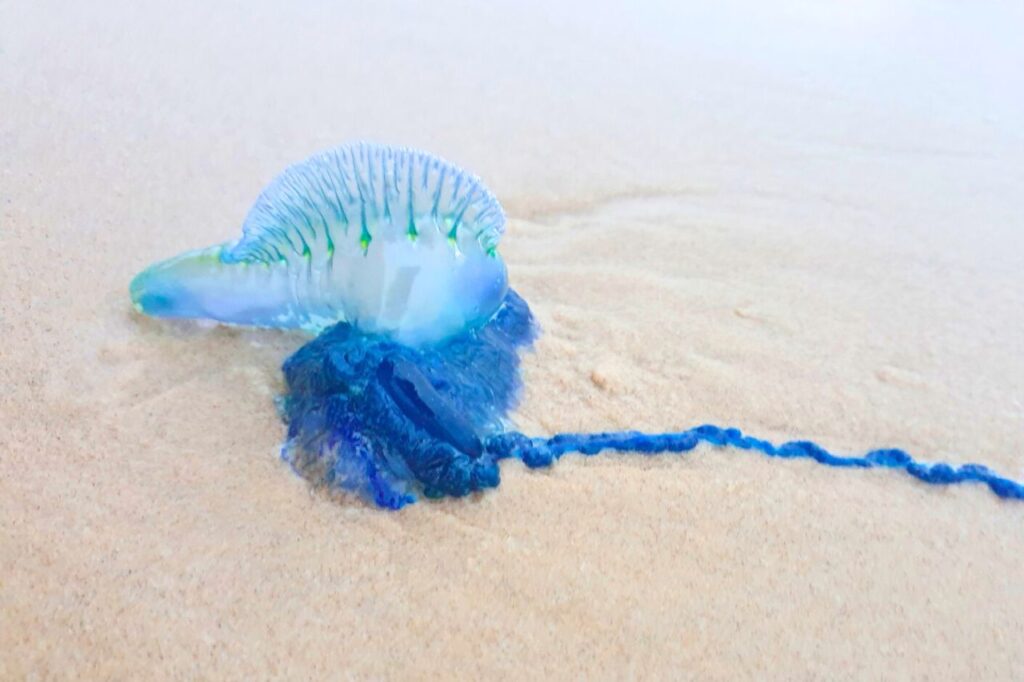
Portuguese Man-of-War washed up on a beach. Photo: Surf Life Saving
Several species of jellyfish are present seasonally in Thailand.
Most are harmless, but some, such as box jellyfish, can pose a serious risk.
They are more common during the monsoon season, when winds and currents push them towards the coast.
In addition to jellyfish, swimmers should also be careful of other venomous marine creatures that are sometimes found in Thai waters.
This includes:
- The Portuguese Man-of-War (a type of siphonophore with a floating balloon)
- The Glaucus atlanticus, or blue dragon, impressive but dangerous, which accumulates the venom of the jellyfish it feeds on
- Other creatures such as stonefish, sawfish and sea urchins
Preventive measures
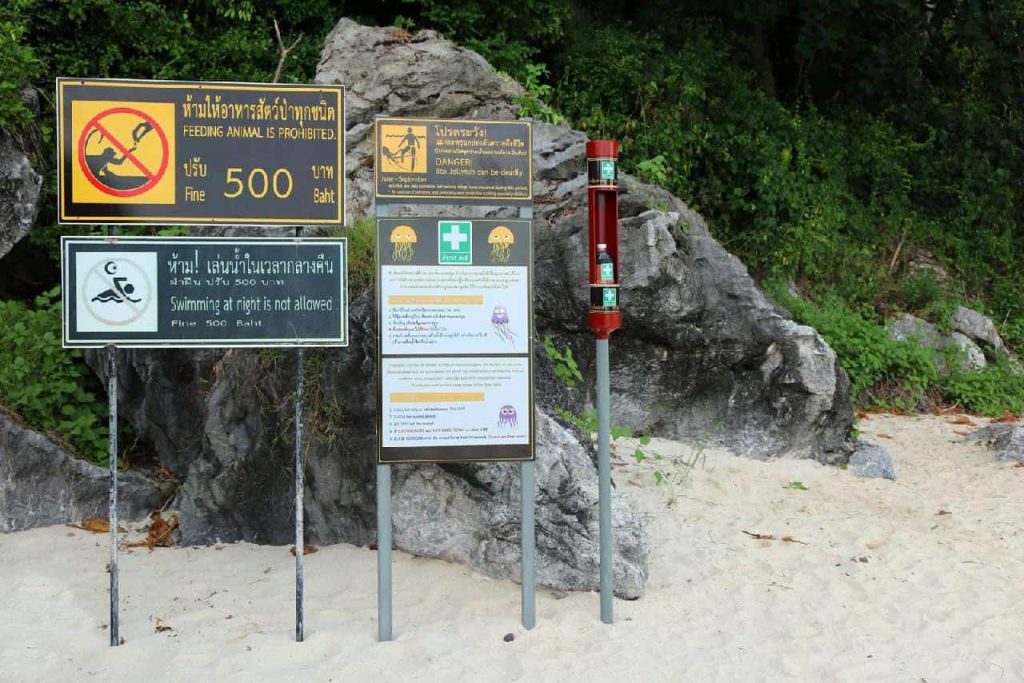
Information signs on the possible presence of jellyfish - box and bottle of vinegar on a beach in Koh Samui
Beach resorts throughout Thailand have strengthened their security measures for visitors.
Warning signs are installed when necessary and first aid stations are available on many popular beaches.
In some areas, protective nets have been installed, but this is not possible everywhere due to coastal conditions.
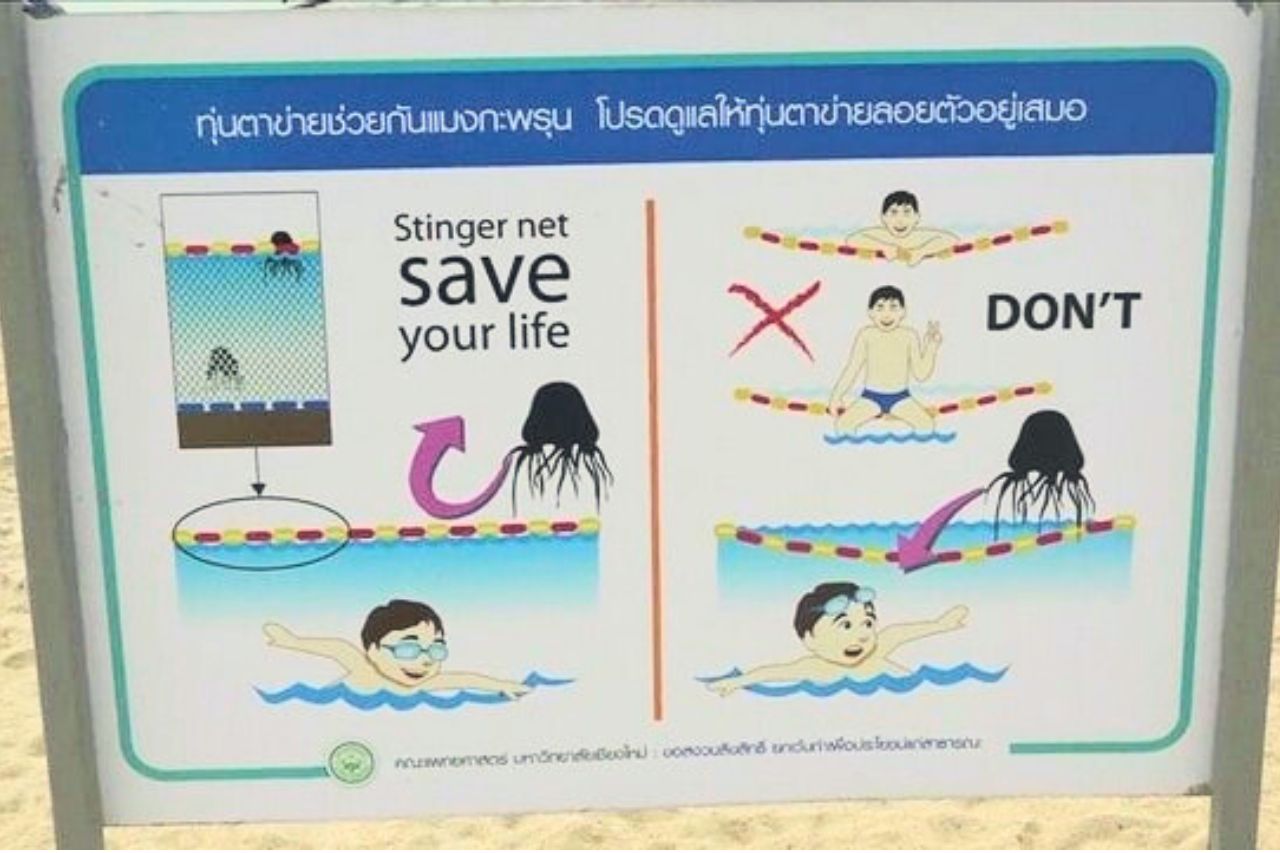
Sign indicating instructions to follow with the anti-jellyfish net on a beach in Thailand.
Visitors are strongly advised to follow the displayed instructions and advice from lifeguards or local operators.
Avoid swimming in the sea after heavy rain, at night or outside the safety zones marked by buoys.
Wearing protective clothing such as rash guards, Lycra suits or long-sleeved clothing can reduce the risk of stings.
Even jellyfish washed up on the beach can still sting painfully, so it's best not to touch them.
What to do in case of a jellyfish sting

Zoe Cahill, an Australian tourist, is covered in scars after her encounter with a box jellyfish on Koh Phangan island in Thailand. Photo: 9news.
Although incidents are rare, it's essential to act quickly and calmly in case of a sting.
Remove the injured person from the water and call the national emergency number 1669.
Keep the victim as still as possible to limit the spread of venom.
Do not rub the wound and do not wash it with fresh water, as this could worsen the effects.
Pour vinegar on the affected area for at least 30 seconds.
Hotels, beachfront restaurants and diving centers are required to have bottles of vinegar, but visitors are advised to bring their own bottle.
If the person shows signs of severe pain, confusion, chest discomfort, breathing difficulties or skin color changes, seek medical attention immediately.
If the victim loses consciousness, perform cardiopulmonary resuscitation until help arrives.
Areas where caution is recommended
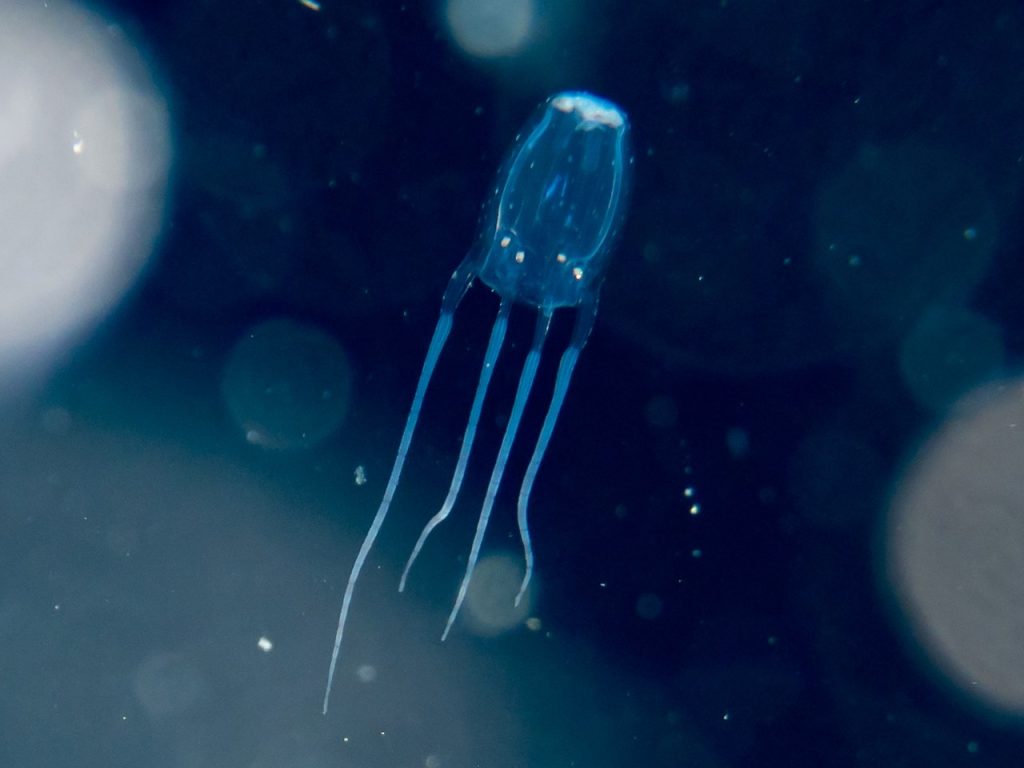
Box jellyfish. Photo: Rickard Zerpe
Although most swimmers never encounter jellyfish, occasional cases of box jellyfish sightings have been reported in certain coastal areas.
This includes certain areas of Krabi (Koh Lanta, Hat Nopparatthara - Mu Ko Phi Phi Marine National Park), Phuket (Nam Bo Bay), Phetchaburi (Hua Hin and Cha-am), Chumphon (Ko Tao), Surat Thani (Ko Samui, Koh Phangan) and Trat (Koh Mak and Koh Kut).
These areas remain very popular and well-managed in terms of security, but visitors must remain attentive to local conditions during the rainy season.
Final advice
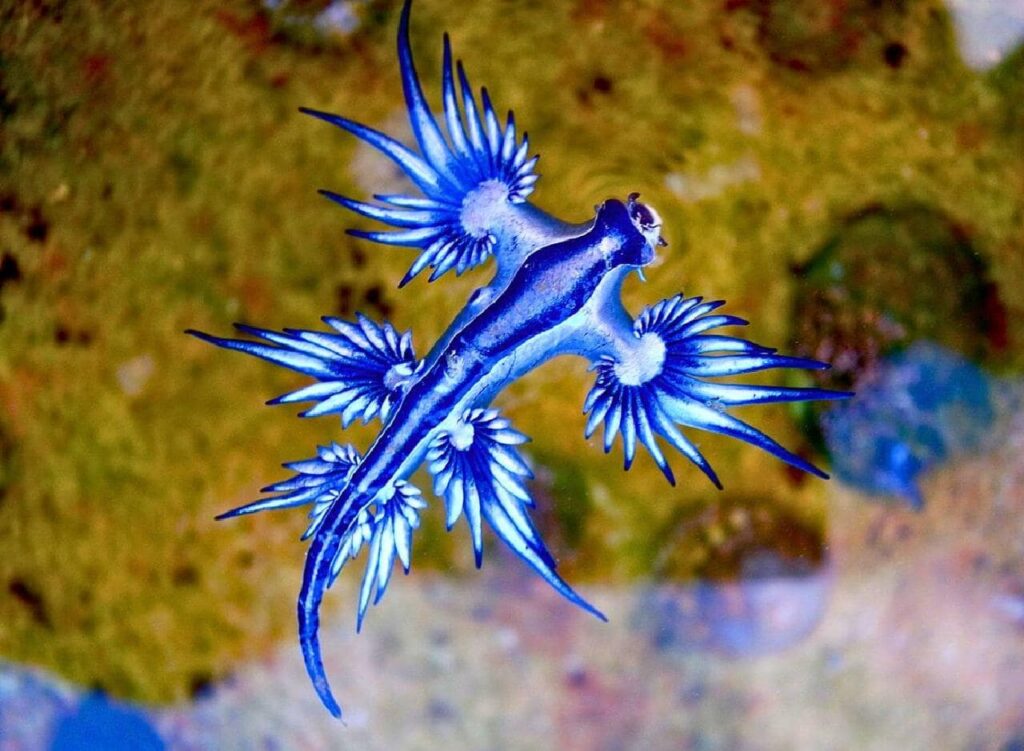
Glaucus atlanticus or blue dragon. Photo: Sylke Rohrlach
Although the risk of being stung by a venomous jellyfish in Thailand is very low, vigilance and caution allow you to enjoy the sea with complete peace of mind.
Always check local advice, locate the nearest first aid post and take simple precautions before bathing.
Thailand's marine environment is rich and diverse, and with a bit of common sense, visitors can continue to enjoy its warm waters safely.
See also:
How to protect yourself from box jellyfish stings in Thailand
A tourist survives the attack of a deadly jellyfish in Thailand
Alert in Phuket, Thailand: the deadly blue dragon reappears
Dangerous animals to know in Thailand
Ipomoea pes-caprae, the vine against jellyfish stings
Source : TAT News
Do you like Toutelathailande.fr?
👉 Leave us a review on Trustpilot.
Your review strengthens the credibility of our work and the trust of our readers.
Useful links to prepare your trip to Thailand
Book bus, train and boat in Thailand
Manage your money while traveling with Wise
If our news, tourist information, or cultural content has been useful to you and you'd like to thank us:
You can follow us on:
Twitter, LinkedIn, Facebook,Google News
Or install our application: Install the application of All Thailand on your smartphone
