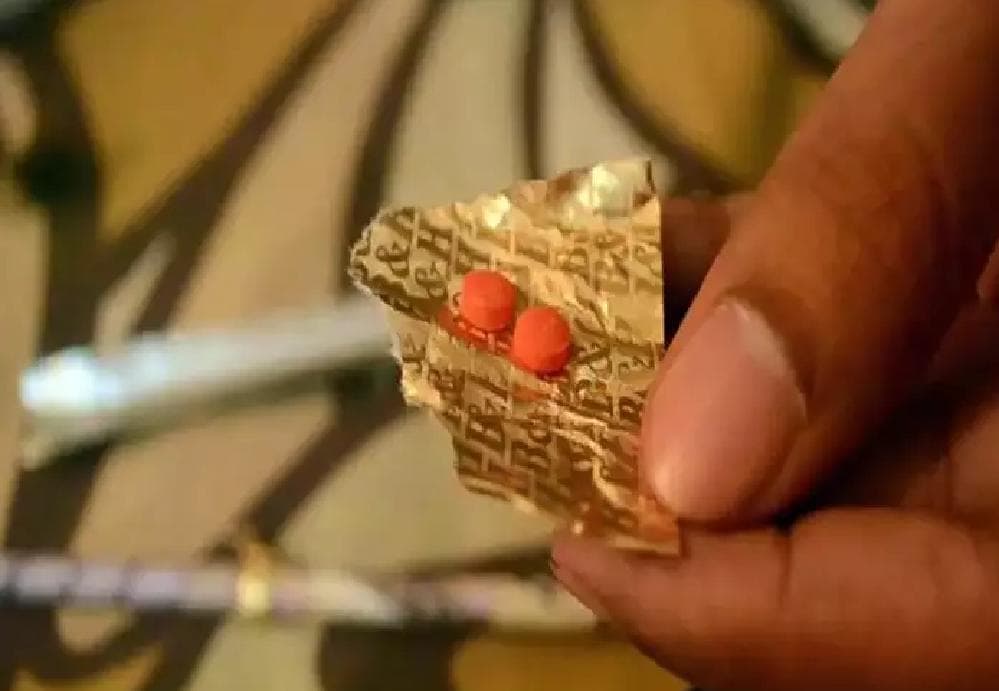
“Ya ba” is the Thai name for methamphetamine, which is wreaking havoc in Thailand. This drug is consumed by all strata of Thai society, from prostitutes to workers, students to teachers, artists to TV presenters…
- Despite a bloody war on drugs and frequent seizures by authorities, the supply of ya ba tablets has increased to the point where prices are falling
- According to a UN expert, a better approach is to manage treatment, prevention and damage minimization demands.
Pichai Gudsorn, 16, is small for his age.
He grew up in poverty, in a slum in the suburbs of Praram III, in Bangkok, with a brother and six cousins raised by their 70-year-old grandmother.
She earns very little living by selling trash, and Pichai's parents rarely visit her.
“I never had any money and was bullied at school all the time because I was poor,” Pichai said – but everything changed when he was introduced to drugs by a friend.
At the age of 12, he starts selling methamphetamine and drops out of school.
He was also taking it until two months ago, when he was arrested for the third time for selling drugs.
Cases like Pichai's are the side effect of the endemic trade in ya ba - a drug combining methamphetamine and caffeine - in Thailand, where prices have fallen with the increase in the product's supply.
Ten years ago, ya ba pills cost between 250 and 350 baht each, but Pichai's experience as a drug mule was different.
I was paid 200 baht to 300 baht to deliver 20 to 30 methamphetamine tablets.
Later, I bought (the total amount) to sell for around 1,500 bahts or less if my credit is good… before selling them for 250 bahts for a pair of pills to taxi drivers, construction workers, and migrant workers », he said.
According to the Thai government, there are more than 10 ya ba production bases in the Golden Triangle, where Thailand, Myanmar and Laos converge on the banks of the Mekong.
The region, long controlled by armed militants, has an estimated production capacity of 2 million tablets per day.
“The oversupply causing the price drops of ya ba is linked to the massive surge in power from Shan State (Myanmar) to Thailand across the border around Chiang Rai, but increasingly also via Laos to bypass Thai efforts along the Myanmar border,” said Jeremy Douglas, regional representative of the United Nations Office on Drugs and Crime for Southeast Asia and the Pacific.
The use of ya ba, which has long been popular among workers and truckers as a stimulant, exploded in the early 2000s.
The administration of former Prime Minister Thaksin Shinawatra responded with a controversial war on drugs in 2003, which was widely condemned by the international community after more than 2,800 extrajudicial executions in the first three months of the campaign.
The high production capacity has also rendered subsequent government attempts to control ya ba ineffective.
From November 2018 to January 2019, Thai authorities seized 247 million pills; it confiscated 248 million in 2017 alone, compared to 124 million in 2016.
“Unfortunately, this shows that the major Thai efforts have had little impact on street supply and that interception rates are likely low even if seizures increase,” Douglas said.
« It is possible that the situation may change somewhat, if I may say so, if regional leaders are willing to consider the seriousness of the problem and completely rebalance their approach. »
"Fundamentally, they need to move away from quick fixes and mass street-level arrests, seriously focus on organized crime, which is rampant in the region, and start to address market demand by putting in place treatment, prevention, and harm reduction efforts."
“These massive street arrests have triggered another wave of the drug epidemic: prison overcrowding.
In March 2018, 74% of prisoners in Thailand were charged with drug offenses.”
“Thai prisons would be empty without drug possession charges,” said Sunthorn Sunthorntarawong, a 68-year-old Protestant pastor who runs the House of Blessing Foundation, an organization that serves as a detention center for minors and manages adult detainees before and after their release.
Pichai was arrested while selling crystal methamphetamine, or "ice," to a police informant.
He was sentenced to two years' juvenile detention, which he chose to serve at the House of Blessing, a partner organization of the Thai Department of Corrections.
He stated that he didn't need treatment, but he wanted to complete his long-awaited basic education 22 months ago at the foundation.
Sunthorn said cases like Pichai's were common.
“They start out as mules because they want to buy things like cell phones or bicycles before they start using drugs,” he said.
Jaroenchai Klaimek, 26, who works with Sunthorn at the foundation, said the best way for young mules or addicts to change their lives is to break ties with friends involved in drug trafficking.
Former drug trafficker, he went in and out of four detention centers before the age of 20, where he claimed to have had many professional contacts before leaving it all behind eight years ago.
In the detention center, the more you're arrested with drugs, the cooler you are, said Jaroenchai, recalling his personal experience of the ya ba boom.
“I could sell 200 ya ba pills for 25,000 baht, after buying them for 18,000 baht,” he said.
In half an hour, these pills reached the hands of construction workers, office workers, taxi drivers, street cleaners, directors and actresses.
But with the low price of methamphetamine, now I can't imagine anyone wanting to risk selling it. »
The government has set up a free treatment program for addicts in exchange for a reduced prison sentence, or, in some cases, canceled, but there were fewer volunteers than the authorities had hoped.
“No addict considers themselves sick,” Sunthorn said.
He has been helping addicts and prisoners for 40 years and still has hope for those he meets.
“There is no measure to prevent a man from becoming involved in drugs, but we want him to be able to rely on himself.
We just have to trust that they will do it. »
See also:
The success of drug rehabilitation programs in Thailand
Source: Jitsiree Thongnoi for the South China Morning Post
Notice to Adblock users
Toutelathailande.fr is an independent media outlet financed solely by advertising.
Automatic and intrusive video formats have been removed for several months to improve your reading comfort.
If our articles are useful to you, you can support the site by disabling your blocker for this domain.
Useful links to prepare your trip to Thailand
Book bus, train and boat in Thailand
Manage your money while traveling with Wise
You can follow us on:
Twitter, LinkedIn, Facebook, Google News
Or install our app:
All Thailand Application on your smartphone
